
When Do Chickens Start Laying Eggs? Age, Daily Rate, and Laying Years
Pullets don’t lay on a fixed birthday. Breed, day length, and feed all move the date. This guide covers when chickens start laying eggs, how many eggs a hen lays a day, and how many years she keeps laying.
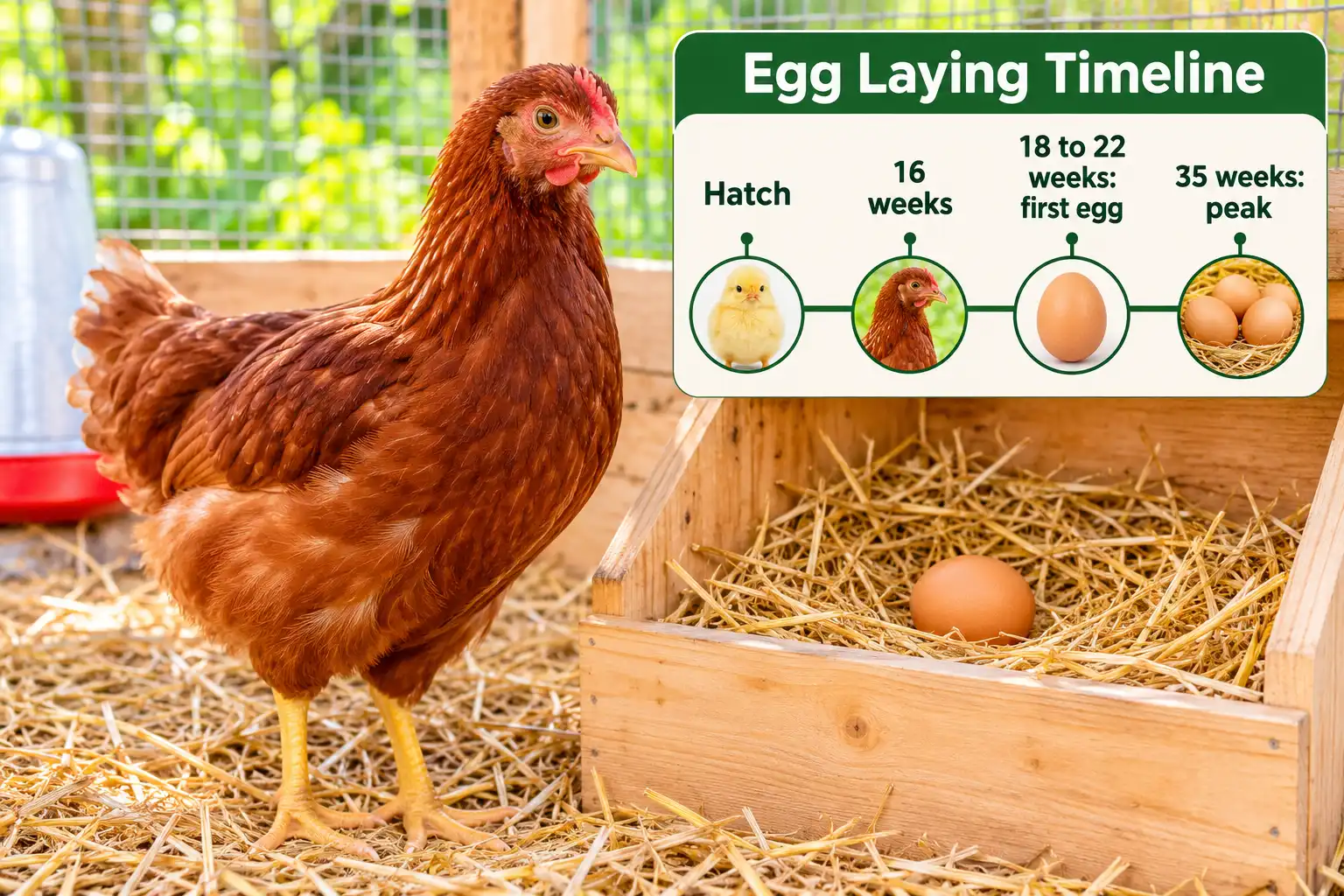
Most pullets lay their first egg at 18 to 22 weeks of age. Oregon State Extension gives 18 to 20 weeks, and University of Arizona Extension gives 18 to 22. Breed and day length shift when chickens start laying eggs.
What Age Do Hens Start to Lay Eggs?
Hens start to lay at 18 to 22 weeks of age in most laying flocks. That’s roughly four to five months after hatch.
The two extension figures overlap, but they don’t match. Oregon State University Extension puts a pullet’s first egg at 18 to 20 weeks. The University of Arizona Cooperative Extension gives 18 to 22 weeks, depending on breed. So the wider Arizona range leaves room for slower-maturing breeds.
Looks can fool you, though. University of Arizona Extension notes that pullets may look full grown at 14 to 16 weeks. Even so, their reproductive tract matures later. A big, fully feathered pullet at 15 weeks is still a few weeks from her first egg.
Pullet is the name for a young female chicken, generally one under a year old. Starting earlier isn’t better for her. She needs a mature body to carry a laying cycle. That’s why raising pullets to laying age focuses on steady growth and controlled light, not a race to the first egg.
Read more: How Often Do Chickens Lay Eggs? Rate, Start Age
When Do Chickens Start Laying Eggs? Count From the Hatch Date
Count 18 to 22 weeks forward from the hatch date, then check the day length in that month. That gives you a realistic window for the first egg.
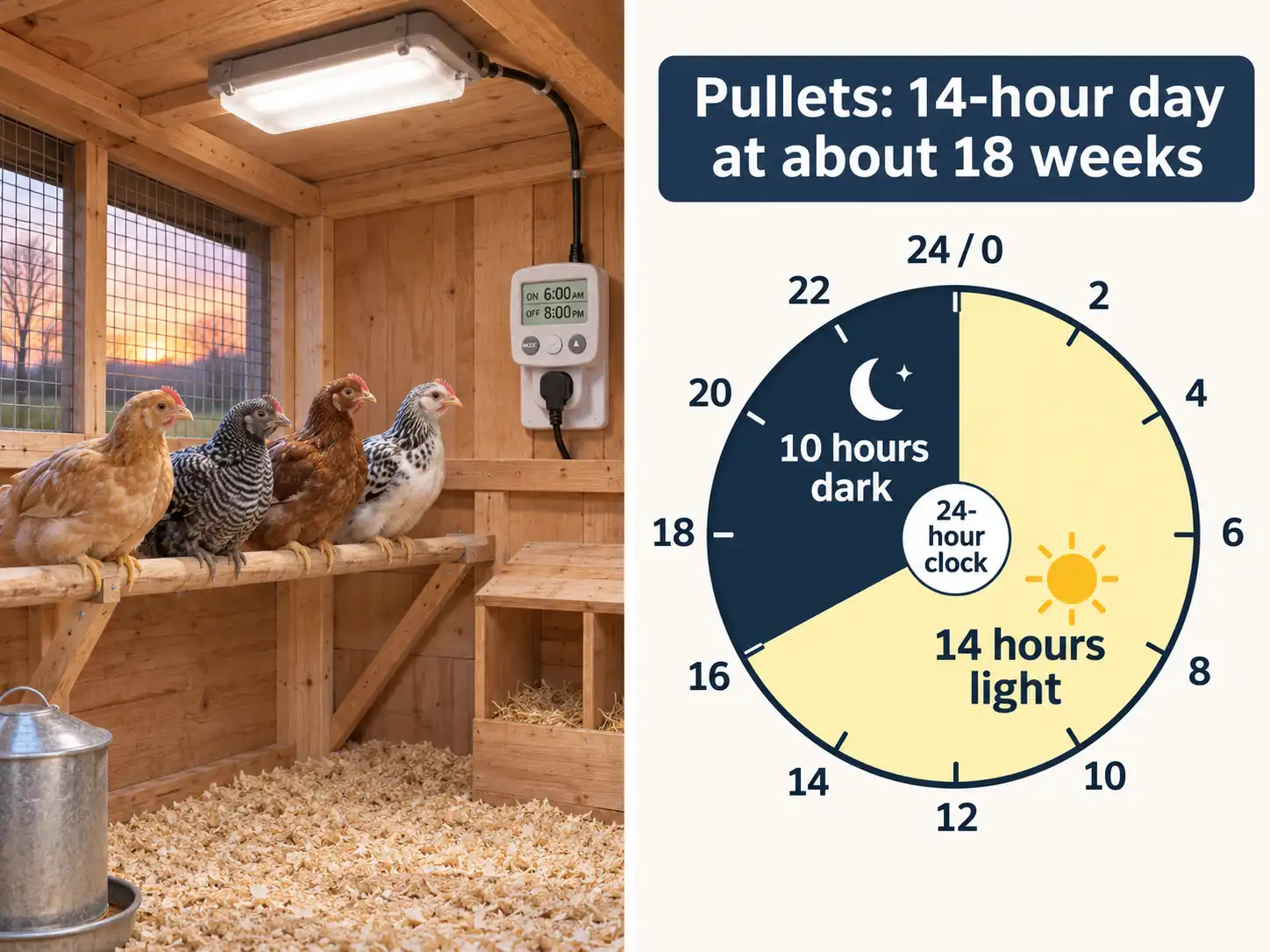
Day length matters because light sets off laying. Dr. Jacquie Jacob of the University of Kentucky explains that longer days signal a hen to start laying. Shorter days signal her to stop. For year-round laying, she puts laying hens on a steady 14 hours of light and 10 hours of dark.
| Pullet hatch date | 18 weeks old | 22 weeks old | Day length at laying age |
|---|---|---|---|
| March 1 | July 5 | August 2 | Long summer days |
| April 1 | August 5 | September 2 | Long, then shortening |
| May 1 | September 4 | October 2 | Shortening |
| June 1 | October 5 | November 2 | Short |
| September 1 | January 5 | February 2 | Shortest of the year |
Spring-hatched pullets reach laying age on long days, so their first eggs tend to arrive on schedule. Pullets hatched in summer or fall, however, reach 18 to 22 weeks on short days. Without added light, they may hold off until days lengthen in late winter or spring.
The swing is large. Oregon State Extension notes that day length in Oregon drops from nearly 16 hours in early summer to just over 8 hours in early winter. Your latitude changes the exact hours, but the pattern holds across most of the US.
What Changes the Start Date
Four things move a pullet’s first egg: breed, light, feed, and stress. You choose the breed when you buy chicks. After that, light, feed, and stress are yours to manage.
Breed
Breed sets where in the 18 to 22 week window a pullet lands. Hatchery catalogs generally list earlier first eggs for production layers, such as Leghorns and sex-link hybrids. They list later ones for heavy breeds such as Brahmas and Orpingtons, and for bantams.
Independent data on first-egg age by breed is limited, though. Most breed-by-breed ages come from hatchery catalogs, not extension trials, so treat them as the hatcheries’ own figures. Backyard flocks often run later than the catalog says.
The extension data does cover output. Oregon State Extension reports that the average commercial Single Comb White Leghorn hen lays about 265 eggs a year. Backyard breeds lay fewer, and the more exotic the breed, the poorer production tends to be. So a flock of Leghorns and a flock of Brahmas hatched the same week won’t fill the egg basket at the same pace.
Light
Texas A&M AgriLife Extension advises no artificial light for pullets until 18 weeks of age. At about 18 weeks, it moves pullets to a 14-hour day. Once the flock reaches 50 percent production, it raises the day to 16 hours and holds it there.
Use a timer. Oregon State Extension warns that even a one-day lapse in the lighting schedule can hurt production. University of Arizona Extension, for its part, favors adding the extra light in the early morning. Mount any coop light securely and well away from bedding. The coop lighting setup guide covers fixtures and timers.
Feed
Feed has to match the pullet’s age. Texas A&M AgriLife Extension recommends an 18 percent protein pullet starter for the first 8 weeks. After that, pullets get a 16 percent protein pullet developer until the first egg.
It also warns against layer feed for pullets under 16 weeks of age. At the first egg, hens switch to a 16 to 18 percent protein layer ration with 3.5 percent calcium. Oregon State Extension adds the reverse rule: don’t keep laying hens on starter or grower feed, because those diets reduce production. The guide to switching pullets to layer feed walks through the timing.
Stress
Stress can delay or stop laying at any age. Oregon State Extension lists moving, handling, overheating, fright, and a lack of feed or water. University of Arizona Extension adds that hot weather cuts feed intake, and fewer nutrients mean fewer eggs.
So timing a move matters. Moving pullets into their laying coop before the first egg, rather than after, keeps that stress out of the start of lay. During heat waves, shade, cool water, and airflow help hold feed intake up.
Signs a Pullet Is About to Lay
Pullets show clear signs in the last couple of weeks before the first egg. Watch for these:
- Comb and wattles grow larger and turn bright red
- She checks out the nest boxes, scratches in the bedding, and sits there briefly
- She crouches low when you reach toward her back
- Her appetite climbs, since forming eggs takes extra nutrients
- She gets louder and more restless in the morning
No single sign sets a date. Several together, however, mean eggs are close. So get nest boxes in place now. Texas A&M AgriLife Extension recommends one nest per four laying hens, set 24 inches above the litter. For 6 hens, that’s 2 nest boxes; for 10 hens, 3. The nest box setup guide covers sizes and bedding.
Free-ranging pullets may pick their own spot instead. University of Arizona Extension notes that hens on range sometimes lay in hidden outdoor nests. It suggests clean, easy-to-reach nest boxes, fake eggs in the nests, and keeping birds in until mid-morning.
Laying Age Timeline: From Chick to Peak
This timeline lines up the published figures for a laying flock, from hatch through the end of a hen’s best laying years.
| Pullet or hen age | What happens | Source |
|---|---|---|
| Hatch to 8 weeks | 18 percent protein pullet starter | Texas A&M AgriLife |
| 8 weeks to first egg | 16 percent protein pullet developer | Texas A&M AgriLife |
| 14 to 16 weeks | Pullets may look full grown but aren’t ready to lay | University of Arizona |
| Under 16 weeks | No layer feed | Texas A&M AgriLife |
| 16 to 18 weeks | Age ready-to-lay pullets are sold | Texas A&M AgriLife |
| About 18 weeks | Light raised to a 14-hour day | Texas A&M AgriLife |
| 18 to 22 weeks | First eggs | Oregon State, University of Arizona |
| 50 percent production | Light raised to 16 hours | Texas A&M AgriLife |
| About 35 weeks | Peak lay above 90 percent, lasting about 10 weeks | Oregon State |
| 14 to 16 months of lay | End of the acceptable rate in a production flock | Texas A&M AgriLife |
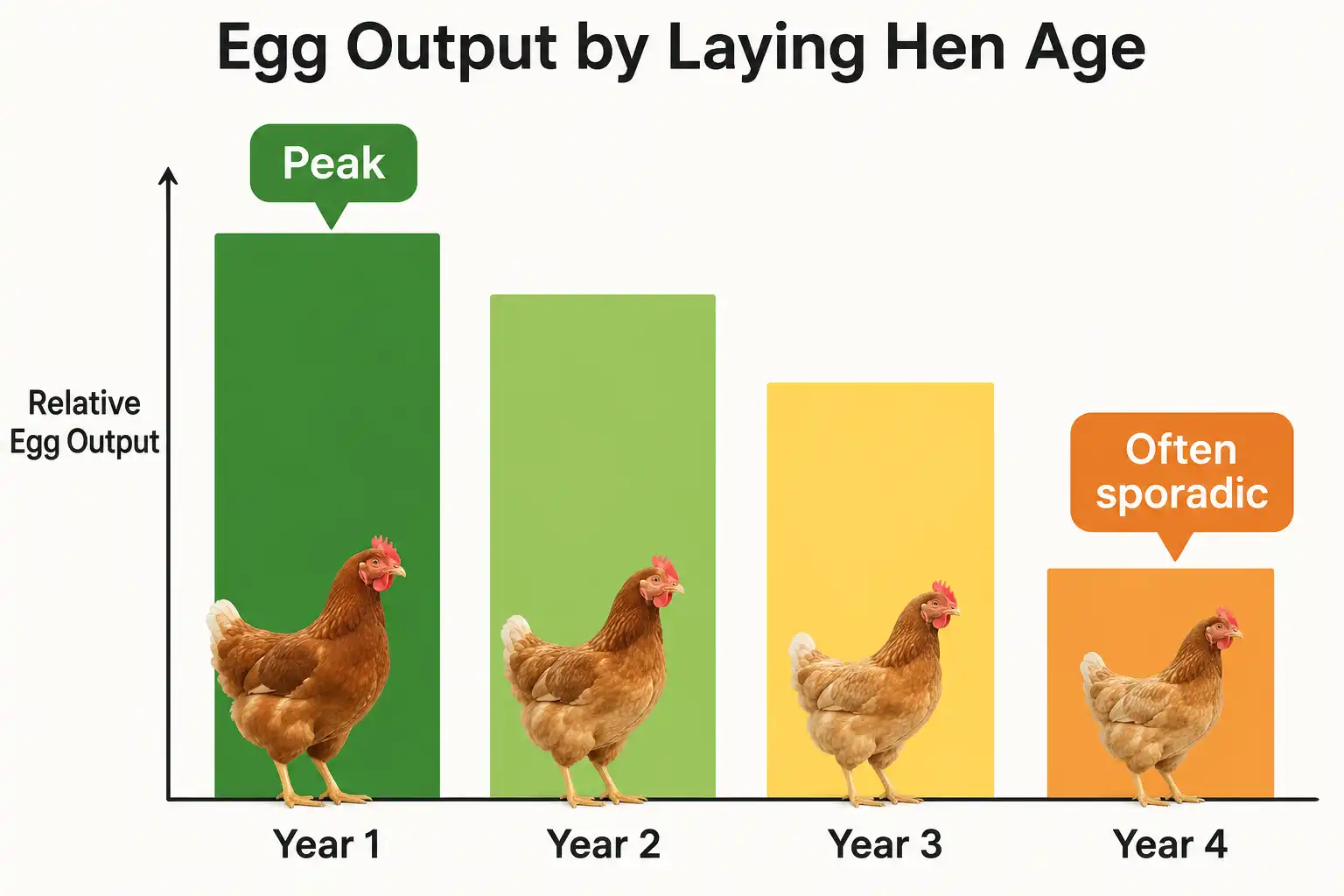
| 2 to 3 years old | Laying declines | Oregon State |
| 3 to 4 years old | Laying often sporadic | University of Arizona |

How Many Eggs Do Chickens Lay a Day?
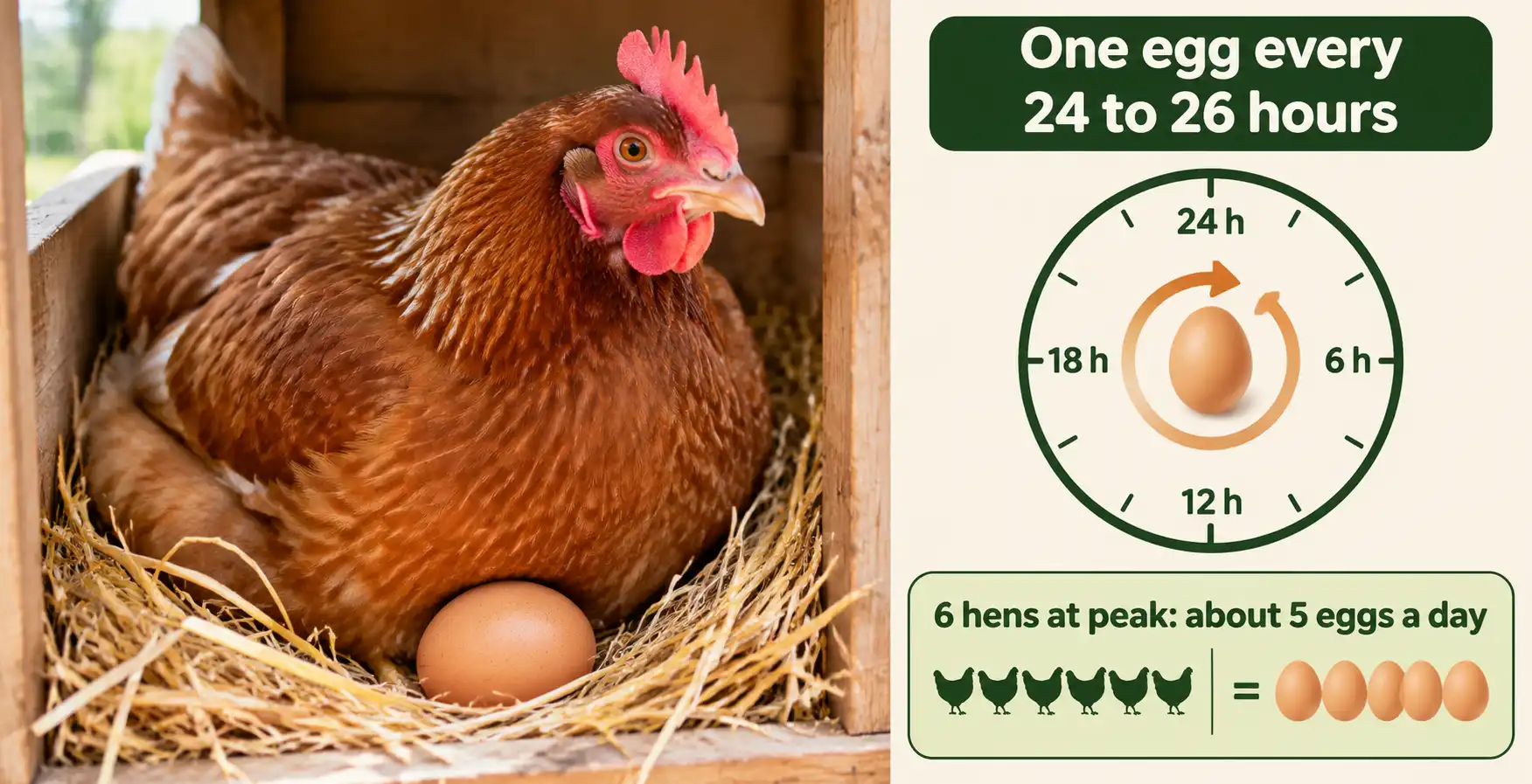
A laying hen lays at most one egg a day. University of Kentucky’s Dr. Jacquie Jacob explains that each egg takes 24 to 26 hours to form, and a hen won’t lay every single day.
Because each egg takes a little longer than a day, a hen’s laying time drifts later. Sooner or later she skips a day, then starts a new run. So no flock lays one egg per hen every day for long.
Rate of lay is the share of hens laying on a given day. Oregon State Extension puts a pullet flock’s peak at about 35 weeks of age, at a rate above 90 percent. That’s 9 eggs in 10 days from one hen, or 9 eggs a day from 10 hens. After that, the rate slowly falls.
Commercial flocks show where the average settles. In the USDA NASS Chickens and Eggs 2025 Summary, US table-egg layers laid about 81.5 to 83 eggs per 100 hens per day across 2025. Across all US layers, production averaged 288 eggs per layer on hand that year. Those are commercial hybrids in controlled houses, though. Backyard breeds usually lay fewer, per Oregon State Extension.
Flock Math: Eggs per Day and per Week
Eggs per day = number of laying hens × rate of lay. Eggs per week = eggs per day × 7.
Two sourced rates give a useful range. The peak rate is 90 percent, from Oregon State Extension. The year-round Leghorn rate is about 73 percent, which is Oregon State’s 265 eggs a year divided by 365 days.
| Laying hens | At peak, 90% (eggs per week) | Leghorn year average, 73% (eggs per week) |
|---|---|---|
| 3 | about 19 | about 15 |
| 6 | about 38 | about 30 |
| 10 | about 63 | about 51 |
| 12 | about 76 | about 61 |
So 6 laying hens at peak give about 5 eggs a day, a little over 3 dozen a week. Over a full year at the Leghorn average, the same 6 hens give about 4 eggs a day, or 2.5 dozen a week.
Want a dozen eggs a week? At the Leghorn average, that takes about 3 laying hens: 12 ÷ (0.73 × 7) = 2.4, rounded up. Backyard breeds lay fewer, so track your own flock for two weeks. Divide total eggs by hens, then by 14 days. That’s your rate of lay to plug in.
How Long Do Chickens Lay Eggs?
Laying hens lay best in their first one to two years, per University of Arizona Extension. Output then slows each year and often turns sporadic by age 3 or 4.
Sources frame the laying life differently, so both views belong here. Oregon State Extension says hens normally produce well until 2 to 3 years old, then decline. Texas A&M AgriLife Extension takes a production view instead. It says hens lay at an acceptable rate for 14 to 16 months. For best results, it replaces the flock with new pullets after 14 to 16 months of lay.
The goal explains the gap. Texas A&M’s figure fits a flock run to sell eggs, where feed cost per dozen matters. A backyard keeper who values the hens themselves can keep them well past that point, with fewer eggs each year.
Run the math for your own pullets. A pullet that starts at about 20 weeks (4.6 months) and lays for 14 to 16 months reaches the Texas A&M replacement point at roughly 19 to 21 months of age.
Research on how long older backyard hens keep laying is thin. Extension sources describe the decline, but they don’t give a firm last-egg age. So treat any exact “lays until age X” figure with caution.
Molting Pauses Laying Each Fall
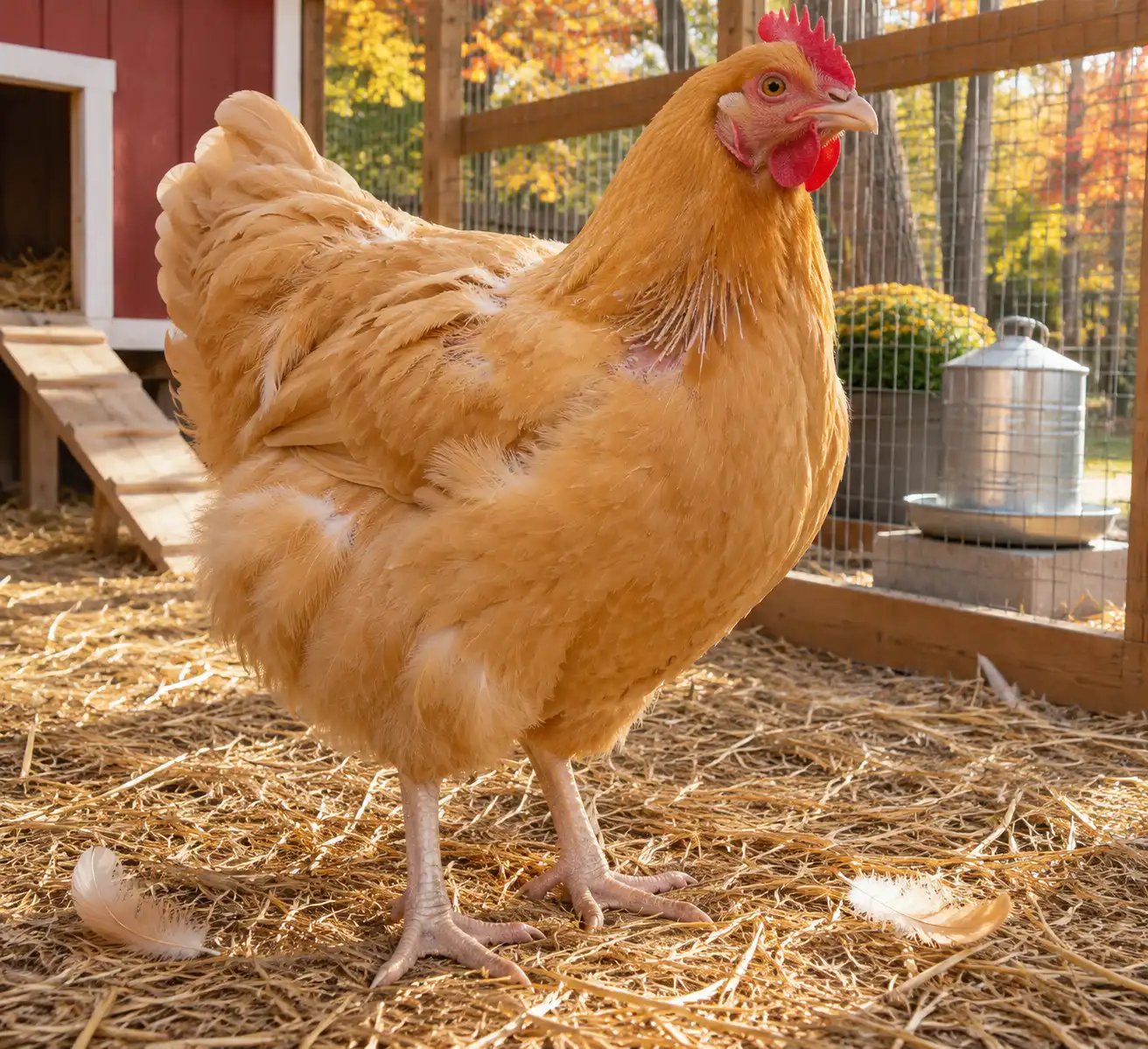
Most adult hens molt once a year, usually starting between August and October, per University of Arizona Extension. Shorter days trigger it. Molting hens slow or stop laying while they regrow feathers, and a molt can run several months across a flock.
There’s an upside for new flocks. Arizona notes that pullets hatched in spring or summer don’t molt in their first autumn. So a spring pullet that starts laying in late summer can keep laying into her first winter, as long as she gets enough light.
Does Added Light Wear Hens Out?
No, according to the research University of Arizona Extension cites. Supplemental light doesn’t appear to shorten a hen’s laying life, as long as her diet, including calcium, is adequate.
Oregon State Extension adds one caution. Molts under long days are often incomplete. So it suggests turning lights off for about 6 weeks in a hen’s second winter to allow a full molt, then returning to long days.
Why a Hen Stops Laying, and When to Call
Call the same day if birds look sick. A drop in egg production is often the first sign of flock disease, per Oregon State Extension. USDA APHIS lists the warning signs, including fewer eggs, soft-shelled or misshapen eggs, sudden deaths, low energy or appetite, and swelling or purple color on the comb and wattles. Report sick or dying birds to your state veterinarian or to USDA at 1-866-536-7593. Never move them off the property. USDA was still confirming new avian influenza cases in commercial and backyard flocks in early November 2026, as fall migration continued. More on bird flu signs in a laying flock is in the Flock Health section.
Most drops have ordinary causes, though. The table describes them; it doesn’t diagnose. When illness is possible, a poultry veterinarian or a state diagnostic lab confirms the cause.
| Cause | What it looks like | Source |
|---|---|---|
| Too young | Pullet under 18 weeks, even if she looks grown | University of Arizona |
| Short days | Fewer eggs as fall days shorten | University of Kentucky |
| Molt | Feather loss and a pause, often August to October | University of Arizona |
| Broodiness | Hen stays on the nest, often 3 to 6 weeks | University of Arizona |
| Broody breeds | Cochins and Silkies go broody often; Leghorns rarely | Oregon State |
| Age | Steady decline after 2 to 3 years | Oregon State |
| Stress or heat | Laying stops after a move, a fright, or a hot spell | Oregon State, University of Arizona |
| Diet | Scratch and table scraps unbalance the layer ration | Oregon State |
| Hidden nests | Free-range hens laying outdoors | University of Arizona |
| Illness | A drop plus the signs USDA APHIS lists | USDA APHIS |
Ready-to-Lay Pullets or Day-Old Chicks: How Long Until Eggs?
Ready-to-lay pullets cut the wait to a few weeks. Day-old chicks take 18 to 22 weeks.
Texas A&M AgriLife Extension notes that some keepers raise day-old pullets, while others buy ready-to-lay pullets at 16 to 18 weeks of age. Against an 18 to 22 week first egg, a pullet bought at 16 weeks may start within 2 to 6 weeks. One bought at 18 weeks may start within 4 weeks.
The move itself can cost time, however. Oregon State Extension lists moving and handling among the stresses that stop egg production. So give new pullets a quiet coop, steady feed and water, and the light schedule they had before, if the seller can tell you what it was.
Each route has a trade-off. Day-old chicks need a brooder and four to five months of care, but you control their feed and light from day one. Ready-to-lay pullets skip the brooder, yet you take on whatever the seller did. The Layers section covers both routes in more depth.
FAQs About Chickens Start Laying Eggs
Do hens need a rooster to start laying eggs?
No, hens lay eggs with or without a rooster, and his presence doesn’t set the start date. A rooster only matters if you want fertile eggs to hatch under a hen or in an incubator.
Can pullets eat layer feed before they start laying?
Not before 16 weeks of age, per Texas A&M AgriLife Extension, which keeps pullets on 16 percent protein developer until the first egg. Then hens move to a layer ration with 3.5 percent calcium.
Why did my hens stop laying when the days got shorter?
Laying hens respond to day length, and shorter fall and winter days signal them to slow or stop, per University of Kentucky’s Dr. Jacquie Jacob. She recommends a steady 14 hours of light a day for year-round laying.
How many eggs does a hen lay in a year?
Oregon State Extension puts the average commercial Single Comb White Leghorn at about 265 eggs a year, with backyard breeds laying fewer. Across all US layers, USDA NASS reported an average of 288 eggs per layer in 2025.
Should I add light for pullets hatched in late summer?
Yes, but not before pullets reach 18 weeks of age, per Texas A&M AgriLife Extension. At about 18 weeks, it moves pullets to a 14-hour day, which helps late-hatched pullets start laying through short winter days.
How many hens do I need for a dozen eggs a week?
About 3 laying hens, using Oregon State Extension’s Leghorn average of 265 eggs a year, or roughly 15 eggs a week. Slower backyard breeds lay fewer, so count your own flock’s eggs before adding hens.
Are a pullet’s first eggs smaller than normal?
Yes, first eggs from a pullet are usually small, and size climbs over her first months. A sudden run of soft-shelled or misshapen eggs from established laying hens is different: USDA APHIS lists it as an avian influenza sign.
Key Points for Your Flock
Mark the calendar 18 to 22 weeks from hatch. Pullets that reach that age on short winter days may run late without added light.
Keep pullets on developer feed until the first egg, and set out one nest box per four hens. If natural light falls short, move pullets to a 14-hour day at about 18 weeks.
Then count eggs for two weeks. Compare your rate against the 90 percent peak and the 73 percent Leghorn average to see whether the flock is on track. If laying drops suddenly and birds look unwell, call your state veterinarian or USDA at 1-866-536-7593.
