
Poultry Chicken Farming: how to start, raise, and run a chicken farm
From a backyard flock of layers to a contract broiler farm, poultry chicken farming runs on the same basics: good housing, the right feed at each age, and strict biosecurity. These guides explain each step using USDA data and university extension research.
Built on USDA statistics, federal rules, and extension research from UF/IFAS, Texas A&M, NC State, and the University of Idaho. Every figure names its source.

Poultry chicken farming in the US, by the numbers
Chicken is the largest part of US poultry by value. Here’s the scale, from USDA’s latest annual figures.
Sources: USDA NASS, Poultry Production and Value 2024 Summary; USDA ERS, Poultry and Eggs Sector at a Glance; USDA ERS, Broiler Production.
What is a poultry business?
A poultry business raises birds, mostly chickens, to sell eggs, meat, chicks, or growing services. Most commercial chicken farms in the US specialize in one stage of production instead of doing everything themselves.
Table eggs
Laying hens produce eggs for grocery chains, restaurants, or direct sale at the farm.
Meat birds
Broilers grow fast. USDA classes a broiler as a young chicken under 10 weeks old.
Contract growing
A grower raises a company’s chicks in their own houses and is paid per flock.
Hatching eggs and chicks
Breeder flocks lay fertile eggs. Hatcheries incubate them and sell day-old chicks.
Pullets
Young hens raised to laying age, then sold to egg farms or small flock owners.
Processing and sales
Small farms can process a limited number of their own birds under federal exemptions.
What are the types of chicken poultry farming?
The main types are broiler farms for meat, layer farms for eggs, breeder flocks and hatcheries for chicks, and pullet farms that raise young hens. Any of them can run conventionally, free-range, pasture-raised, or certified organic.
| Farm type | What it sells | Time to first sale | Key fact |
|---|---|---|---|
| Broiler farm | Meat chickens | One flock, under 10 weeksUSDA FSIS broiler class | 97% of broilers were raised on contract in USDA’s 2011 surveyUSDA ERS |
| Layer farm | Table eggs | First eggs at about 18 to 24 weeksUF/IFAS, NDSU Extension | Hens are often replaced after 14 to 16 months of layTexas A&M AgriLife |
| Breeder flock and hatchery | Fertile eggs and chicks | Longest setup of any type | Buyers look for NPIP participation, which USDA APHIS recommendsUSDA APHIS |
| Pullet farm | Young hens near laying age | About 18 weeks per flock | Pullets go on a 14-hour day at about 18 weeksTexas A&M AgriLife |
| Backyard flock | Eggs or meat for home use | 18 to 24 weeks for eggs | Local zoning decides whether you can keep chickens at all |
Free-range, pasture-raised, and organic
These are ways of raising any type of flock, not separate farm types. Free-range and pasture systems give birds outdoor access. Organic adds USDA rules on feed, health care, and outdoor space, covered in the organic section below.
How to start a poultry farm
Start with the market, not the chickens. Decide what you’ll sell and who will buy it, then build the farm around that answer. These eight steps work for a small egg farm or a contract broiler operation.
Pick your model
Eggs, meat, contract broilers, or pullets. Each needs different housing, labor, and cash flow.
Check zoning and state rules
County zoning comes first. Many states also require flocks to be registered.
Write a business plan
Feed is the biggest cost, around 70 percent of raising chickens, per UF/IFAS Extension.
Line up financing
USDA’s Farm Service Agency makes farm loans, including for beginning farmers.
Build housing and buy equipment
Space per bird, ventilation, and lighting set how many birds you can keep.
Plan biosecurity first
Buy birds from NPIP-participating sources and keep new birds apart for 30 days, per USDA APHIS.
Bring in chicks
Have the brooder at 90 to 95°F before they arrive, per UF/IFAS Extension.
Know the selling rules
Federal exemptions cover small-scale meat processing. Egg sales follow state rules.
Contract chicken farming: how it works
Most US broilers are raised on contract. In USDA’s 2011 farm survey, 97 percent of broilers came from contract operations, per the USDA Economic Research Service. A poultry company, often called an integrator, owns the birds. The grower owns the farm.
The company provides
- Day-old chicks from its own hatchery
- Feed from its own feed mill
- Technical support during the flock
- Catching, hauling, and processing at market weight
The grower provides
- Broiler houses and equipment, usually financed by the grower
- Daily labor and flock care
- Utilities, such as electricity and heating fuel
- Litter management between flocks
How growers are paid. Almost all broiler contracts base pay on how a grower’s flock performs compared with other growers, per USDA ERS. Since February 12, 2024, companies must give broiler growers a Live Poultry Dealer Disclosure Document under a USDA Agricultural Marketing Service rule. Read it, and talk to current growers for the same company, before you borrow for houses.
Chicken poultry farm equipment
What you need depends on flock size and type. These are the basics almost every chicken farm uses, from a backyard coop to a commercial house.
Brooder and heat
Holds chicks at 90 to 95°F in the first week, then 5°F cooler each week, per UF/IFAS.
Feeders
Allow about 3 inches of feeder space per adult bird, per NC State Extension.
Waterers
Clean water at all times. Drinkers should be easy to clean and hard to foul.
Lighting
Laying hens do best with 14 to 16 hours of light a day, per UF/IFAS Extension.
Ventilation
Fans and vents carry out moisture and ammonia and keep birds comfortable in heat.
Nest boxes and egg handling
Clean nests, frequent collection, and cool storage keep eggs sellable.
How to raise chickens, from chick to laying hen
Chicks need steady heat, clean water, and the right feed for their age. Heat drops each week, and the feed changes twice before a hen lays her first egg.
Brooder temperature, per UF/IFAS Extension
- Week 1: 90 to 95°F
- Week 2: 85 to 90°F
- Week 3: 80 to 85°F
- Week 4: 75 to 80°F
- After: 5°F less each week until feathered
Feed by age, per UF/IFAS Extension
Chicken layer feed and poultry farming for layers
Layer feed is lower in protein than chick feed and much higher in calcium, because every eggshell is mostly calcium carbonate. UF/IFAS Extension puts calcium in layer feed at about 3.5 to 4 percent, while birds under 18 weeks need only about 1 percent.
Timing matters. Feeding layer feed too early can damage young birds’ kidneys, so UF/IFAS Extension says to wait until 18 weeks. Texas A&M AgriLife Extension switches pullets to a 16 to 18 percent protein laying ration with 3.5 percent calcium at the first egg.
Running a laying flock
Light drives laying. Texas A&M puts pullets on a 14-hour day at about 18 weeks and raises it to 16 hours once the flock reaches half production. Commercial-style flocks are often replaced after 14 to 16 months of lay, when production drops.
Layer feed
What a typical tag and program look like
- Crude protein
- 14 to 18%
- Calcium
- 3.5 to 4.0%
- Start feeding at
- 18 weeks
- Daylight for laying
- 14 to 16 hours
- Feed per dozen eggs
- About 5 lb
Sources: UF/IFAS, Texas A&M AgriLife, and NC State Extension. Always follow the tag on your bag.
What do free range chickens eat?
Grass, clover, seeds, insects, and worms, plus a complete feed. Forage helps, but it can’t carry a flock alone. UF/IFAS Extension reports that forage can replace only about 5 to 10 percent of a grain-based diet, depending on the bird’s age, the setting, and the pasture quality.
What they find outside
- Grasses and clover
- Seeds
- Insects, worms, and grubs
Forage: about 5 to 10% of a grain-based diet, per UF/IFAS
What they still need from you
- A complete feed matched to their age
- Calcium for laying hens, from layer feed
- Clean water, all day
Range-fed birds need supplemental feeding, per NC State Extension.
Organic poultry farming: what USDA requires
Organic chicken production follows the USDA National Organic Program. Birds must be raised organically from their second day of life, eat certified organic feed, receive no antibiotics, and have real access to the outdoors. The same rules cover organic hen farming for eggs.
Organic from day two
Poultry must be under organic management no later than the second day of life.
Certified organic feed
Feed must be organic. That’s often the largest cost difference from conventional birds.
No antibiotics
Sick birds still get treated. A treated bird can’t be sold as organic.
Outdoor access
Birds need year-round access to the outdoors, with soil and vegetation under the 2023 rule.
Third-party certification
A USDA-accredited certifier inspects the farm each year.
Small farm exemption
Farms selling under $5,000 a year in organic products can skip certification but must follow the rules.
Sources: USDA National Organic Program regulations and the Organic Livestock and Poultry Standards final rule (Federal Register, November 2, 2023). Hormones aren’t allowed in any US poultry, organic or not, per USDA FSIS.
Poultry vaccination schedule: what’s typical
There’s no single schedule for every flock. Your veterinarian, hatchery, or extension poultry specialist sets it based on the diseases in your area. Here’s what University of Idaho Extension describes for small flocks.
| Vaccine | Protects against | When it’s usually given |
|---|---|---|
| Marek’s disease | A common viral disease that causes tumors and paralysis | At the hatchery, on day one |
| Newcastle disease | A respiratory and nervous system disease | Starting after the first week, where local risk calls for it |
| Infectious bronchitis | A fast-spreading respiratory disease | Starting after the first week, often alongside Newcastle |
| Fowl pox | Skin and mouth lesions, spread by mosquitoes | Young birds, in areas where pox occurs |
| Fowl cholera | A bacterial disease of older birds | Only where it’s a known problem |
Source: University of Idaho Extension, Vaccination of Poultry. Vaccination doesn’t replace sanitation and biosecurity. We publish no doses: follow the vaccine label and your veterinarian.
Poultry processing plant rules for small farms
Chicken sold as meat must come from an inspected plant, unless the farm qualifies for an exemption under the federal Poultry Products Inspection Act. The limits count birds per farm, per calendar year.
Producer/grower exemption
A farm may slaughter and sell up to 1,000 healthy birds of its own raising. The limit is per farm, not per family member.
The 20,000 bird exemption
Covers up to 20,000 birds raised on the farm, processed under sanitary conditions, with no buying or selling of other poultry.
Official inspection
Birds must go through a USDA FSIS inspected plant or a state program with equal standards.
Sources: North Dakota Department of Agriculture and UC Agriculture and Natural Resources guides to the federal exemptions. States can set tighter rules, so check with your state agriculture department.
Chick, pullet, or adult chicken? The terms that matter
In USDA’s official poultry classes, a hen is an adult female chicken more than 10 months old, and a broiler is a young chicken under 10 weeks. On the farm, a hen usually starts laying well before she counts as an adult in those classes.
- 0 to 6 weeks
Chick
Needs brooder heat and starter feed.
- 6 to 18 weeks
Pullet or cockerel
A young female or male, on grower feed.
- 18 to 24 weeks
Point of lay
Most hens lay their first eggs in this window.
- Over 10 months
Hen or rooster
An adult chicken in USDA’s classes.
Sources: USDA FSIS poultry class definitions (9 CFR 381.170); UF/IFAS and NDSU Extension for feed stages and laying age. USDA also defines a roaster as a young chicken of 8 to 12 weeks.
Biosecurity and bird flu: protect the flock
Highly pathogenic avian influenza can strike with little warning. Sudden deaths, birds eating and drinking less, and dull, sleepy birds are common signs, per USDA APHIS. Biosecurity is the main defense for every flock size.
- Keep wild birds away from your flock, feed, and water
- Limit visitors, and don’t visit other poultry farms
- Don’t lend or borrow equipment
- Wash hands and scrub boots before and after flock work
- Buy birds only from NPIP-participating sources
- Keep new birds and show birds apart for 30 days
Source: USDA APHIS, Defend the Flock. The CDC also advises washing your hands after touching chickens, eggs, or coop equipment, because healthy-looking birds can carry Salmonella.
Sick or dying birds?
Report it right away to your state veterinarian or to USDA’s toll-free line:
Don’t move birds, eggs, or equipment off the farm until you’ve talked to them.
Latest guides
Foraging and Treats
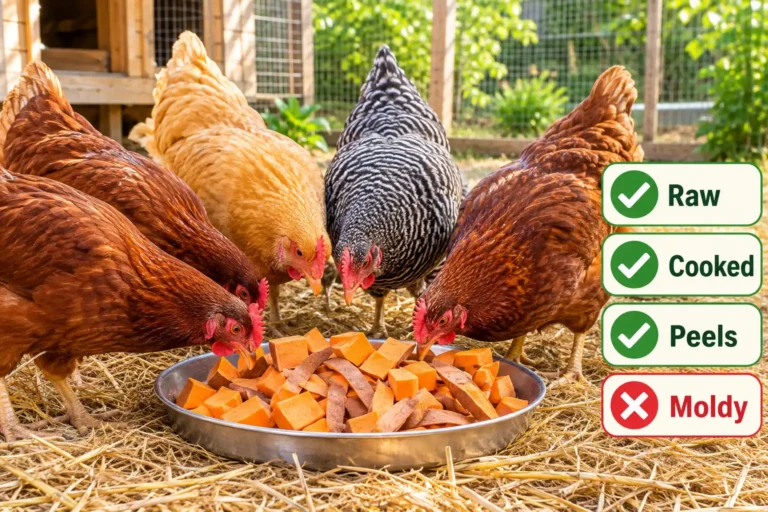
Can Chickens Eat Sweet Potatoes? Raw, Cooked, Peels and Skins
Sweet potatoes are a common, low-risk vegetable scrap for backyard flocks. Can chickens eat sweet potatoes raw, cooked, and peel-on?…
November 13, 2026

Foraging and Treats
Can Chickens Eat Red Peppers? Safe Parts, Hot Peppers, and How Much
Red peppers are one of the safer kitchen scraps for a backyard flock. So can chickens eat red peppers raw,…
November 13, 2026
Egg Handling
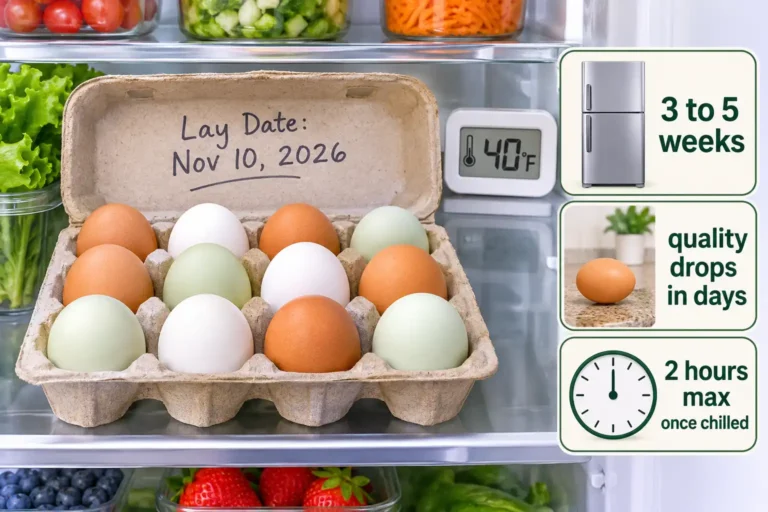
How Long Do Farm Fresh Eggs Last? Fridge, Counter, and Freezer Times
Farm fresh eggs start out fresher than store eggs, but storage decides how long that lead lasts. Here is how…
November 13, 2026
Egg Production
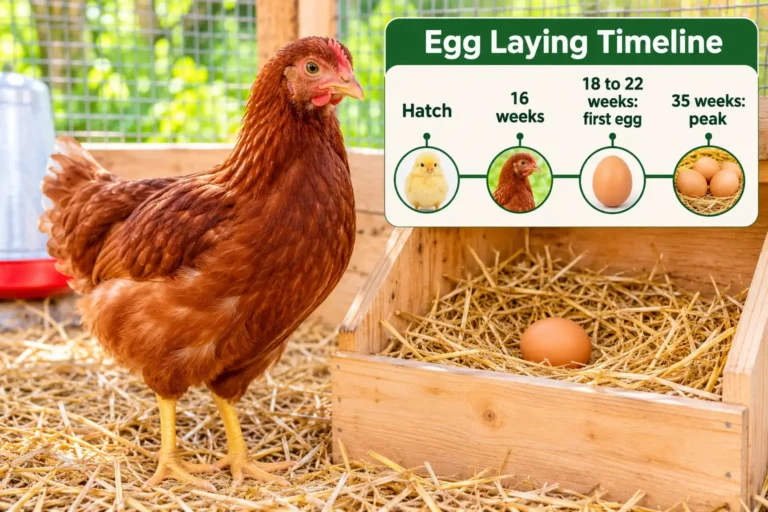
When Do Chickens Start Laying Eggs? Age, Daily Rate, and Laying Years
Pullets don’t lay on a fixed birthday. Breed, day length, and feed all move the date. This guide covers when…
November 13, 2026

Egg Production
How Often Do Chickens Lay Eggs? Rate, Start Age, and Why They Stop
A laying hen rarely lays every single day. How often chickens lay eggs depends on the hen’s age, her breed,…
November 13, 2026

Foraging and Treats
Can Chickens Eat Bananas? Peels, Portions, and Safe Feeding
Can chickens eat bananas? Adult laying hens can, as a small treat, and the peel is safe too with some…
November 13, 2026
Poultry chicken farming questions
What is poultry chicken farming?
It’s raising chickens for eggs, meat, or chicks, from backyard flocks to commercial farms. US farms raised 9.33 billion broilers and produced 109 billion eggs in 2024, per USDA NASS.
How do I start a chicken farm?
Decide what you’ll sell and to whom, check zoning and state rules, then write a business plan and build housing. Buy chicks from NPIP-participating hatcheries and plan biosecurity before they arrive.
Is contract chicken farming a good business?
It depends on the company, the contract, and your debt. Pay is usually ranked against other growers, so read the Live Poultry Dealer Disclosure Document and talk to current growers first.
How much protein does chicken layer feed have?
Usually 14 to 18 percent, with about 3.5 to 4 percent calcium for eggshells, per UF/IFAS and Texas A&M extension. Don’t feed it to birds younger than 18 weeks.
Do free range chickens still need feed?
Yes. Forage replaced only about 5 to 10 percent of a grain-based diet in UF/IFAS work, so free range birds still need a complete feed and clean water.
What makes chicken or eggs organic?
USDA organic birds are managed organically from their second day of life, eat organic feed, receive no antibiotics, and have outdoor access under National Organic Program rules.
Can I sell chickens I process on my own farm?
Often, within limits. Federal exemptions allow up to 1,000 or 20,000 birds a year raised on your farm, depending on the exemption, and some states set tighter rules.
When is a chicken considered an adult?
In USDA’s official classes, a hen is an adult female chicken more than 10 months old. Most hens start laying sooner, at about 18 to 24 weeks, depending on breed.
What vaccines do chickens need?
Most chicks get a Marek’s disease vaccine at the hatchery on day one. Others, such as Newcastle disease and fowl pox, depend on local risk, so ask your veterinarian or extension specialist.
How we work
Our guides don’t rest on anyone’s personal flock. Every figure comes from USDA, university extension services, or federal rules, and we name the source beside it.
Where sources differ, we show both figures instead of averaging them. We don’t diagnose sick birds or publish medication doses. That’s a job for a poultry veterinarian.
Sources we rely on
- USDA National Agricultural Statistics ServiceBroiler and egg production and value
- USDA Economic Research ServiceIndustry structure, contracts, and exports
- USDA Agricultural Marketing ServiceContract grower transparency rule
- USDA APHIS, Defend the FlockBiosecurity and avian influenza reporting
- USDA National Organic ProgramOrganic poultry standards
- UF/IFAS ExtensionBrooding, feed stages, lighting, and pasture diets
- Texas A&M AgriLife ExtensionManaging a small laying flock
- NC State ExtensionCoop space, feeder space, and feed use
- NDSU ExtensionRaising chicks and laying age
- University of Idaho ExtensionPoultry vaccination
Corrections and contact
Found a figure that looks wrong?
Tell us the page, the figure, and the source you’re comparing against.
editorial@poultrychickenfarming.org
Corrections usually go up the same week.
Everything else
Questions about the site, permissions, or a broken page.
contact@poultrychickenfarming.org
We aim to reply within three business days.
Birds sick or dying?
Call your poultry veterinarian, your state veterinarian, or USDA at 1-866-536-7593. Don’t wait on an email.