Can Chickens Eat Red Peppers? Safe Parts, Hot Peppers, and How Much
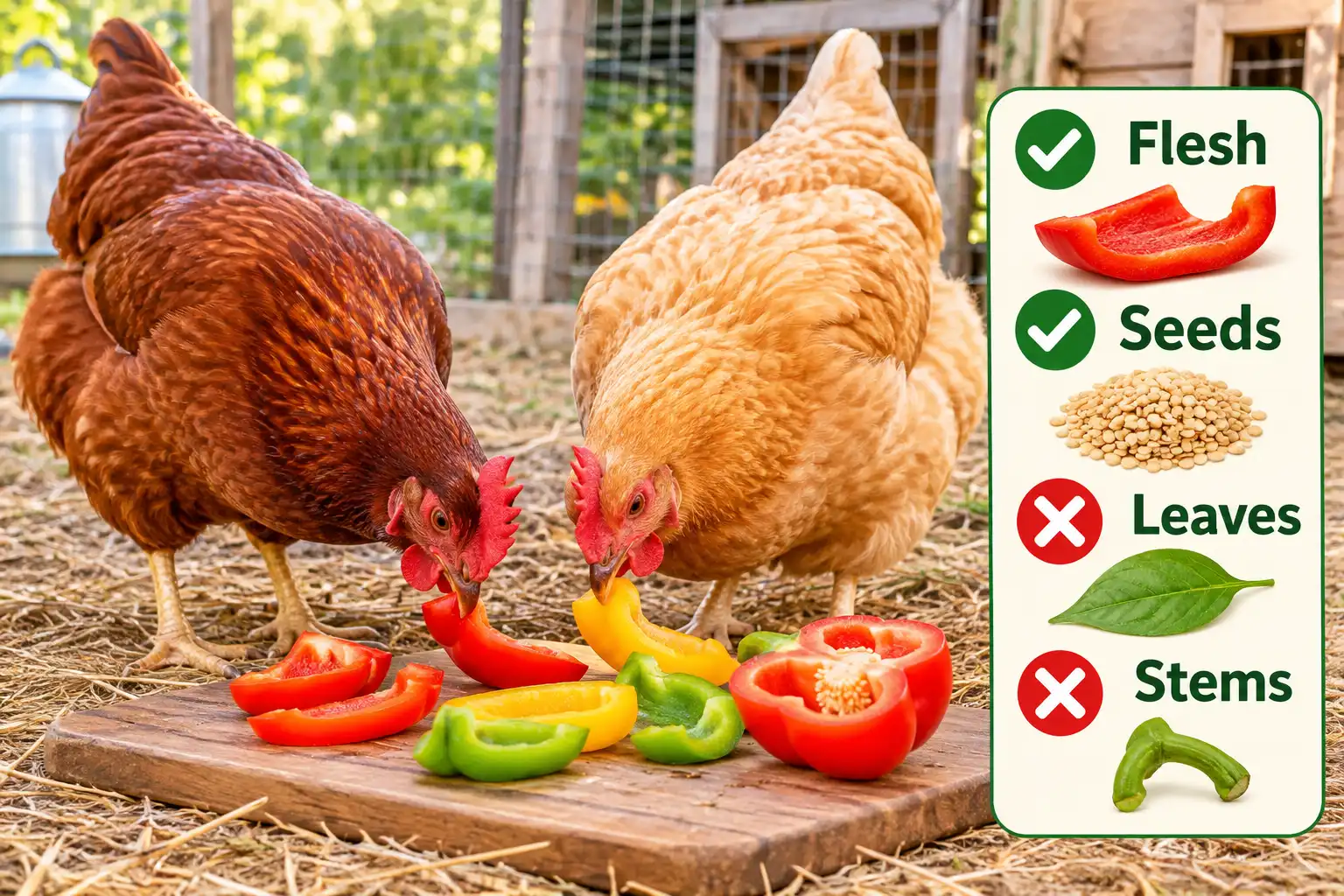
Red peppers are one of the safer kitchen scraps for a backyard flock. So can chickens eat red peppers raw, cooked, seeded, or hot? Mostly yes. The parts that need care are the plant, the portion, and the frying pan.
Yes, chickens can eat red peppers, seeds and all, raw or plainly cooked. Remove the leaves and stems. Then keep all treats combined under 10 to 15 percent of a laying hen’s daily food, per Oregon State University Extension.
Can Chickens Eat Red Peppers Safely?
Yes. The ripe fruit of a red bell pepper is safe for adult laying hens, and so are its seeds. The risk sits elsewhere on the plant.
UC ANR’s guide to feeding a backyard flock lists leaves from pepper plants among the foods to keep from chickens. Tomato, potato, and eggplant leaves are on that list too. The pepper fruit is not.
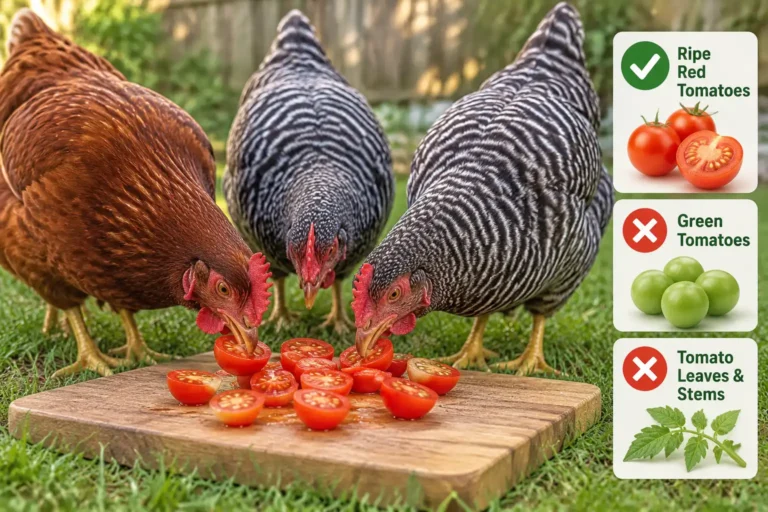
That pattern makes sense, because peppers belong to the nightshade family. So the rule matches the one for tomatoes, another nightshade crop: feed the ripe fruit, and keep the leafy plant away.
Here is how each part of a pepper sorts out for adult laying hens.
| Pepper part | Safe? | Why |
|---|---|---|
| Ripe flesh, any color | Yes | Not on UC ANR’s avoid list |
| Seeds | Yes | Soft, and wild birds eat and spread them |
| White core and ribs | Yes | Same tissue as the flesh |
| Stem and green cap | Trim off | Tough plant tissue, removed as a precaution |
| Leaves and vines | No | Listed by UC ANR as a food to avoid |
| Moldy or rotting pepper | No | Rotting scraps can cause botulism, per the University of Kentucky |
Red, Green, and Yellow Peppers Compared
All three colors are safe. But they are not the same food. Green bell peppers are unripe, while red and yellow ones are ripe, and ripening changes the nutrients.
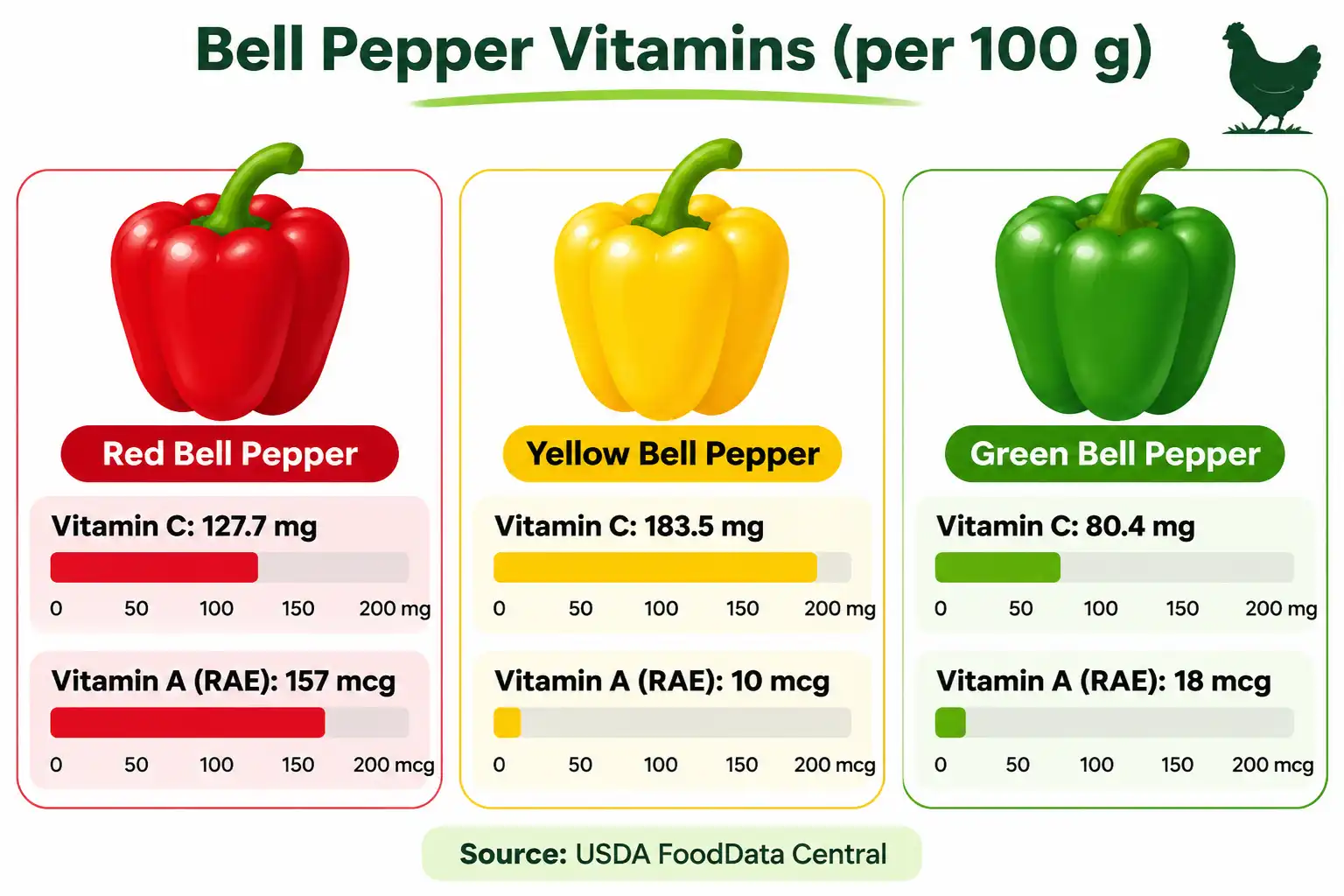
USDA FoodData Central gives these figures for raw sweet peppers, per 3.5 ounces (100 grams):
| Raw sweet pepper | Vitamin C | Vitamin A (RAE) | Calories |
|---|---|---|---|
| Red | 127.7 mg | 157 mcg | 31 |
| Yellow | 183.5 mg | 10 mcg | 27 |
| Green | 80.4 mg | 18 mcg | 20 |
Can chickens eat green peppers?
Yes. Green bell peppers are safe for laying hens under the same rules as red ones. They carry the least vitamin A and the fewest calories of the three, per USDA figures.
Can chickens eat red bell peppers?
Yes, and red is the richest of the three in vitamin A. Red peppers also carry red carotenoid pigments, the compounds researchers have studied for egg yolk color.
Can chickens eat red and yellow peppers together?
Yes. Mixing colors is fine, because the safety rules are identical. Yellow peppers lead on vitamin C and red ones on vitamin A. So a mix adds variety without changing the portion limit.
What a Pepper Actually Gives a Hen
Less than the vitamin C numbers suggest. Chickens, unlike people, make their own vitamin C in their kidneys. So the headline nutrient in a pepper matters far less to a hen than to you.
The vitamin A side counts for more, since chickens turn plant carotenes into vitamin A. Still, a complete ration already supplies vitamin A, plus the protein and calcium a laying hen needs. Oregon State University Extension puts layer feed at about 16 percent protein and 3 to 4 percent calcium. Peppers bring almost none of either.
Peppers are also mostly water, at roughly 92 to 94 percent by weight in USDA data. That makes them a light snack on a hot day. But it also means a large serving fills a hen’s crop without feeding her much.
So treat peppers as variety and enrichment. A complete layer ration does the nutritional work.
Do Red Peppers Change Egg Yolk Color?
They can, but the research used concentrated extracts rather than fresh peppers. In a 1990 Poultry Science paper, North Carolina State researchers fed laying hens red pepper oleoresin. The hens deposited its red carotenoids in their yolks. But the researchers mixed that extract into the feed itself.
A few slices of fresh pepper are a far smaller and wetter source. No extension trial has measured what fresh bell pepper treats do to yolk color in a backyard flock. So any change is likely small, and it remains unmeasured.
Greens may matter more. Oregon State University Extension notes that greens help keep yolks a deep orange. For that reason, pasture and leafy scraps probably do more for yolk color than a pepper treat does.
Can Chickens Eat Hot Peppers?
Yes. Chickens don’t feel the burn of hot peppers.
Capsaicin, the compound behind a jalapeño’s heat, acts on a pain receptor called TRPV1. Sven-Eric Jordt and David Julius of UC San Francisco studied that receptor in a 2002 paper in the journal Cell. They found the chicken version is insensitive to capsaicin. It still responds to heat and acid, though, so hens still feel a hot surface.
That trait explains why wild birds eat chili peppers and spread the seeds, the researchers note. So jalapeño, cayenne, or habanero scraps won’t hurt a hen’s mouth.
Even so, keep three limits:
- Hot peppers count toward the same treat ceiling as bell peppers.
- Skip chili powder, hot sauce, and seasoning blends, which often carry salt, garlic, and oil.
- Wear gloves when you cut hot peppers, and keep the juice away from your eyes.
Do hot peppers make eggs spicy? Published research on whether capsaicin reaches the egg is thin. The same goes for claims that hot peppers boost laying or fight disease. Treat all of them as unproven.
Pepper Seeds, Cores, Stems, and Leaves
Seeds and cores: feed them. Pepper seeds are soft, and wild birds eat them freely, per the Cell study. You don’t need to scoop them out.
Stem and cap: trim them off. The stem is tough and woody. It’s also part of the plant rather than the fruit. Since UC ANR lists pepper leaves as a food to avoid, cutting off the stem is a sensible precaution.
Leaves and vines: keep them out of the run. This is the one firm “no” on the plant. So garden cleanup piles of pepper, tomato, potato, or eggplant vines belong on the compost heap, not over the run fence.
For the rest of the short list, see the guide to foods to keep away from your flock.

Raw, Cooked, Frozen, or Pickled Peppers
Raw: the best choice. Raw pepper needs nothing more than a rinse and a trim.
Plain cooked: fine. Steamed, boiled, or roasted pepper with no oil or seasoning is safe for laying hens.
Sautéed or fried: skip it. USDA FoodData Central lists sautéed red pepper at about 13 grams of fat per 3.5 ounces, compared with 0.3 grams raw. UC ANR advises avoiding fatty foods, because chickens don’t need much fat.
Frozen: fine if plain. Frozen pepper strips with nothing added are the same food as fresh.
Pickled, jarred, stuffed, or fajita leftovers: skip them. These carry brine, oil, cheese, onions, or seasoning that doesn’t belong in a hen’s diet.
How Much Red Pepper Is Safe for Your Flock?
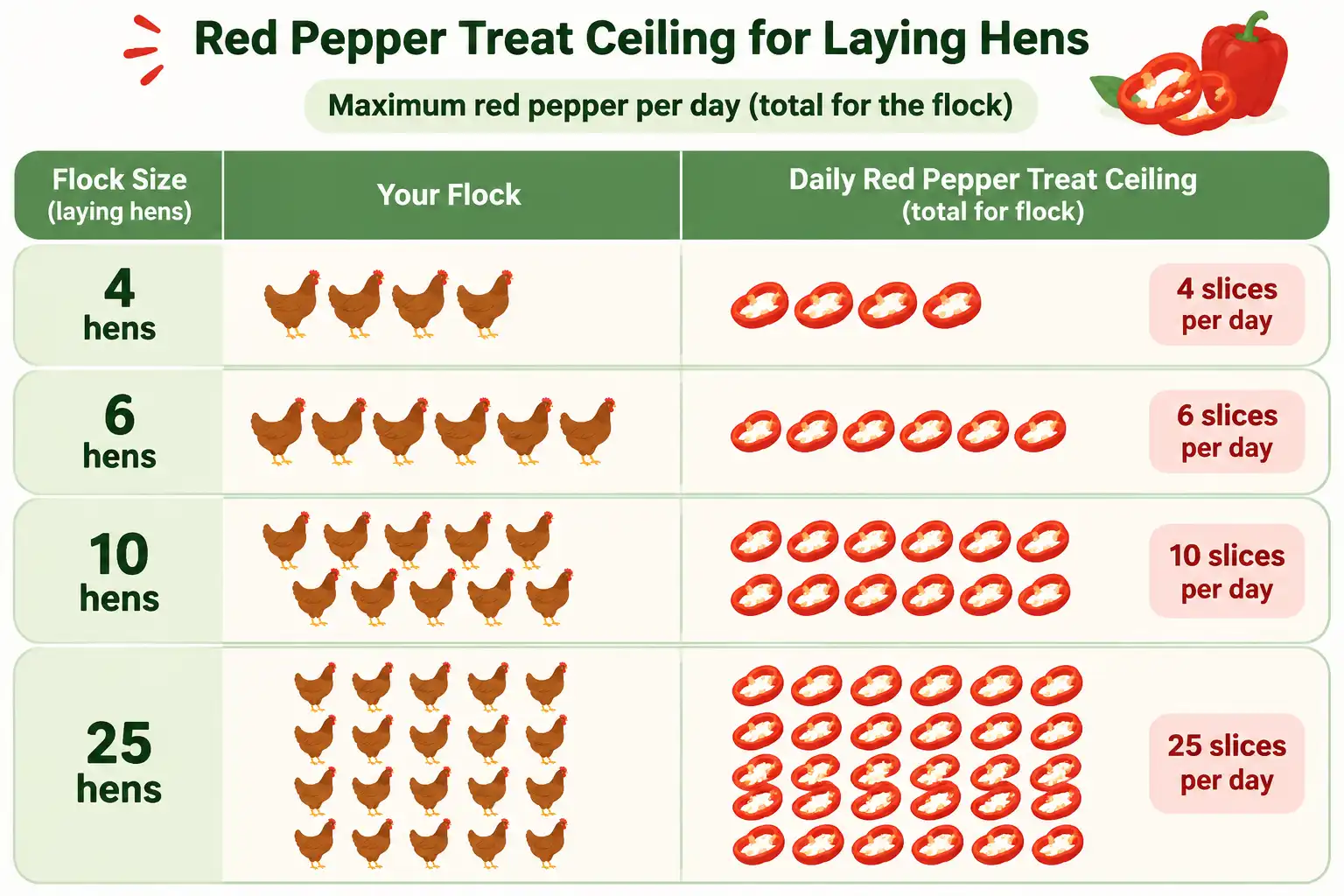
About one medium bell pepper a day covers the full treat allowance for 5 to 10 laying hens. Here is the working.
Oregon State University Extension limits scratch to about 10 to 15 percent of total daily food. It holds table scraps to the same limit. Meanwhile, the University of Kentucky lists layer feed use at 18 to 24 pounds per 10 laying hens per week.
So 10 laying hens get roughly 1.8 to 3.6 pounds of treats a week. That works out to about 0.4 to 0.8 ounce per hen per day. A medium bell pepper weighs about 4.2 ounces (119 grams), per USDA.
| Laying hens | Daily treat ceiling | Medium peppers a day, if peppers are the only treat |
|---|---|---|
| 4 | 1.6 to 3.3 oz | 0.4 to 0.8 |
| 6 | 2.5 to 4.9 oz | 0.6 to 1.2 |
| 10 | 4.1 to 8.2 oz | 1 to 2 |
| 25 | 10.3 to 20.5 oz | 2.4 to 4.9 |
Three adjustments apply:
- The ceiling covers every treat combined, so scratch, mealworms, and other scraps come out of the same allowance.
- Hens eat less in hot weather and more in cold, per the University of Kentucky. So the allowance shrinks in summer.
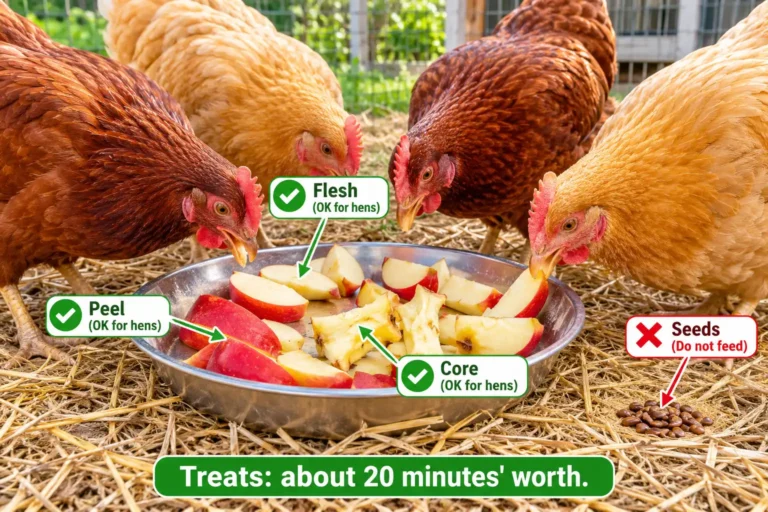
- Both extension services give a simpler test, too: offer no more than the flock finishes in about 20 minutes.
These are ceilings, not targets.
How to Serve Peppers to Chickens
- Rinse the pepper. Washing takes off surface dirt and residue.
- Trim the stem and cap. Leave the seeds and the core in place.
- Cut it to size. Halves or strips suit standard-size hens. Dice the pieces smaller for bantams.
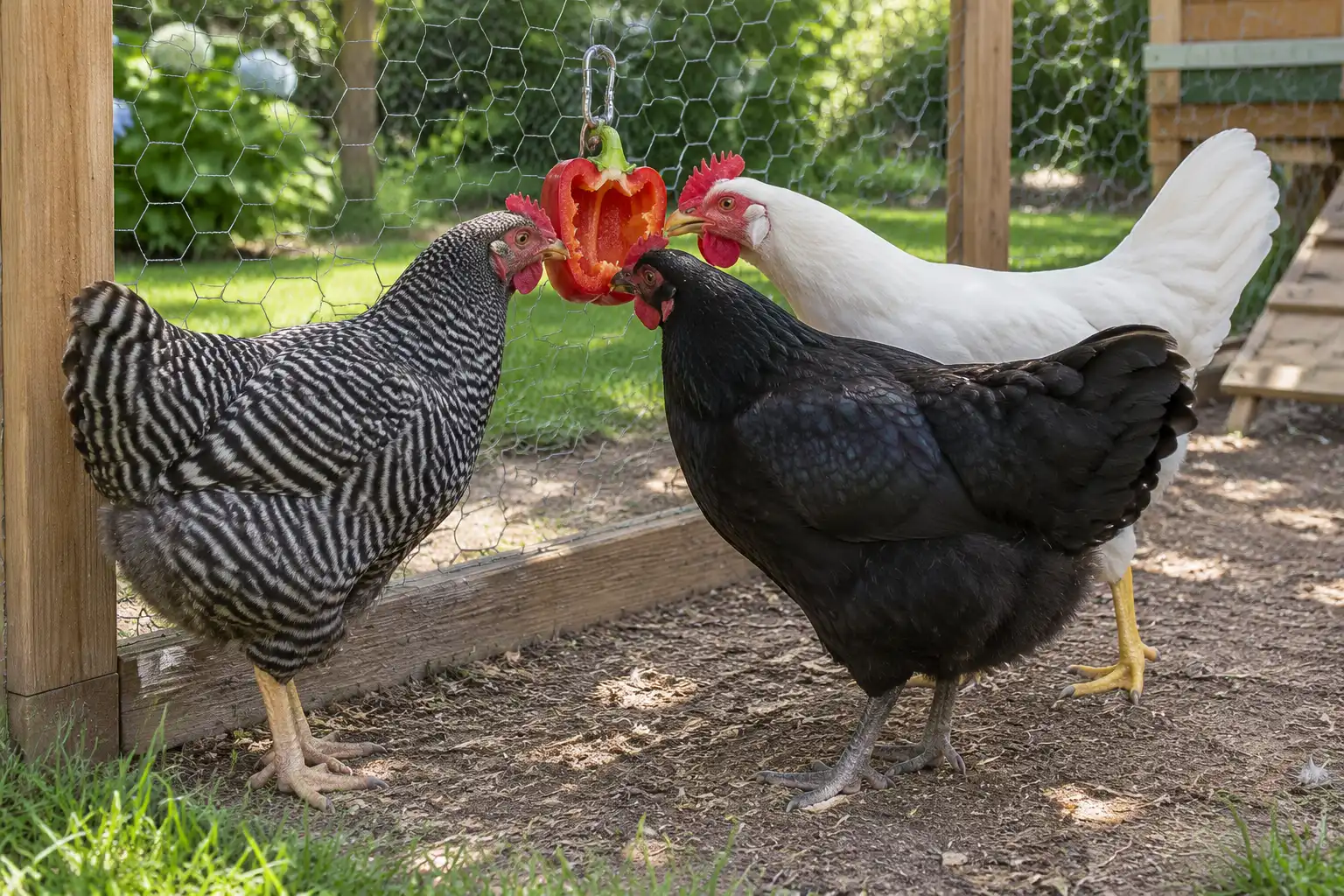
- Scatter it or hang it. Spreading pieces across the run gives lower-ranked hens a share. Meanwhile, a halved pepper on a clip keeps the flock busy longer.
- Offer it after the layer feed. Later in the day works well, so treats don’t crowd out the ration.
- Pick up leftovers the same day. The University of Kentucky warns that scraps left to rot can lead to botulism. If a hen turns weak or unsteady after eating spoiled food, call a poultry veterinarian or your state diagnostic lab that day.
- Keep grit on hand. UC ANR notes that hens on pellets alone don’t need grit, but grit helps grind other foods. So once scraps are routine, offer insoluble grit separately. Oyster shell doesn’t count, because the University of Kentucky calls it too soft to grind.
Chicks, Pullets, and Broilers
Chicks. Chick starter carries a chick’s whole diet, so peppers add little. If you want to offer a taste, wait until after the first week. UC ANR says chicks not on complete pellets can start grit after that point. So add grit alongside any treat. Keep the pieces tiny and rare.
Pullets. Growing pullets can have small amounts. Even so, their grower ration matters far more than treats while they build toward laying.
Broilers. Fast-growing broilers such as Cornish Cross gain weight fast on formulated broiler feed over a short grow-out. Treats only dilute that ration, so peppers add little for meat birds.
Pepper Plants and Free-Range Hens
Free-range hens will peck through a pepper patch. The ripe fruit is fine, but the leaves are the problem, per UC ANR. So a few habits help:
- Fence pepper beds during the growing season, or let hens into the garden only after you pull the plants.
- Put spent pepper vines on the compost heap, not over the run fence.
- Pick up fallen, half-rotten peppers, because they count as spoiled scraps.
For other garden plants and scraps, the foraging and treats guide covers what fits a laying flock.
When Pepper Treats Cause Problems
Fewer eggs after weeks of generous treats. The University of Kentucky notes that too many table scraps and greens can hurt egg production. So cut treats back to the ceiling above.
Thinner shells. Hens that fill up on scraps eat less layer feed. That feed carries the 3 to 4 percent calcium that Oregon State University Extension ties to strong shells. Trim the treats first.
Hens ignore the pepper. Some flocks take time to accept a new food. Try smaller pieces, or mix them with a treat the hens already know.
Bullying at treat time. Scatter pieces widely, so every hen gets a chance.
Leftovers in the run. Remove them by evening, before they spoil.
FAQs About Chickens Eat Red Peppers
Can chickens eat red pepper seeds?
Yes, chickens can eat red pepper seeds, so don’t bother removing them. Birds eat and spread pepper seeds in the wild, and researchers writing in Cell link this to birds’ insensitivity to capsaicin.
Can chickens eat roasted red peppers from a jar?
No, skip jarred roasted peppers, because the brine, oil, and seasonings don’t belong in a hen’s diet. Roast a plain pepper yourself without oil instead, and it’s as safe as raw.
How often can I give my hens peppers?
You can offer peppers daily if all treats together stay within the daily ceiling. For 10 laying hens, that’s roughly one to two medium peppers a day when peppers are the only treat.
Are pepper plant leaves poisonous to chickens?
Treat them as unsafe and keep them out of the run. UC ANR lists leaves from pepper plants, along with tomato, potato, and eggplant leaves, among foods to avoid feeding chickens.
Do red peppers make chickens lay more eggs?
No published extension trial shows that fresh peppers raise egg numbers. Studies that added red pepper extracts to hen feed focused on yolk color, and too many treats of any kind can lower production.
Can chickens eat banana peppers or sweet mini peppers?
Yes, banana peppers, sweet mini peppers, and other mild types follow the same rules as bell peppers. Feed the flesh and seeds, trim the stem, and count them toward the daily treat ceiling.
Key Points for Your Flock
Red, yellow, and green peppers are all safe for laying hens, and so are their seeds. Trim the stem, keep leaves and vines out of the run, and skip anything cooked in oil or brine. Hot peppers won’t burn a hen’s mouth. Keep every treat within the daily ceiling, about one medium pepper for 5 to 10 hens, and let layer feed carry the nutrition. If you’d rather buy treats than save scraps, the page on packaged feed and treats covers what to check on the label.