What Can Chickens Not Eat: 17 Foods, Feeds, and Hazards to Avoid
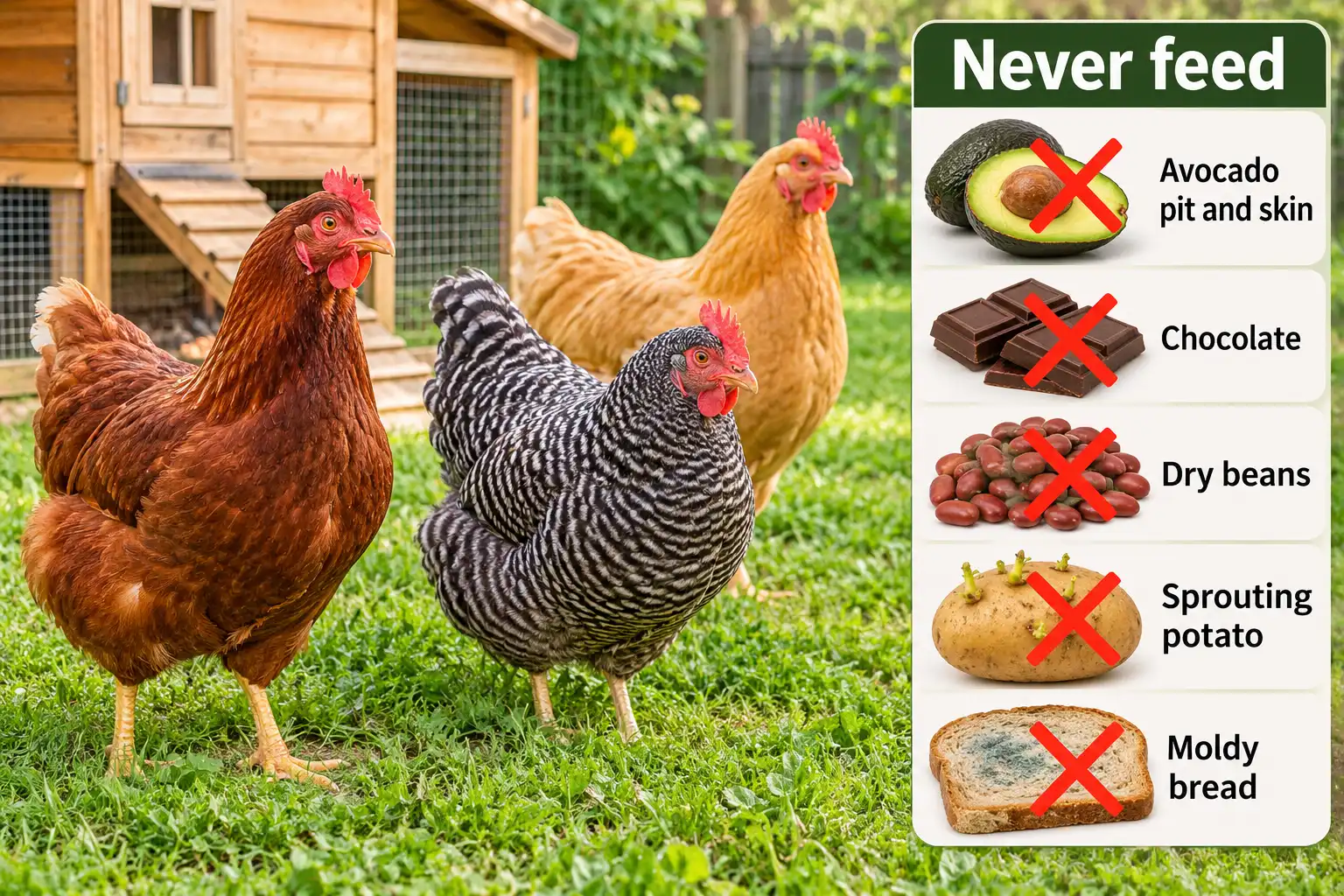
Most kitchen scraps are fine for a backyard flock. A short list, though, can sicken or kill birds. Knowing what not to feed chickens comes down to a few natural toxins, spoiled food, too much salt, and feed made for a different age.
What not to feed chickens: raw or dry beans, avocado skin and pits, chocolate, coffee, alcohol, green potato peels, moldy food, and salty leftovers. Keep treats under 10 percent of a backyard flock’s diet, and never give chicks layer feed.
What Not to Feed Chickens, A to Z
UF/IFAS Extension and NC State Extension flag the same core foods, so the table puts them in one place. Each row names the part that causes harm and a safer swap.
| Food or item | What causes the harm | Do this instead | Source |
|---|---|---|---|
| Alcohol | Toxic; can cause disorientation and respiratory failure | No drinks or heavily fermented food | UF/IFAS |
| Apple seeds, fruit pits | Release cyanide when crushed or chewed | Feed the flesh, remove seeds and pits | UF/IFAS |
| Avocado skin, pit, leaves | Persin | Skip avocado entirely | UF/IFAS, NC State |
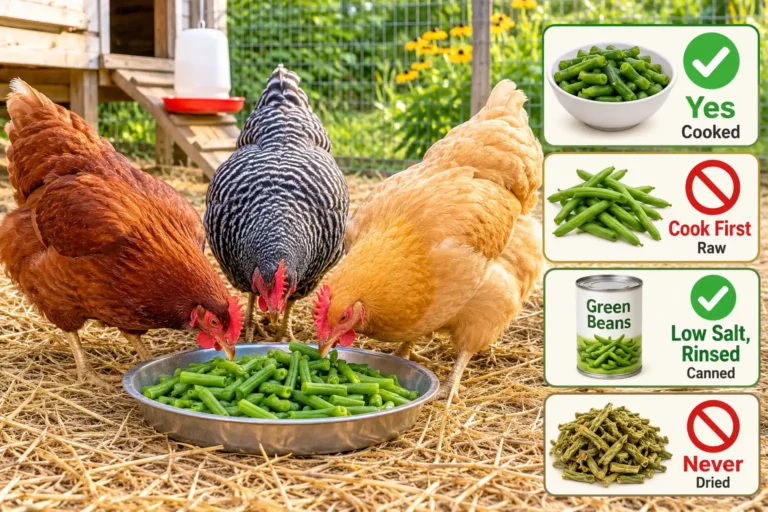
| Beans, raw or dry | Phytohemagglutinin (PHA) | Cooked beans only | UF/IFAS |
| Chocolate | Theobromine and caffeine | Keep all chocolate away | UF/IFAS, NC State |
| Coffee grounds, tea bags, energy drinks | Caffeine | Compost away from the run | UF/IFAS |
| Garden pesticides, granular baits | Granules attract chickens | Keep birds off until it dries or settles | NC State |
| Grass clippings, long stringy grass | Poorly digestible; linked to impacted crop | Mow short, rake clippings away | UMD |
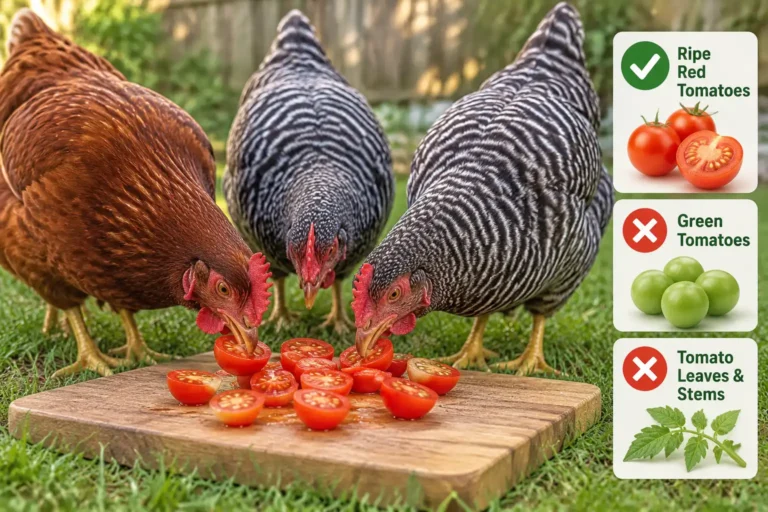
| Green or sprouting potatoes and peels | Solanine | Plain cooked potato only (sources differ) | UF/IFAS, NC State |
| Household chemicals, fuel | Poisoning | Store sealed, out of reach | NC State |
| Layer feed for chicks and young pullets | Too much calcium for growing birds | Starter, then grower or developer feed | UF/IFAS, Mississippi State |
| Moldy or rotten food and feed | Mold toxins such as aflatoxin | Compost it | UF/IFAS, UGA |
| Onions, large amounts | Can damage red blood cells | Small amounts, not daily | UF/IFAS |
| Salty food | Dehydration, kidney damage, fewer eggs | Unsalted scraps | UF/IFAS |
| Scratch or scraps as the main diet | Unbalanced diet | Complete feed first | UF/IFAS, Mississippi State |
| String, plastic, newspaper | Indigestible | Keep the run tidy | UMD |
| Tobacco leaf and stem | Toxic plant | Keep butts and plants out of the run | NC State |
This list covers the hazards. For the other side of the menu, see the treats and forage chickens can safely eat.

Why Raw Beans, Avocado, and Chocolate Top Every List
These foods carry natural toxins, and a small amount can do harm.
Raw or dry beans
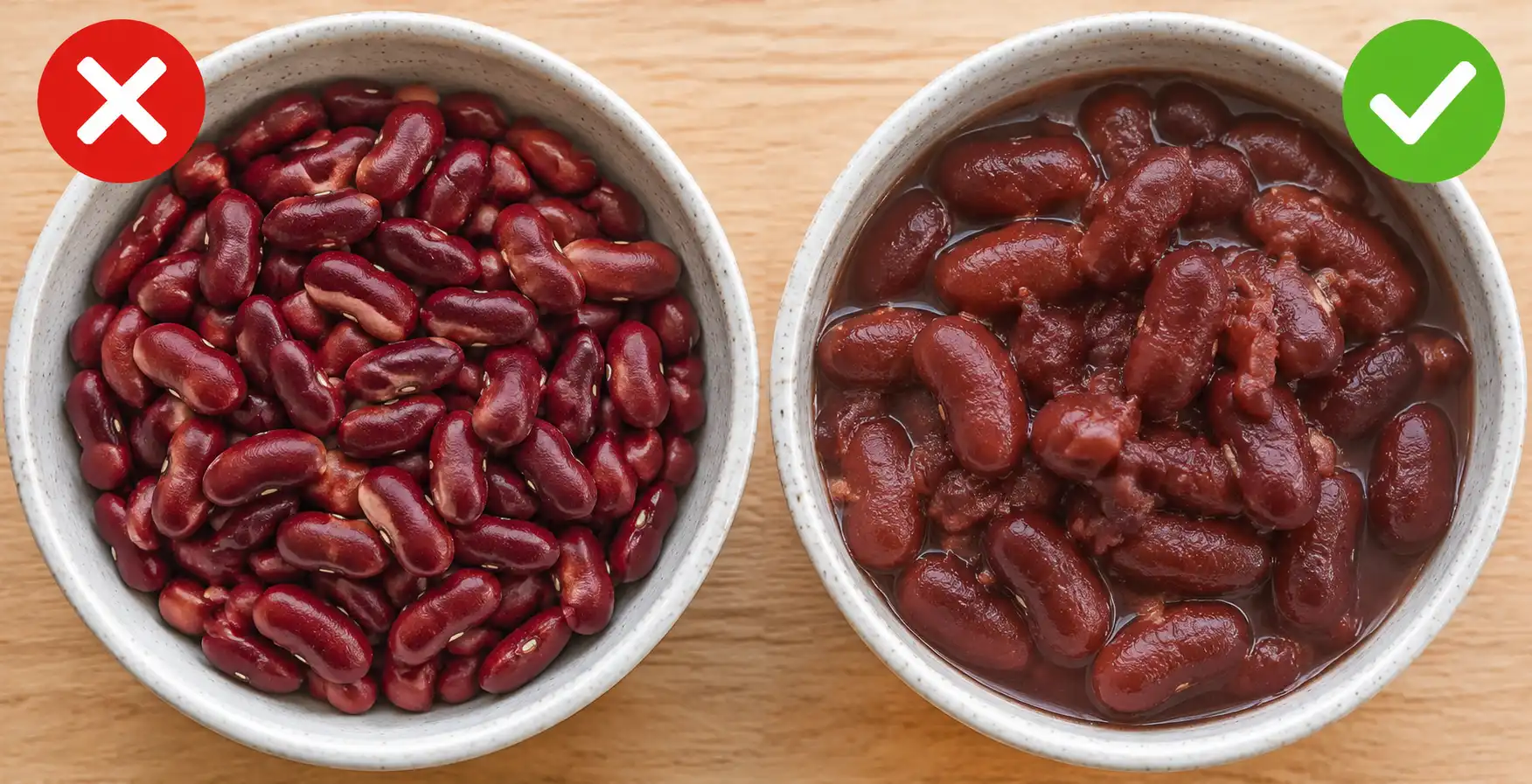
UF/IFAS Extension warns that uncooked beans can be deadly to chickens because they contain phytohemagglutinin (PHA). Cooked beans are generally safe, the same source notes. So cook dry beans fully before they reach the scrap bowl. Never scatter dry beans in the run.
Avocado
Persin sits mostly in the skin, pit, and leaves, per UF/IFAS Extension. It can cause breathing trouble, weakness, and heart problems. The flesh carries less, but UF/IFAS still advises leaving it out. NC State Extension also lists avocado among foods to keep from a flock. If an avocado tree grows near the run, rake up fallen leaves and fruit.
Chocolate, coffee, and tea
Chocolate contains theobromine and caffeine. UF/IFAS Extension says even small amounts can cause hyperactivity, seizures, heart problems, or death. Coffee grounds, tea bags, and energy drinks bring the same caffeine risk. Many households compost their grounds, so keep the compost bin closed or fenced off from free-ranging hens.
Moldy Food and Stale Feed
If food is too moldy for you to eat, it is too moldy for the flock, says UF/IFAS Extension. Mold can produce toxins that cause breathing trouble, digestive upset, or poisoning.
Stored feed spoils too. A University of Georgia Extension backyard flock tip notes that molds grow fast once feed moisture passes 13 to 14 percent. Some of those molds make aflatoxin, which harms poultry health and growth. Fat in feed also turns rancid faster above 85°F, per the same tip.
So buy only what the flock finishes while it is fresh. Mississippi State Extension puts an average laying hen at 1/4 to 1/3 pound of feed a day. Here is how long one 50-pound bag lasts for laying hens on feed alone:
| Laying hens | Feed per day | 50 lb bag lasts |
|---|---|---|
| 3 | 0.75 to 1 lb | 50 to 67 days |
| 6 | 1.5 to 2 lb | 25 to 33 days |
| 10 | 2.5 to 3.3 lb | 15 to 20 days |
Three hens can take two months to finish a bag. That is a long time in a hot shed, so a smaller bag often stays fresher.
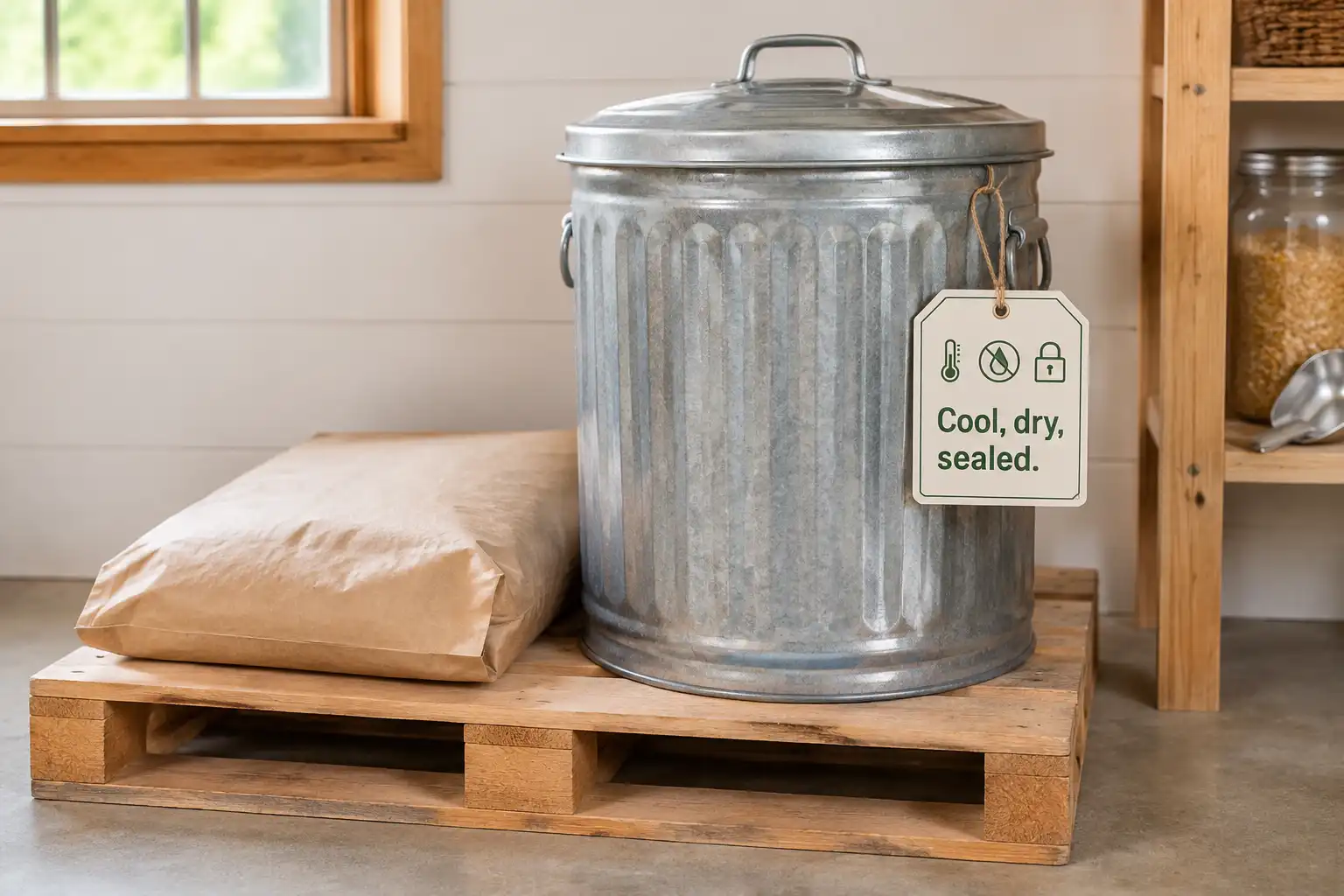
UGA Extension also advises keeping feed cool, folding opened bags shut, and storing them in a container with a tight lid. Put out a limited amount each day, because feed left for days can pull in moisture and mold. Feeders that limit waste and rodents help here too.
Potatoes, Onions, and Fruit Seeds: Where Sources Differ
These foods are not all or nothing. The part of the plant and the amount both matter.
Potatoes
Green or sprouting potatoes contain solanine, which can affect the nervous system, per UF/IFAS Extension. UF/IFAS says to avoid green peels and spoiled potatoes. Still, it calls plain cooked potatoes generally safe in moderation.
NC State Extension is stricter. It lists green potatoes and potato peelings as foods not to feed, with no exception for cooking. Both sources agree on the peel and the green parts. So the cautious choice is to skip peels and offer only plain, cooked, peeled potato as an occasional treat.
Onions
Large amounts of onion can damage red blood cells and may cause anemia, UF/IFAS Extension reports. Small amounts are usually harmless, the same source adds. Even so, onion should not be a regular item, and strong onion can change the taste of eggs.
Apple seeds and fruit pits
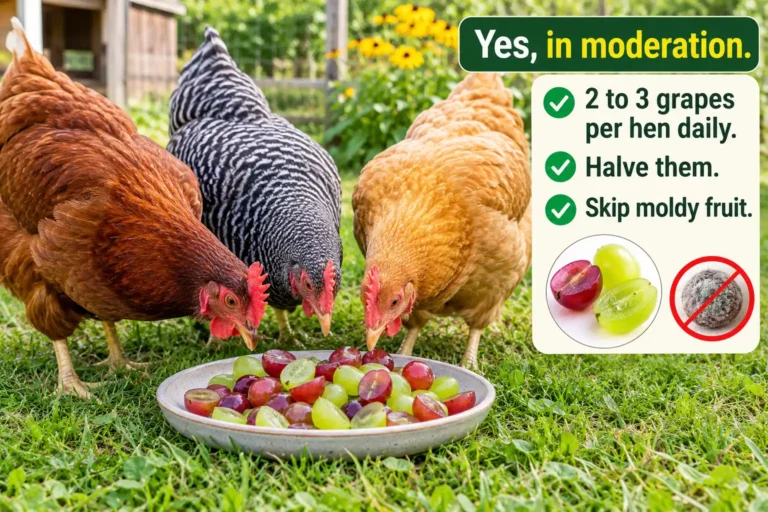
Seeds and pits from apples, peaches, cherries, and plums contain compounds that release cyanide when crushed or chewed, according to UF/IFAS. The fruit itself is fine. Core apples and pit stone fruit before the scraps go out.
Salty Leftovers and Alcohol
Excess salt can cause dehydration and kidney damage, according to UF/IFAS Extension. Its avoid list includes chips, fast food, canned foods, and heavily salted leftovers.
A second UF/IFAS publication, Factors Affecting Egg Production in Backyard Chicken Flocks, goes further. Birds need only a little salt, it says, but excessive amounts are highly toxic and reduce egg production. That is one more reason to keep salty scraps out of the bowl.
Alcohol belongs on the same list. UF/IFAS says chickens should never get alcoholic drinks or heavily fermented foods. Alcohol can cause disorientation, dehydration, respiratory failure, and death.
UF/IFAS sums up the scrap rule in one line: if food is spoiled, heavily processed, or questionable, leave it out. In practice, that rules out most plate leftovers cooked with salt, butter, or sauce.
The Wrong Feed for the Bird’s Age
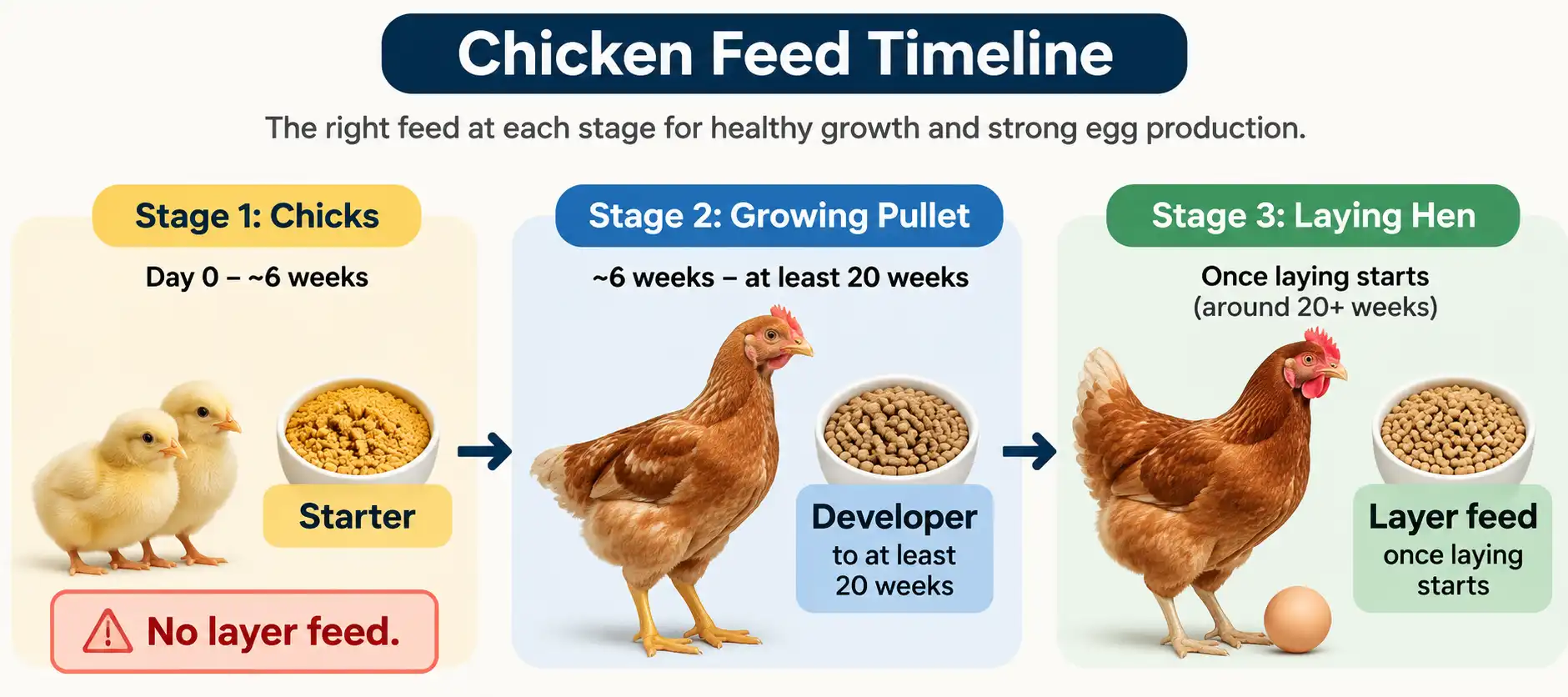
Layer feed is the most common feed mistake, and it hurts young birds. UF/IFAS Extension warns that a high-calcium layer diet unbalances calcium and phosphorus in young birds, which raises sickness and death rates.
Match the bag to the bird:
- Chicks need a higher-protein chick starter, per UF/IFAS Extension.
- Pullets and cockerels stay on a developer feed until at least 20 weeks of age, Mississippi State Extension advises.
- Laying hens move to a layer ration with added calcium once egg production starts, per the same source.
The details for each stage are in the guides to starter rations for young chicks and layer feed for laying hens.
In a mixed-age flock, a shared feeder puts layer feed in front of young birds. Ask your county extension office or feed supplier how to split feeding for each age group.
Medicated feeds are a separate case. Mississippi State Extension says to follow the label’s withdrawal periods before eating eggs or meat from treated birds. Whether a flock needs medicated feed at all is a question for your hatchery or poultry veterinarian.
Too Many Treats: The 10 Percent Limit
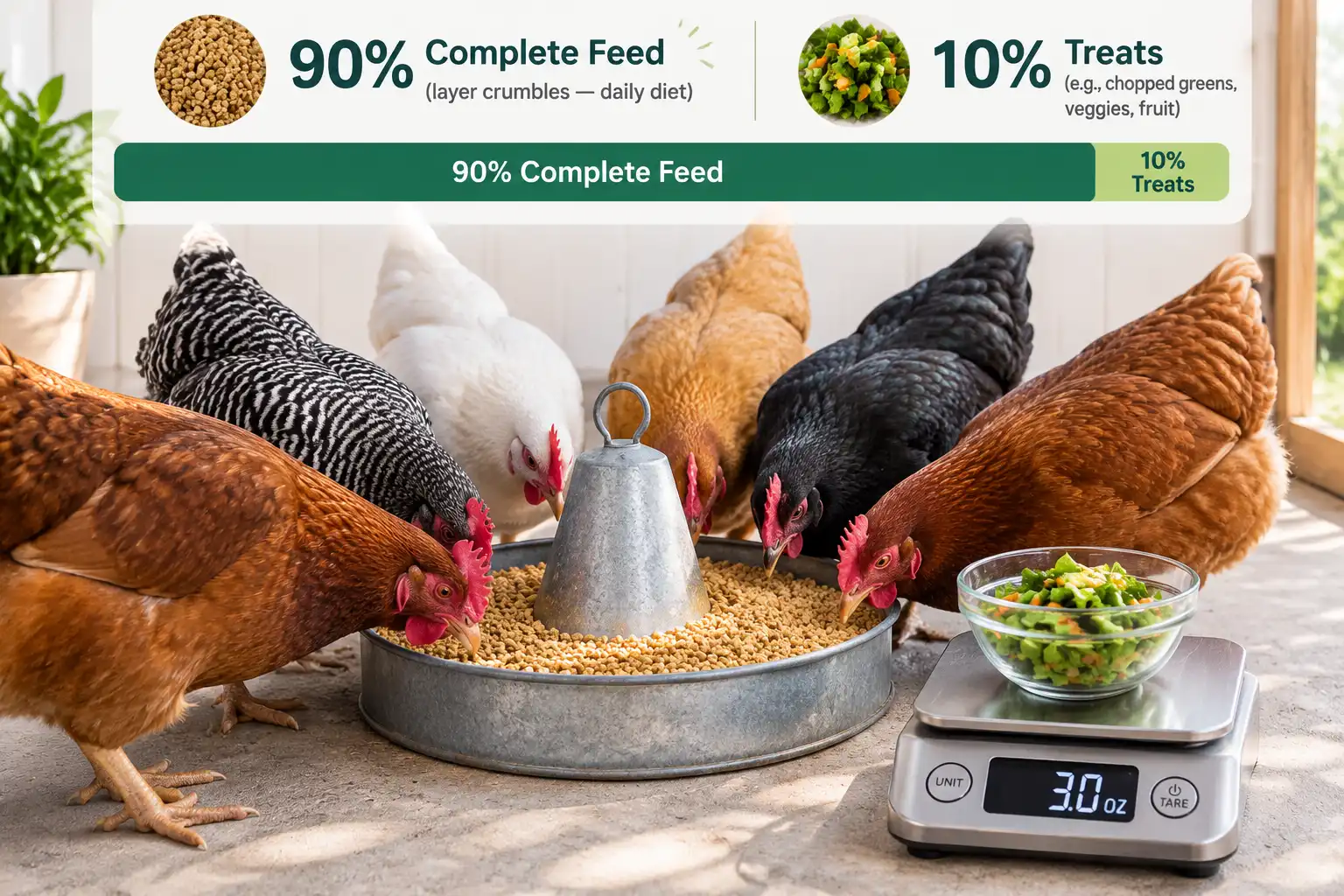
Even safe treats cause trouble in bulk. UF/IFAS Extension advises keeping treats under 10 percent of a flock’s diet. Hens that fill up on treats eat less balanced feed, which can cut egg production and harm health. Scratch counts as a treat, too. UF/IFAS warns that whole grains, scratch feeds, and table scraps leave a diet imbalanced and inadequate.
So what does 10 percent look like? Mississippi State Extension puts a laying hen at 1/4 to 1/3 pound of feed a day, or 4 to about 5.3 ounces. Ten percent of that is roughly 0.4 to 0.5 ounce of treats per hen per day.
| Laying hens | Treats per day | Treats per week |
|---|---|---|
| 1 | 0.4 to 0.5 oz | 2.8 to 3.7 oz |
| 6 | 2.4 to 3.2 oz | 17 to 22 oz (1 to 1.4 lb) |
| 10 | 4 to 5.3 oz | 28 to 37 oz (1.8 to 2.3 lb) |
Weigh the scrap bowl on a kitchen scale for a few days. Most people are surprised by how small the daily share is.
Treats also need grit. UF/IFAS notes that chickens without access to soil may go without it and then struggle to digest grains, seeds, and treats. A dish of poultry grit and oyster shell covers that gap.
Poisonous Plants in the Run and Yard
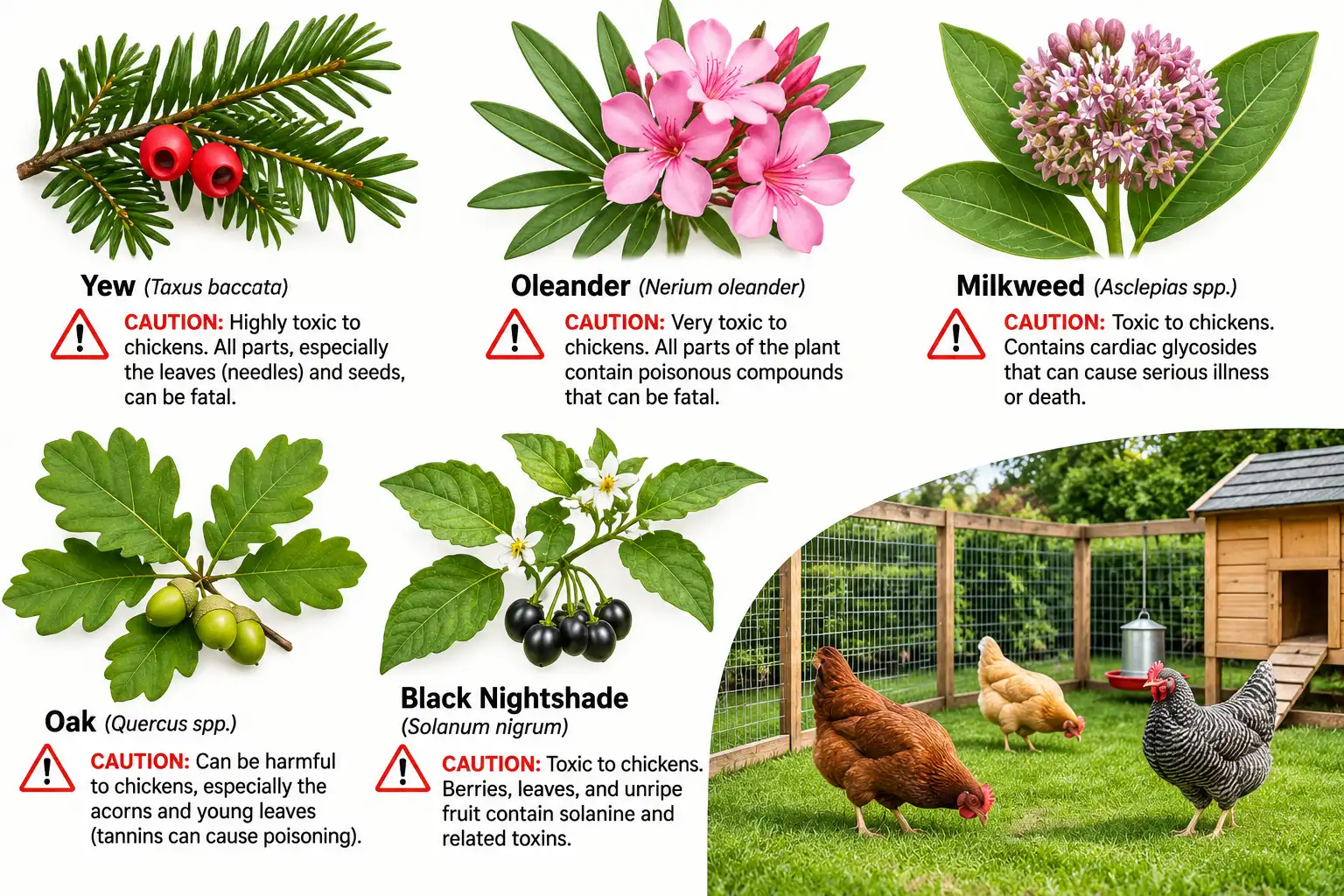
Free-ranging hens can find toxic plants on their own. NC State Extension lists these as toxic to poultry, with the part that causes harm:
- Yew, oleander, and yellow jasmine: all parts
- Milkweed: the whole plant
- Oak and black locust: leaves
- Nightshade and pokeberry: fruit
- Tobacco: leaf and stem
- Cassava: root
- Jimsonweed, hemlock, corn cockle, vetch, sweet pea, and rapeseed: seeds
Toxicity depends on how much a bird eats, NC State notes. A flock with a steady supply of quality feed and water is less likely to eat a lethal amount. Some poisonings cause signs before death. Others only lower egg production or growth.
The list is not complete, and plants vary by region. So walk the area before you let hens out, and pull or fence off anything on it. Your county extension office can identify plants you are unsure about.
Chemicals, Baits, and Things That Aren’t Food
NC State Extension lists household chemicals, cleaning supplies, fuels, and stored pesticides as flock hazards. Follow every pesticide label. Then keep birds and people off a treated area until the product dries or settles. Take extra care with small granular products, such as many fire ant baits, because chickens are often drawn to them.
Some items cause blockages instead of poisoning. University of Maryland Extension names newspaper, grass, feathers, string, and plastic as poorly digestible materials that can lead to an impacted crop. So mow the run short and rake long grass clippings away rather than tossing them in. After chores, pick up twine, bag strings, and plastic scraps.
What If a Hen Ate Something Toxic?
Call a poultry veterinarian, your county extension office, or your state veterinarian the same day. Poisoning and infectious disease can look alike, and only a veterinarian or a state diagnostic lab can tell them apart. Bag the suspect food or plant so they can see what the birds ate. Home treatment and any medication are the veterinarian’s call.
USDA APHIS lists signs of illness to report right away, including:
- Sudden deaths, or more deaths than usual
- Lack of energy or appetite
- Fewer eggs, or soft-shelled or misshapen eggs
- Stumbling, falling, or a twisted head and neck
- Swelling or purple color on the comb, wattles, or legs
- Greenish, watery diarrhea
These signs can point to avian influenza or another disease, even when a hen also got into the scraps. Report sick or dying birds to your state veterinarian or to USDA at 1-866-536-7593. This reflects USDA APHIS guidance as of November 2026. Meanwhile, keep the birds where they are and follow your backyard biosecurity routine so nothing spreads.
Where the Research Is Thin
Little published research measures how much of a given kitchen food harms a laying hen. Extension lists name foods with known toxins, such as PHA in raw beans and persin in avocado. None of the extension sources cited here give a safe or lethal amount for any of them.
Citrus is a good example of the gap. Many online lists ban it, yet none of the extension sources cited here name citrus as toxic. We found no extension guidance to support a firm rule either way, so feed it sparingly or skip it.
Plant lists have the same limit. NC State’s list covers one region, and the source itself says it is incomplete. When a food or plant is unclear, the safe default is to leave it out.
FAQs on What Not to Feed Chickens
Can chickens eat avocado flesh?
It is best to skip it. UF/IFAS Extension says persin concentrates in avocado skin, pit, and leaves, and although the flesh carries less, it still advises keeping avocado out of the flock’s diet.
Are cooked beans safe for chickens?
Yes, fully cooked beans are generally safe, according to UF/IFAS Extension. The danger is phytohemagglutinin in raw or dry beans, so never scatter uncooked beans in the run or mix them into scraps.
Can chickens eat potato peels?
Skip raw and green peels. UF/IFAS Extension calls plain cooked potatoes generally safe in moderation, but NC State Extension lists potato peelings among foods not to feed, so peeled, cooked potato is the cautious choice.
Can I feed chickens kitchen scraps every day?
Yes, as long as scraps stay under 10 percent of a laying flock’s diet and skip salty, moldy, or toxic foods. For six laying hens, that is about 2.4 to 3.2 ounces daily, based on Mississippi State figures.
Is it bad if chicks eat layer feed?
Yes, it can be. UF/IFAS Extension warns that high-calcium layer feed unbalances calcium and phosphorus in young birds, so keep chicks on starter and pullets on developer feed until laying begins.
Can chickens eat coffee grounds?
No. UF/IFAS Extension lists coffee grounds, tea bags, and energy drinks as dangerous because caffeine affects the heart and nervous system and can be fatal, so keep compost with grounds closed off from hens.
Do chickens avoid poisonous plants on their own?
Not reliably. NC State Extension notes that flocks with steady feed and water are less likely to eat a lethal amount, but free-ranging hens can still sample yew, oleander, milkweed, or nightshade.
Key Points for Your Flock
Keep raw beans, avocado, chocolate, caffeine, alcohol, green potatoes, and moldy or salty food out of the scrap bowl. Feed the right complete ration for each age, and hold treats under 10 percent of a laying flock’s diet. Before hens free-range, walk the yard for toxic plants and stray chemicals.
If birds sicken or die suddenly, call your veterinarian or state veterinarian the same day, or USDA at 1-866-536-7593.