Can Chickens Eat Tomatoes? What’s Safe, What Isn’t, and How Much
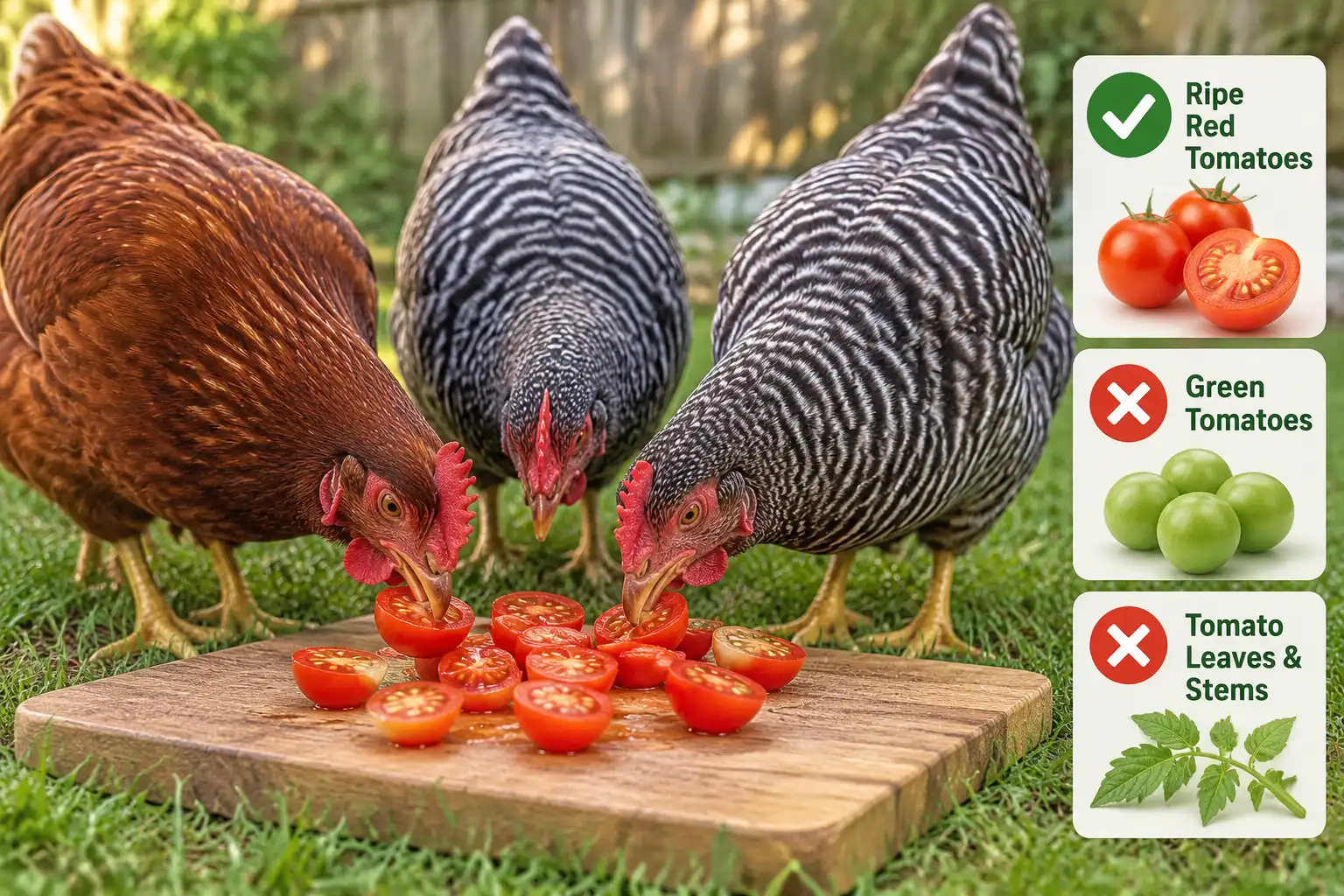
Chickens can eat tomatoes, as long as the fruit is ripe. Green fruit, leaves, stems, and vines are a different matter. Below: why the plant is the problem, how much tomato fits a flock’s diet, and how sweet potatoes and other kitchen scraps compare.
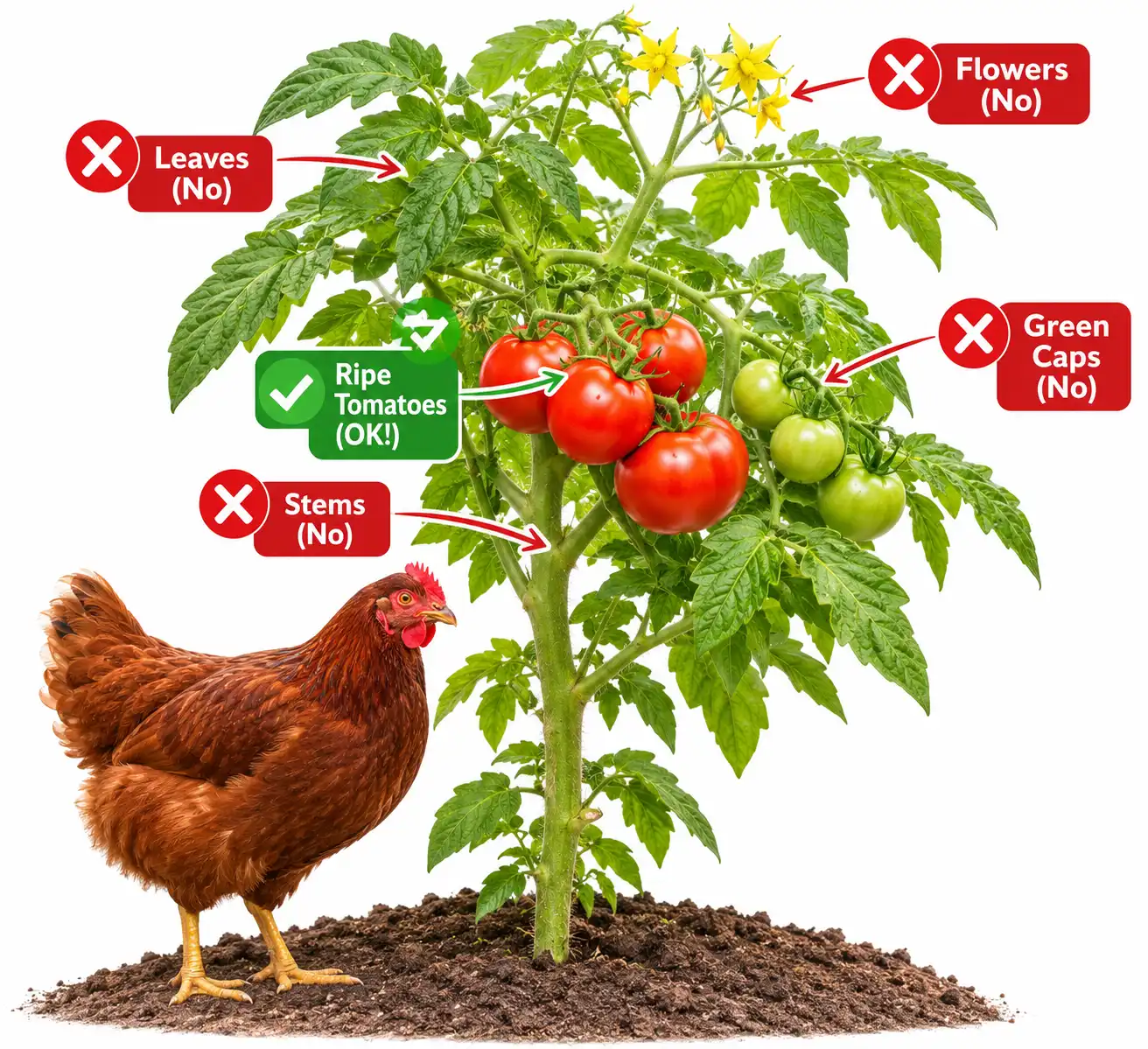
Yes, chickens can eat ripe tomatoes, including cherry tomatoes, as an occasional treat. Keep out green tomatoes, leaves, stems, flowers, and vines. They carry far more tomatine, a natural plant toxin, and frying or microwaving does not lower it.
Can Chickens Eat Tomatoes Safely?
Yes, ripe tomato fruit is a safe treat for chickens. The flock feeding guidance from UC Davis and UC Cooperative Extension lists tomato leaves and nightshade plants among foods to avoid. It does not list ripe tomato fruit. Likewise, UF/IFAS Extension’s list of 10 foods never to feed chickens leaves tomatoes off entirely.
So the fruit isn’t the worry. The plant it grows on is.
Ripe tomatoes are mostly water, which makes them a cooling summer snack. Still, a tomato is not a balanced ration. UC Cooperative Extension warns that scraps can cause nutritional problems when they crowd out a hen’s complete layer feed. That’s why tomato stays a treat.
Why the Tomato Plant Is the Problem
The plant’s defense chemical is tomatine. Tomato plants make it, likely to fend off insects and other pests, according to USDA Agricultural Research Service work on tomatine by Friedman and Levin.
Many guides call it solanine. That’s close, but not exact. Solanine is the potato’s main glycoalkaloid, and tomatine is the tomato’s. Both belong to the same family of plant toxins.
What matters is where the tomatine sits. The USDA ARS team measured it across the plant, in milligrams per 100 grams of fresh weight:
| Tomato part | Tomatine (mg per 100 g) | For chickens |
|---|---|---|
| Leaves, stems, flowers, roots, green cap (calyx) | 14 to 130 | Keep out |
| Green tomatoes, fresh, pickled, or fried | 0.9 to 55 | Keep out |
| Ripe red tomatoes | 0.03 to 0.08 | Treat |
In other words, the low end for leaves is about 175 times the high end for ripe red fruit. So the fruit gets a yes, and the foliage gets a no.
The research is thin on one point. We found no published study that sets a harmful amount of tomatine for chickens. As a result, the practical rule is to keep green parts out entirely rather than ration them.
Can Chickens Eat Green Tomatoes?
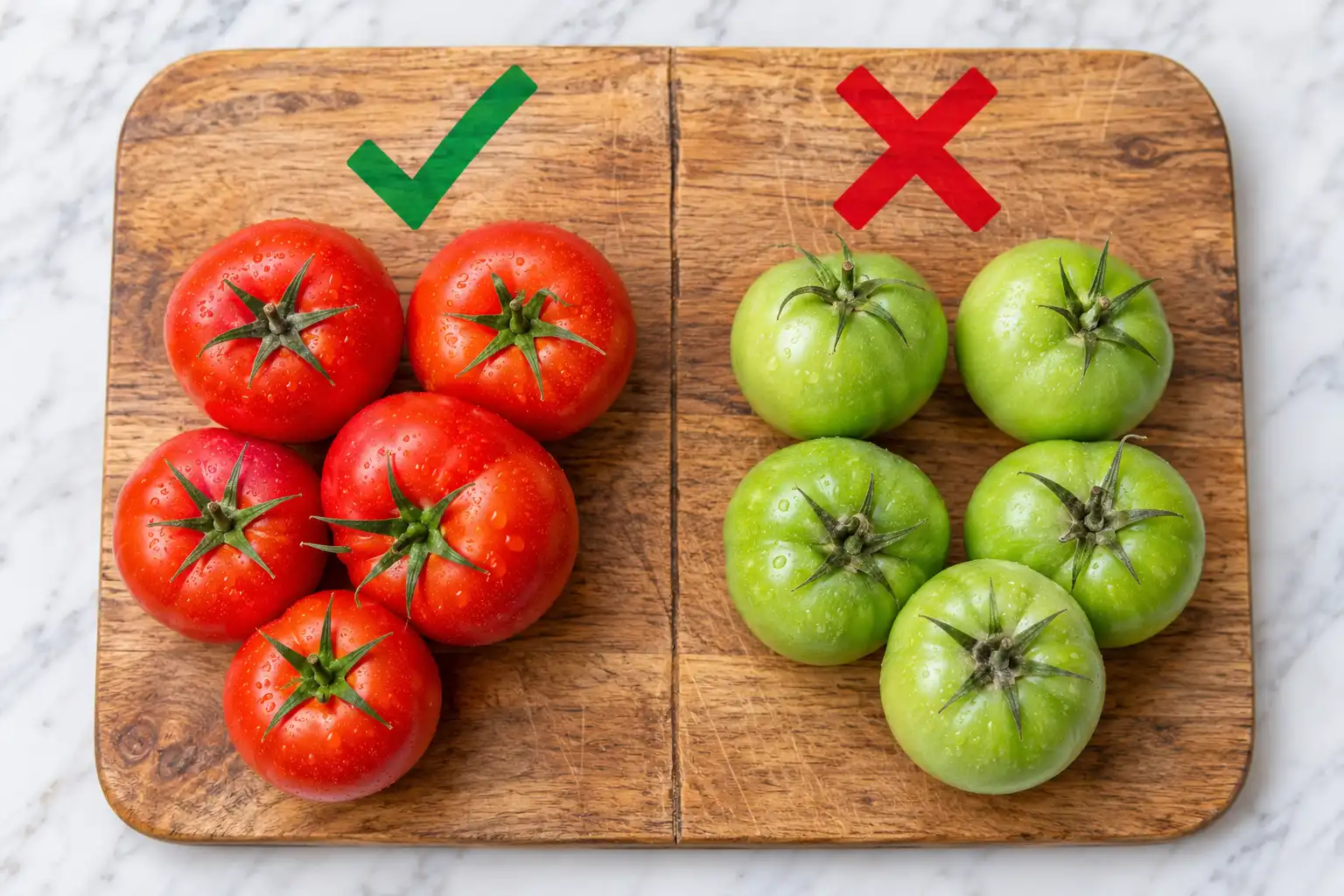
No. Unripe green tomatoes belong in the compost, not the run. USDA ARS measured 0.9 to 55 mg of tomatine per 100 g in fresh and processed green tomatoes. Ripe red fruit tested at only 0.03 to 0.08 mg.
Cooking doesn’t fix that. In the same work, microwaving and frying did not significantly lower tomatine. So leftover fried green tomatoes stay out too. They also carry oil and salt. UC Cooperative Extension advises against fatty foods, and UF/IFAS Extension flags salty ones.
Ripening is what brings tomatine down. For that reason, wait until the fruit is fully colored, with no green shoulders.
Green-when-ripe heirlooms, such as Green Zebra, are a gray area. Tomatine data on these varieties is limited. If you can’t tell whether a green fruit is ripe, leave it out.
Can Chickens Eat Cherry Tomatoes?
Yes. Ripe cherry and grape tomatoes are as safe as full-size ones. The same rules apply, with one extra step: pull off the little green cap and stem. USDA ARS grouped the calyx, that green cap, with leaves and stems as the highest-tomatine parts.
Next, halve them. That way several hens can share, and one bird can’t run off with a whole tomato. For bantams, quarter them.
Ripe yellow, orange, and dark cherry varieties follow the same rule. Fully colored is fine. Green is not.
Finally, count cherry tomatoes toward the daily treat total below. They’re small, so a handful adds up fast.
Can Chickens Eat Tomato Plants?
No. Keep chickens off tomato leaves, stems, flowers, and vines. UC Cooperative Extension lists tomato leaves among foods to avoid, and USDA ARS found the most tomatine in those parts.
In many backyards, free-ranging hens share space with a vegetable garden. A few habits keep the two apart:
- Fence or cage tomato beds through the growing season.
- Pick up dropped green fruit before the flock finds it.
- Compost pulled vines away from the run at season’s end, rather than tossing them in for the birds.
- Clear frost-killed vines before free-range time, since they still hold green fruit.
- Pull volunteer tomato seedlings that sprout in the run from dropped seeds.
What If Chickens Ate Tomato Leaves or Green Tomatoes?
First, remove access and watch the flock. We can’t say whether a given amount is harmful, because no tomatine threshold has been set for chickens. Also, many poultry problems look alike from the outside. Only a poultry veterinarian or a state diagnostic lab can confirm a cause.
Call a poultry veterinarian the same day if a bird:
- Stops eating or drinking
- Stands hunched or can’t keep its balance
- Dies suddenly
Sudden deaths, or several sick birds at once, can also point to avian influenza. That disease must be reported. Call your state veterinarian or USDA’s toll-free line at 1-866-536-7593, which was current as of November 2026. Don’t move birds off the property while you wait, and keep up the biosecurity steps for your flock.
Skip home remedies until a vet has weighed in. Treating the wrong cause only costs time.
How Much Tomato Can Chickens Eat?
Tomato counts toward the treat allowance, not the meal. Oregon State University Extension’s guide to feeding laying hens caps scratch, table scraps, and greens combined at what the flock clears in about 20 minutes. For scratch, it puts that at about 10 to 15 percent of daily food.
Mississippi State University Extension supplies the other number. Its poultry feeds and nutrition guidance says an average laying hen eats about 1/4 to 1/3 pound of feed a day. That’s 4 to 5.3 ounces. So one laying hen’s treat allowance runs about 0.4 to 0.8 ounces a day.
Here’s that math carried through to whole flocks of laying hens:
| Laying hens | Layer feed per day | All treats per day, tomato included |
|---|---|---|
| 4 | 1 to 1.3 lb | 1.6 to 3.2 oz |
| 6 | 1.5 to 2 lb | 2.4 to 4.8 oz |
| 10 | 2.5 to 3.3 lb | 4 to 8 oz |
| 12 | 3 to 4 lb | 4.8 to 9.6 oz |
| 25 | 6.3 to 8.3 lb | 10 to 20 oz |
Two notes keep the table honest. First, it works by weight, and tomatoes are mostly water, so the cap is generous. The 20-minute rule is the better daily check. Second, the two extension services differ in tone. Mississippi State recommends a layer ration with no extra grain or supplement at all, while Oregon State allows a small share. So treat the table as a ceiling, not a target.
To use it, weigh one of your tomatoes on a kitchen scale once. Then you’ll know how many fit your flock’s share.

Chicks, Pullets, and Broilers
Age changes the answer. Oregon State Extension keeps chicks on a starter with 18 to 20 percent protein until about 6 weeks. Pullets then move to a grower feed with about 15 or 16 percent protein. They switch to layer feed at 18 to 20 weeks or at the first egg, whichever comes first.
The extension guidance we checked sets no age for first treats. Still, every bite of tomato replaces a bite of starter. So chicks under about 6 weeks are better off on starter alone, and pullets get tomato in small, occasional amounts. Our chick care guides cover those first weeks in more detail.
If you add scratch grains alongside tomato, Oregon State says to offer insoluble grit so birds can grind the grains. Oyster shell is too soft to stand in for it. The grit and oyster shell guide explains which bird needs which.
Broilers are a separate case. Oregon State notes that diets for young meat-type chickens run about 22 percent protein. Cornish Cross broilers grow fast on that feed, so tomato is a minor hot-weather extra at most.
How to Feed Tomatoes to Chickens
- Choose ripe fruit. Pick fully colored tomatoes with no green patches, and remove the green cap and stem.
- Skip spoiled fruit. UF/IFAS Extension’s rule is simple: if food is too moldy for you to eat, don’t feed it to chickens. Split or rotting garden tomatoes go to compost.
- Serve it plain. Leave out salt, sauce, oil, and onion. UF/IFAS warns that salty foods can cause dehydration and kidney damage, and large amounts of onion can damage red blood cells.
- Cut it up. Halve cherry tomatoes and chop larger ones. Then offer them in a shallow dish or on clean ground, not in the feeder.
- Clear leftovers. Pick up whatever is left after about 20 minutes, in line with Oregon State’s cleanup rule. Wet scraps left out draw flies and rodents.
If you’d rather buy treats than save scraps, our feed and treat product guide covers what to read on the label.
Can Chickens Eat Sweet Potatoes?
Yes, once they’re cooked. Sweet potatoes come from the morning glory family, not the nightshade family, so tomatine and solanine aren’t the issue. However, raw sweet potato has its own problem.
Why Raw Sweet Potato Needs Cooking
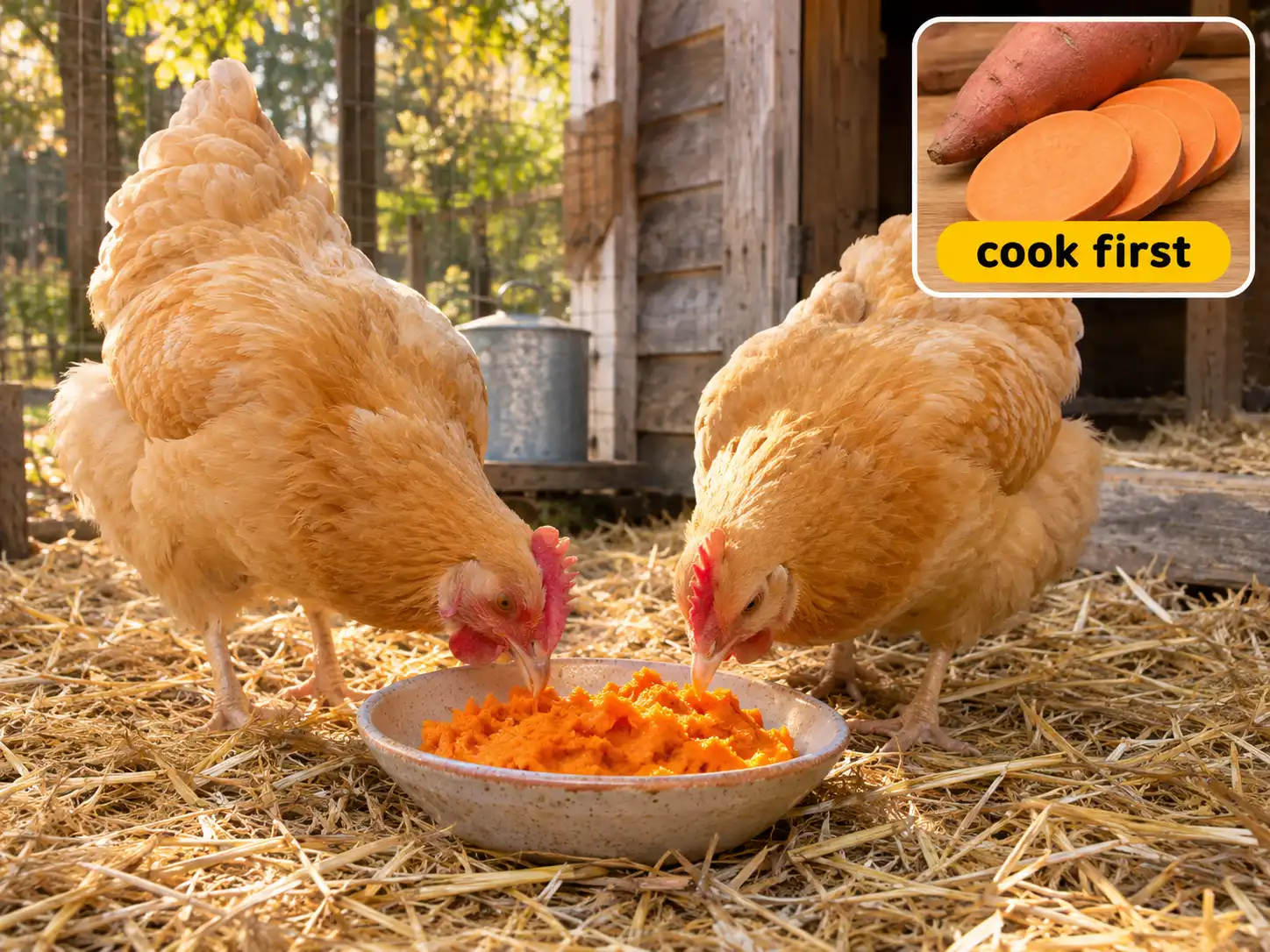
Raw sweet potato contains trypsin inhibitors, which reduce how well birds digest protein. FAO’s Feedipedia datasheet on sweet potato tubers reports that moist heat above 80°C (176°F) eliminates that activity. Raw starch is also poorly digested by young birds, per the same datasheet. An FAO chapter on feeding sweet potato to animals reaches the same conclusion: cooking is needed for both starch digestion and the inhibitors.
So boil, steam, or bake sweet potato plain until soft. Let it cool, then mash or cube it. Scrub the skin first, and the cooked skin can go in with the flesh. Moldy roots go to compost.
Also, don’t mix it up with white potato. UF/IFAS Extension warns that green or sprouting potato peels carry solanine.
Sweet Potato Leaves and Vines
The FAO chapter notes that sweet potato vines carry little trypsin inhibitor. In fact, dried vine meal has been used in poultry rations as a source of protein and yolk pigment. Research on fresh vines fed to backyard flocks is limited, though. Treat them like other garden greens: fresh, clean, and within the 20-minute rule.
How Much Sweet Potato
In formulated rations, Feedipedia puts the safe level for laying hens at 10 to 15 percent sweet potato meal, with added protein and vitamin A. Egg production tends to drop at 20 percent. As a backyard treat, cooked sweet potato shares the same daily allowance as tomato.
What Can Chickens Not Eat?
The list of truly off-limits foods is short. Two extension sources cover most of it: UF/IFAS Extension’s list of 10 foods never to feed chickens, and the UC Davis and UC Cooperative Extension feeding guidance.
| Food | Why it stays out | Source |
|---|---|---|
| Avocado skin, pit, and leaves | Persin, linked to breathing and heart problems | UF/IFAS |
| Chocolate | Theobromine and caffeine | UF/IFAS, UC |
| Coffee grounds, tea bags, energy drinks | Caffeine affects the nervous system and heart | UF/IFAS |
| Raw or dry beans | Phytohemagglutinin; cooked beans are generally safe | UF/IFAS, UC |
| Green or sprouting potato peels | Solanine | UF/IFAS, UC |
| Tomato leaves, stems, vines, green fruit | Tomatine | UC, USDA ARS |
| Moldy or rotten food | Mold toxins | UF/IFAS, UC |
| Salty food: chips, fast food, canned food | Dehydration and kidney damage | UF/IFAS |
| Onions in large amounts | Red blood cell damage and anemia | UF/IFAS |
| Apple seeds and fruit pits | Release cyanide when crushed or chewed | UF/IFAS |
| Alcohol and tobacco | Toxic to chickens | UF/IFAS, UC |
| Rhubarb | Listed as toxic | UC |
| Fatty foods | Chickens need little fat | UC |
| Raw sweet potato | Trypsin inhibitors; cook it first | FAO |
The sources split on potatoes. UF/IFAS Extension calls plain cooked potatoes generally safe in moderation and warns only about green or sprouting peels. UC Cooperative Extension, by contrast, lists potato, pepper, and eggplant among nightshade plants to avoid. Both agree green potato parts stay out. If you’d rather not sort it out, skip nightshade plants and peels and pick other treats.
For safe options, our guide to treats and foraging covers what chickens can eat and how much.
FAQs About Tomatoes for Chickens
Can chickens eat tomato seeds and skins?
Yes, as part of a ripe tomato. USDA ARS testing found very little tomatine in ripe red fruit, so seeds and skin come along with the flesh without any extra prep beyond removing the green cap.
Can chickens eat cooked tomatoes or tomato sauce?
Plain cooked ripe tomatoes are fine in treat amounts. Sauces, salsa, and canned tomato products often carry salt, onion, or oil, which UF/IFAS Extension and UC Cooperative Extension flag between them.
Can chickens eat tomatoes every day?
They can have ripe tomato most days if all treats together stay within Oregon State Extension’s 10 to 15 percent of daily food. For six laying hens, that’s about 2.4 to 4.8 ounces of treats a day.
Can chicks eat tomatoes?
Extension guidance we checked sets no age for first treats. Oregon State Extension keeps chicks on an 18 to 20 percent protein starter until about 6 weeks, so starter alone is the safer choice until then.
Can chickens eat sweet potato skins?
Cooked skins are fine alongside cooked flesh. Raw sweet potato, skin or flesh, carries trypsin inhibitors, which FAO’s Feedipedia says moist heat above 176°F removes, so cook the whole root first.
Can chickens eat regular potatoes?
Plain cooked potatoes are generally safe in moderation, according to UF/IFAS Extension, but green or sprouting peels are not. UC Cooperative Extension takes a stricter line and lists potato among plants to avoid.
Key Points for Your Flock
Feed ripe tomatoes, cherry tomatoes included, with the green cap pulled off. Keep green fruit, leaves, stems, and vines out of reach, cooked or not. Cook sweet potatoes before they go in the dish. And keep every treat, tomato or otherwise, inside what your flock clears in about 20 minutes.