Can Chickens Eat Grapes? Yes, About 2 to 3 per Hen a Day

Grapes are one of the easiest fruits to share with a backyard flock. Dogs can’t have them, so keepers often ask whether chickens can eat grapes at all. What matters is how many grapes fit a hen’s day, which kinds work, and which go in the trash.
Yes, adult chickens can eat grapes, including green, red, and seeded kinds. Keep treats within 10 to 15 percent of daily feed, or about 2 to 3 grapes per laying hen a day. Halve them and skip moldy fruit.
Can Chickens Eat Grapes Safely?
Yes. Grapes are safe for adult chickens in treat-sized amounts. They are not on the list of 10 foods to keep from chickens that UF/IFAS Extension published in May 2026. That list covers avocado, chocolate, raw or dry beans, green potato peels, and moldy food. It also names salty food, onions, alcohol, caffeine, apple seeds, and fruit pits.
The grape worry comes from dogs. Grape and raisin poisoning is a known problem in dogs, so the warning often gets passed along to chicken keepers. Poultry research gives no sign of the same problem. A 2022 Poultry Science trial by Erinle and colleagues fed broiler chicks grape pomace at 2.5 percent of the diet. Growth and meat quality showed no harm.
Still, one limit is worth stating plainly. No published trial tests whole table grapes as a backyard treat. So the case for safety rests on two points. Grapes are missing from extension lists of harmful foods. And grape byproducts have gone into broiler feed without harm. That supports a few grapes a day. It does not support large amounts.
For the full set of foods to skip, see our guide to foods to keep away from your flock.
How Many Grapes Can a Chicken Eat?
A laying hen can have about 2 to 3 average grapes a day, if grapes are her only treat. That number comes from carrying extension feed figures through to a single grape.
The math starts with feed. University of Kentucky Extension puts a laying hen at about a quarter pound (4 ounces) of feed a day. Mississippi State University Extension gives 1/4 to 1/3 pound for a laying hen, depending on weather, size, and production.
Next comes the treat limit. Oregon State University Extension caps scratch for laying hens at what they clean up in about 20 minutes. That is about 10 to 15 percent of a hen’s daily food. It applies the same limit to table scraps and greens.
Then comes the grape. USDA FoodData Central weighs 10 red or green grapes at 49 grams, about 1.7 ounces. So one grape weighs roughly 0.17 ounce.
Put together for one laying hen:
- Treat allowance per laying hen: 10 to 15 percent of 4 ounces, or 0.4 to 0.6 ounce
- Grapes per laying hen: 0.4 to 0.6 ounce divided by 0.17 ounce, or about 2.3 to 3.5 grapes
We round down to 2 to 3 grapes, because grapes are about 15 percent sugar by weight, per USDA. The 20-minute check also works without any math. If grapes are still lying in the run 20 minutes later, the flock got too many.
Grape Portions by Flock Size
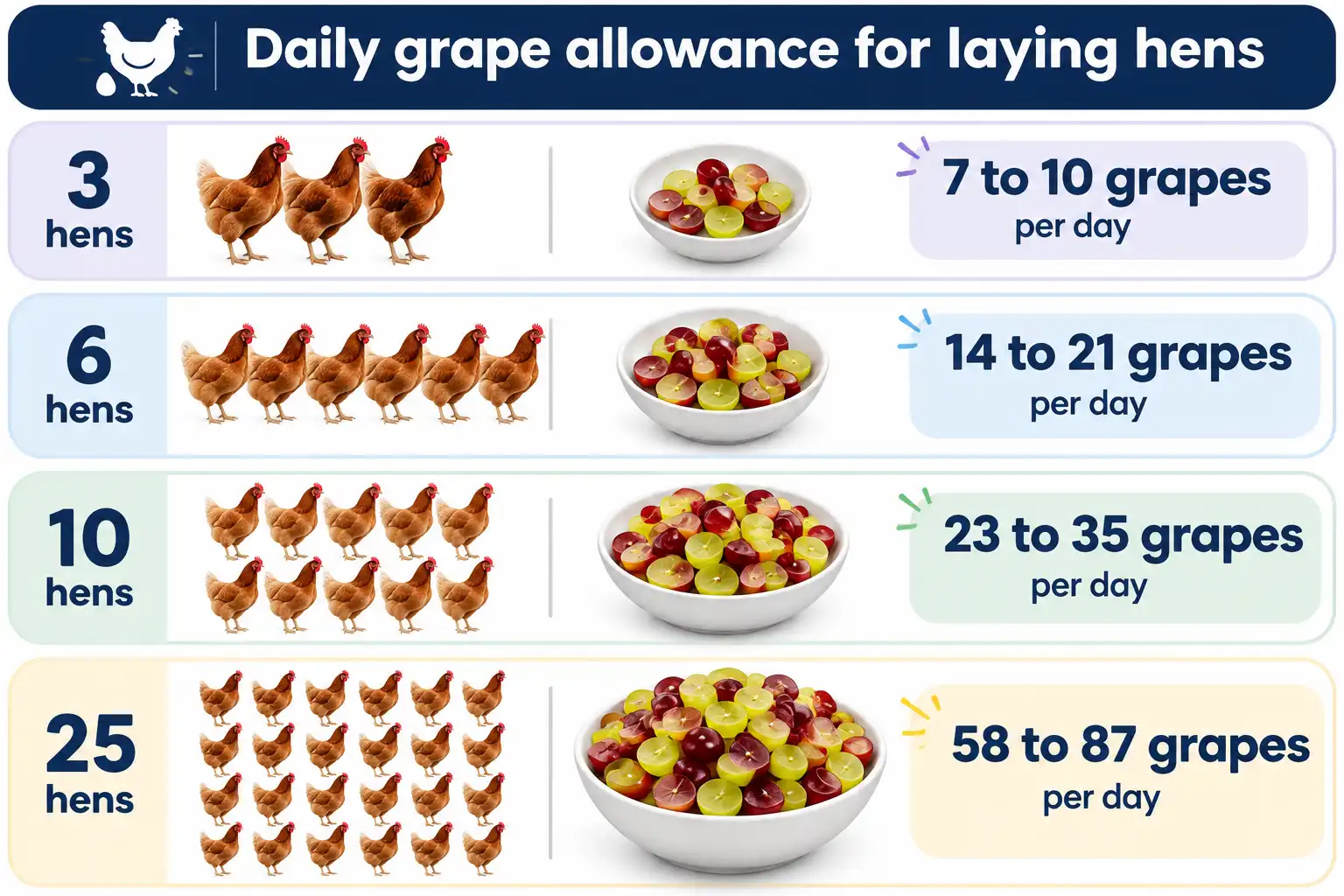
Most keepers toss grapes to the whole flock at once, so here is the same math at flock scale. The table assumes laying hens eating 1/4 pound of feed each per day, with grapes as the only treat.
| Laying hens in the flock | Feed per day | Treat allowance (10 to 15%) | Grapes per day | Rough volume |
|---|---|---|---|---|
| 3 hens | 3/4 lb | 1.2 to 1.8 oz | 7 to 10 | 1/4 to 1/3 cup |
| 6 hens | 1 1/2 lb | 2.4 to 3.6 oz | 14 to 21 | 1/2 to 2/3 cup |
| 10 hens | 2 1/2 lb | 4 to 6 oz | 23 to 35 | 3/4 to 1 1/8 cups |
| 25 hens | 6 1/4 lb | 10 to 15 oz | 58 to 87 | 1 7/8 to 2 3/4 cups |
The volume column uses USDA’s weight of 151 grams for a cup of grapes. That cup holds about 31 grapes.
Then adjust for your birds. Mississippi State ties its range to hen size, so large hens such as Orpingtons and Brahmas sit toward the top. They get slightly more room. Bantams eat less, so their share shrinks. And on days with other treats, cut the grapes back.
The same ceiling applies to other kitchen scraps and treats you hand out.
Why Grapes Stay a Small Treat
Grapes are mostly water and sugar, and they carry almost none of what a laying hen needs to make eggs. USDA FoodData Central lists red or green grapes at about 81 percent water and 15 percent sugar by weight. Here is how they compare with layer feed.
| Per 100 grams | Grapes, red or green, raw | Layer feed for laying hens |
|---|---|---|
| Protein | 0.7 g (under 1%) | about 16 g (16%) |
| Calcium | 0.01 g (10 mg) | 3 to 4 g (3 to 4%) |
The grape figures come from USDA FoodData Central. The layer feed figures come from Oregon State University Extension’s guide to feeding laying hens.
That gap explains the limit. A hen that fills up on grapes eats less of her feed. University of Kentucky Extension warns that excessive table scraps and greens can hurt egg production. Its egg flock guide adds that diluting a hen’s diet can lead to nutrient deficiency and poor egg production. So the real risk is not poison. It is a hen short on the protein and calcium she needs for eggs and shells.
Our guide to layer feed protein and calcium shows what a complete ration supplies. And if you buy packaged treats for a laying flock, the same ceiling applies to them.
Green, Red, and Black Grapes
Can Chickens Have Green Grapes?
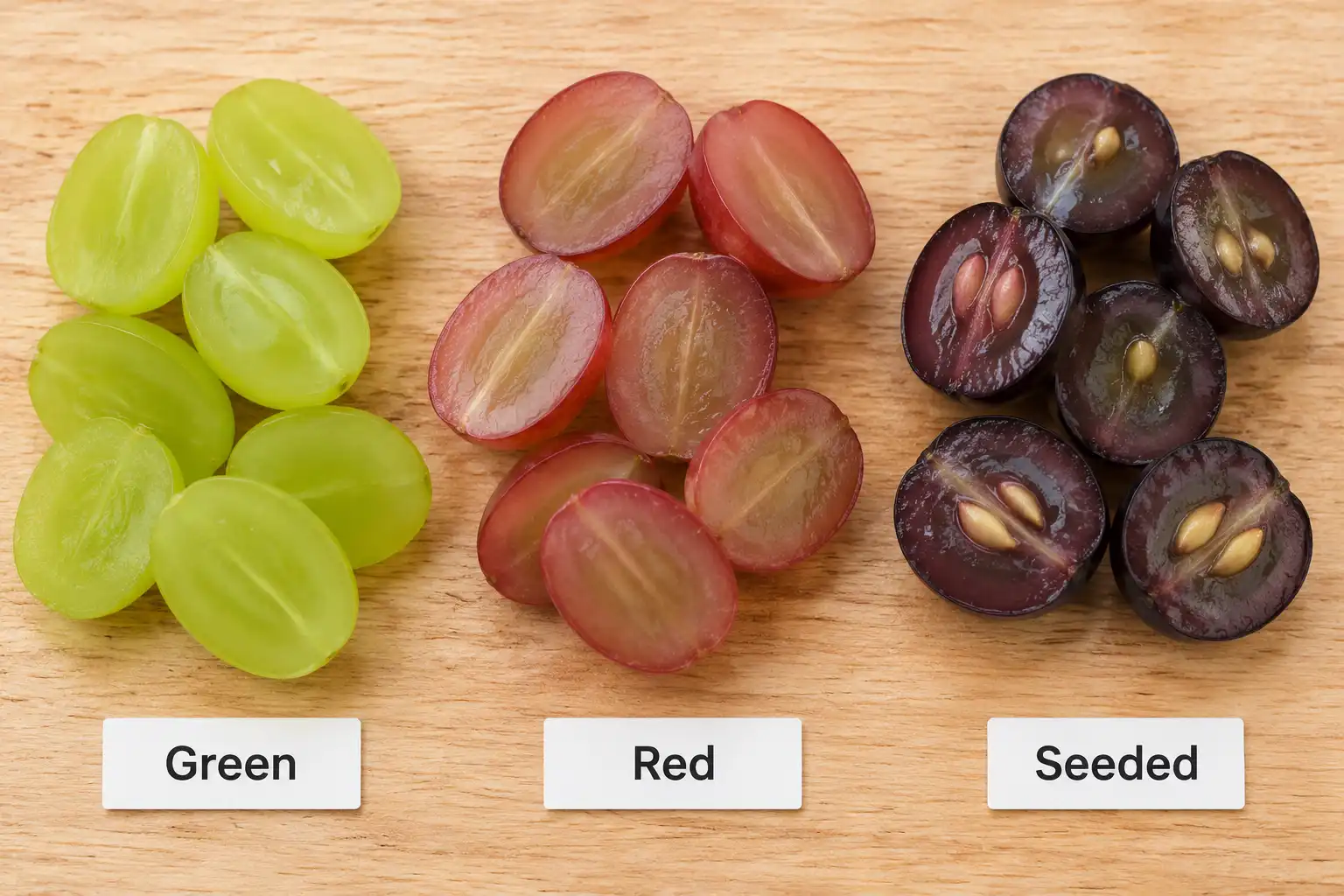
Yes. Green grapes are as safe as any other color for adult hens. In fact, USDA FoodData Central does not split them from red grapes. It lists red and green European grapes, such as Thompson Seedless, under one entry with one nutrient profile. Green seedless grapes are also the easiest to serve, with thin skins and no seeds.
Can Chickens Have Red Grapes?
Yes. Red grapes match green ones on water, sugar, and protein in USDA’s data. So they follow the same limit of 2 to 3 per laying hen. The difference sits in the skin. Red and purple grapes get their color from skin pigments. Grapes are also rich in phenolic compounds, per a 2011 Poultry Science study by Viveros and colleagues. That is why researchers test grape byproducts in broiler feed.
Those trials, though, mixed dried byproducts into complete feed at fixed rates. They do not show that a handful of red grapes improves a backyard hen’s health.
Black and Concord Grapes
Black table grapes and Concord-type grapes are fine too. USDA lists American slip-skin grapes such as Concord as a separate entry, with sugar close to European grapes. Concords usually have seeds and a tough skin, so halve them for smaller birds.
Can Chickens Have Grapes With Seeds?
Yes, adult chickens can eat seeded grapes. Grape seeds are not on UF/IFAS Extension’s list of foods to avoid. That list flags apple seeds and the pits of peaches, cherries, and plums, which release cyanide when crushed or chewed. Our guide to apples and their seeds covers that case.
Poultry research also supports grape seeds. Grape pomace is the seeds, skins, and stems left after pressing, per Viveros and colleagues. In their trial, broiler chicks fed a grape pomace concentrate gained weight like the control birds. A concentrated grape seed extract, however, cut weight gain. So whole seeds inside fruit are one thing, and purified grape seed products are another. Do not add grape seed extract to your flock’s feed or water.
Seeded grapes are bigger and firmer, which matters for small birds. Halve them for standard hens, and quarter them for bantams and young pullets.
Grapes by Bird Type and Age
Baby Chicks
UF/IFAS Extension keeps chicks on commercial chick starter for the first 6 to 8 weeks. Young birds then move to grower feed until 20 weeks. No extension source we checked sets an age for a chick’s first fruit, so we will not invent one. The research simply does not cover it.
What the feed guidance does support is clear: starter should make up nearly everything a young chick eats. If you offer grape at all, mince a sliver fine and keep it to a taste. Our guide to raising young chicks covers the rest of their care.
Pullets
Pullets are still growing on grower feed, so treats compete with a ration built for that stage. Keep grapes to an occasional halved piece, and quarter them for smaller breeds.
Broilers
Fast-growing broilers such as Cornish Cross are fed for gain. Oregon State University Extension puts diets for young meat-type chicks near 22 percent protein. A grape is under 1 percent protein, so it only dilutes that ration for broilers. There is little reason to offer them grapes often.
Bantams
Extension feed figures do not list bantams separately. So scale down from the standard hen numbers, and quarter every grape.
How to Prepare Grapes for Chickens
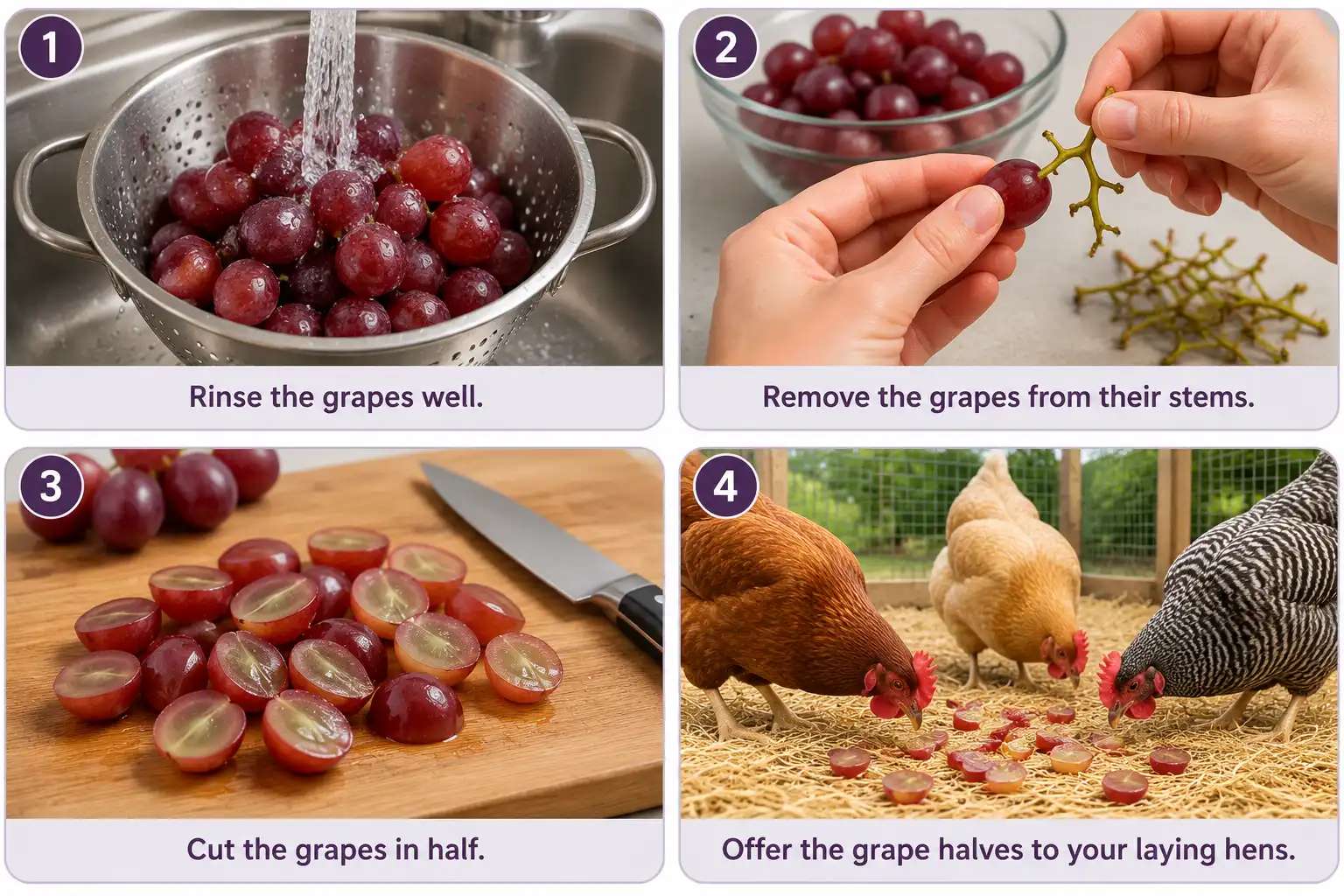
Preparing grapes takes about a minute. Each step below has a reason behind it.
- Rinse the grapes under running water. This removes dirt and some surface residue from the skins.
- Pull off the stems. Bare fruit is easier for hens to peck apart.
- Cut them to size. Halve grapes for standard hens, and quarter them for bantams and young birds. A whole grape is a big bite for a small bird.
- Scatter them in the run or spread them in a shallow dish. Spreading them out gives lower-ranking hens a fair chance at a piece.
- Serve them after the main feed. Hens that eat their ration first are less likely to fill up on fruit.
- Pick up leftovers within about 20 minutes. Oregon State uses that window as the treat limit. University of Kentucky Extension also warns that rotting scraps can lead to botulism.
Frozen Grapes in Hot Weather
Frozen grapes make a good hot-weather treat, with one catch. Mississippi State University Extension says frozen treats can help keep chickens cool. But it also notes that hens eat less in the heat, so they still need their balanced feed. It suggests offering that feed early in the morning, when it is cooler.
MSU lists cut fruit frozen in water-filled ice trays as an acceptable treat. For grapes, halve them first, then freeze them in a tray with water. Count frozen grapes in the same daily allowance as fresh ones. Then set them out in the shade, next to cool, clean water.
Grapes to Throw Out
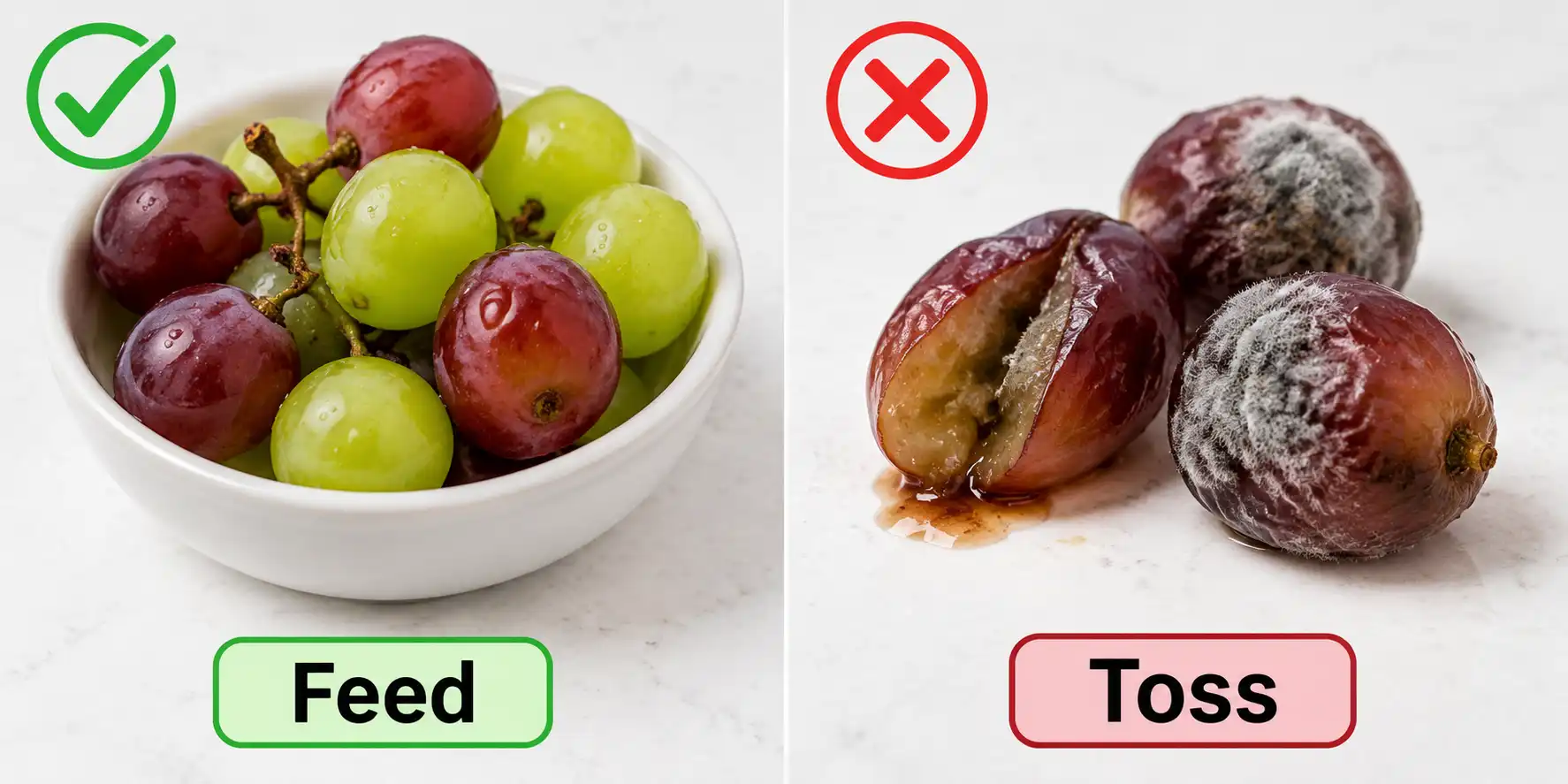
Throw out any grape that is moldy, rotting, or fermenting. UF/IFAS Extension lists moldy or rotten food among its 10 foods never to feed chickens. Mold toxins can cause breathing and digestive problems or poisoning. University of Kentucky Extension also warns that rotting scraps can lead to botulism.
Check for these before the grapes go out:
- Mold: fuzzy white, gray, or blue spots, often near the stem end
- Split, leaking grapes: they spoil fast and draw flies
- Fermenting grapes: a sour, vinegar, or wine smell, and alcohol is on the UF/IFAS list too
- Fallen grapes under a vine: rake them up before they rot in the run
- Grape products: juice, jelly, and grape-flavored snacks add sugar, and wine is alcohol
If you are unsure about a grape, leave it out. A spoiled grape costs the flock nothing to skip.
Raisins, Grape Leaves, and Backyard Vines
Raisins
Raisins are safe for chickens, but they are far denser than grapes. USDA FoodData Central puts fresh grapes at about 81 percent water and raisins near 15 percent. As a result, raisins carry roughly four times the sugar by weight. Count each raisin as one grape, since that is what it was. That keeps a laying hen to 2 or 3 raisins on a day without other treats.
Grape Leaves and Vines
Hens will peck grape leaves, young shoots, and low clusters. Grape leaves are not on UF/IFAS Extension’s list of foods to avoid. However, little research covers them as chicken feed, so treat them as forage, not as part of the diet. Fence young vines, because a flock can strip them fast.
If you spray your vines, read the product label first. Check it for any grazing or livestock feeding restriction, and follow it before birds forage under the vines.
When to Call a Veterinarian
Grapes rarely cause trouble. Still, a few situations call for a veterinarian, not a wait-and-see approach.
- A bird that stretches its neck, gapes, or struggles to breathe after eating may have something stuck. Call a poultry veterinarian right away.
- Watery droppings have many causes, including disease. If they persist, or a bird stops eating, call your veterinarian.
- Sudden deaths, birds that stop eating or drinking, and a drop in egg production are not a treat problem. Report them the same day to your state veterinarian or to USDA at 1-866-536-7593.
We describe signs here. Only a veterinarian or a state diagnostic lab can confirm what is wrong with a bird.
FAQs About Chickens Eat Grapes
Can chickens eat grapes every day?
Yes, if grapes fit inside the daily treat allowance along with everything else. For a laying hen, that allowance is only about 2 to 3 grapes, which leaves little room for other treats.
Can chickens eat grape skins?
Yes, chickens can eat grape skins, so there is no need to peel grapes. Skins are part of the grape pomace fed to broiler chicks in Poultry Science trials without harm.
Can chickens eat grape stems?
A stray stem will not hurt, since stems are part of the grape pomace used in broiler feed trials. Still, pull them off before serving, because bare fruit is easier for hens to peck.
Will grapes make my hens stop laying?
Not in treat-sized amounts like 2 to 3 grapes per laying hen a day. University of Kentucky Extension links poor laying to excessive table scraps that crowd out layer feed.
Are grapes good for chickens?
They are a safe treat more than a real source of nutrition. Grapes are about 81 percent water and under 1 percent protein, per USDA, so they add variety rather than nutrients.
Can chickens eat grapes straight off a backyard vine?
Yes, ripe grapes from an unsprayed backyard vine are fine for adult hens. If the vine was sprayed, follow the product label first, and rake up fallen or fermenting fruit before it rots.
Putting This Into Practice
Grapes of any color, seeds included, are a safe treat for adult chickens. Keep them to about 2 to 3 halved grapes per laying hen a day. Give fewer when other treats are on the menu. Toss anything moldy or fermenting, and keep young chicks on starter. If a bird seems sick after eating, call your veterinarian instead of adjusting the treats.