Can Chickens Eat Bananas? Peels, Portions, and Safe Feeding
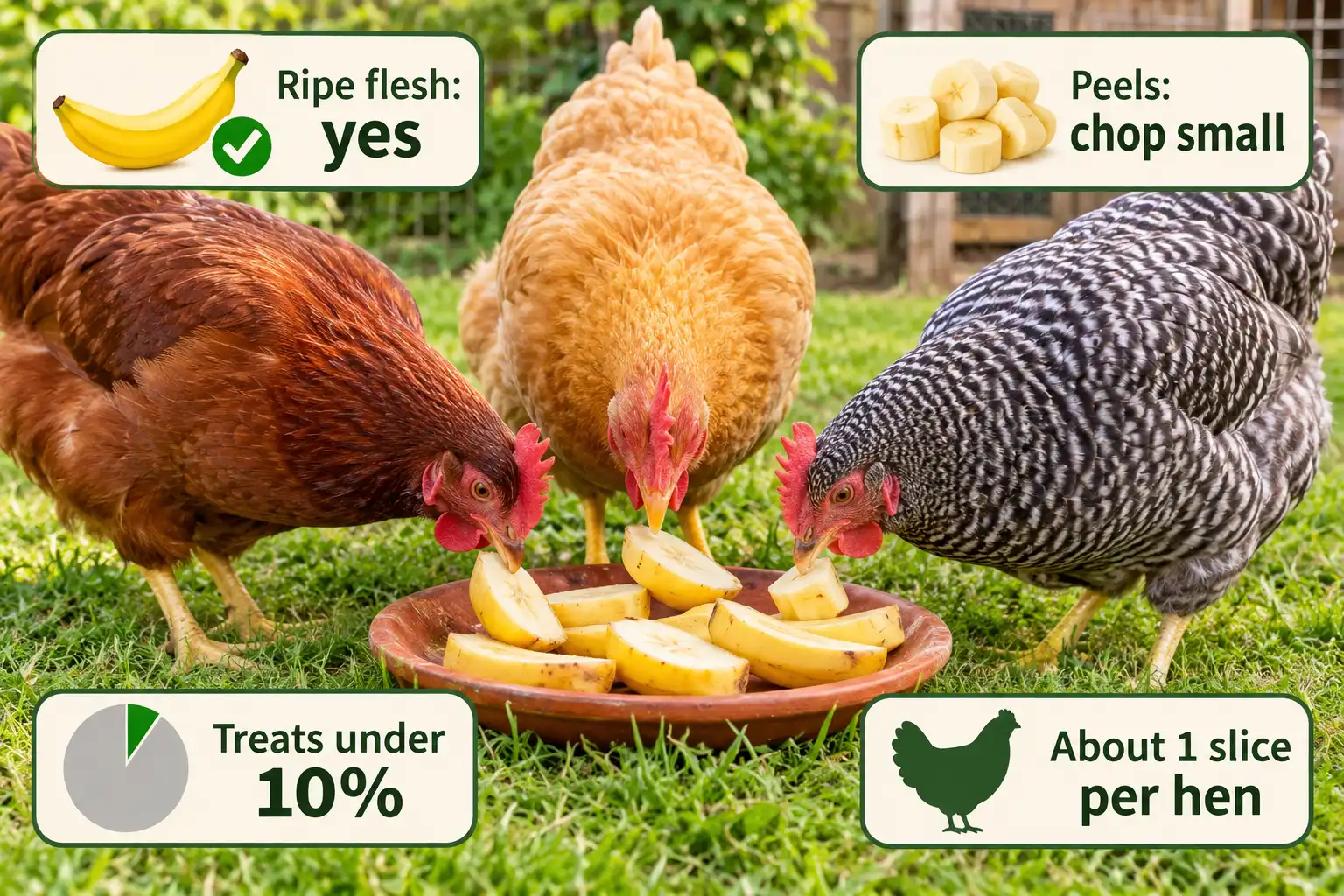
Can chickens eat bananas? Adult laying hens can, as a small treat, and the peel is safe too with some prep. Below are banana portions worked out by flock size, the bird ages that should skip banana, and what the peel really adds.
Chickens can eat bananas: adult laying hens may have ripe flesh and chopped peels. Colorado State University Extension caps all treats at 10 percent of the daily diet, about one 3/4 to 1 inch slice per hen per day.
Are Bananas Safe for Chickens?
Yes. Ripe banana flesh is safe for adult chickens, and nothing in the fruit is toxic to them. The Colorado State University Extension feeding guidance tells flock owners to avoid salty foods, citrus, moldy food, avocado skins and pits, undercooked or dried beans, onions, and rhubarb. It also urges caution with potato peelings. Bananas aren’t on that list.
The catch is nutrition, not safety. USDA lists a medium banana, 7 to 7 7/8 inches long, at 118 grams (about 4.2 ounces) of fruit. That fruit carries 27 grams of carbohydrate, 14 grams of sugar, 3 grams of fiber, and 1 gram of protein.
So a banana is mostly water and sugar. For a hen, that makes it a snack, never a meal. Our guide to foods that are unsafe for chickens covers the scraps that do cause harm.
What Bananas Add to a Hen’s Diet, and What They Don’t
Banana flesh brings sugar and potassium, but very little protein or calcium. USDA FoodData Central puts raw banana at about 75 percent water. Per 100 grams, it lists 12.2 grams of sugar, 1.09 grams of protein, 358 milligrams of potassium, and 5 milligrams of calcium.
Compare that with what a laying hen needs. Mississippi State University Extension sets layer feed minimums at 16 percent protein and 3.0 percent calcium.
| Nutrient | Ripe banana flesh (USDA) | Layer feed minimum for laying hens (Mississippi State) |
|---|---|---|
| Protein | About 1% | 16% |
| Calcium | About 0.005% | 3.0% |
That gap is why treats get a cap. Here is rough math by weight eaten. If banana replaced 10 percent of a laying hen’s diet, she would drop to about 14.5 percent protein and 2.7 percent calcium. At 20 percent banana, she falls to about 13 percent protein and 2.4 percent calcium.
Calcium shows up first at the nest box. UF/IFAS Extension notes that laying hens short on calcium lay thin, soft, or misshapen shells. Many layer feeds run above the minimums, so read this math as a direction, not an exact figure.

How Much Banana Can Chickens Eat?
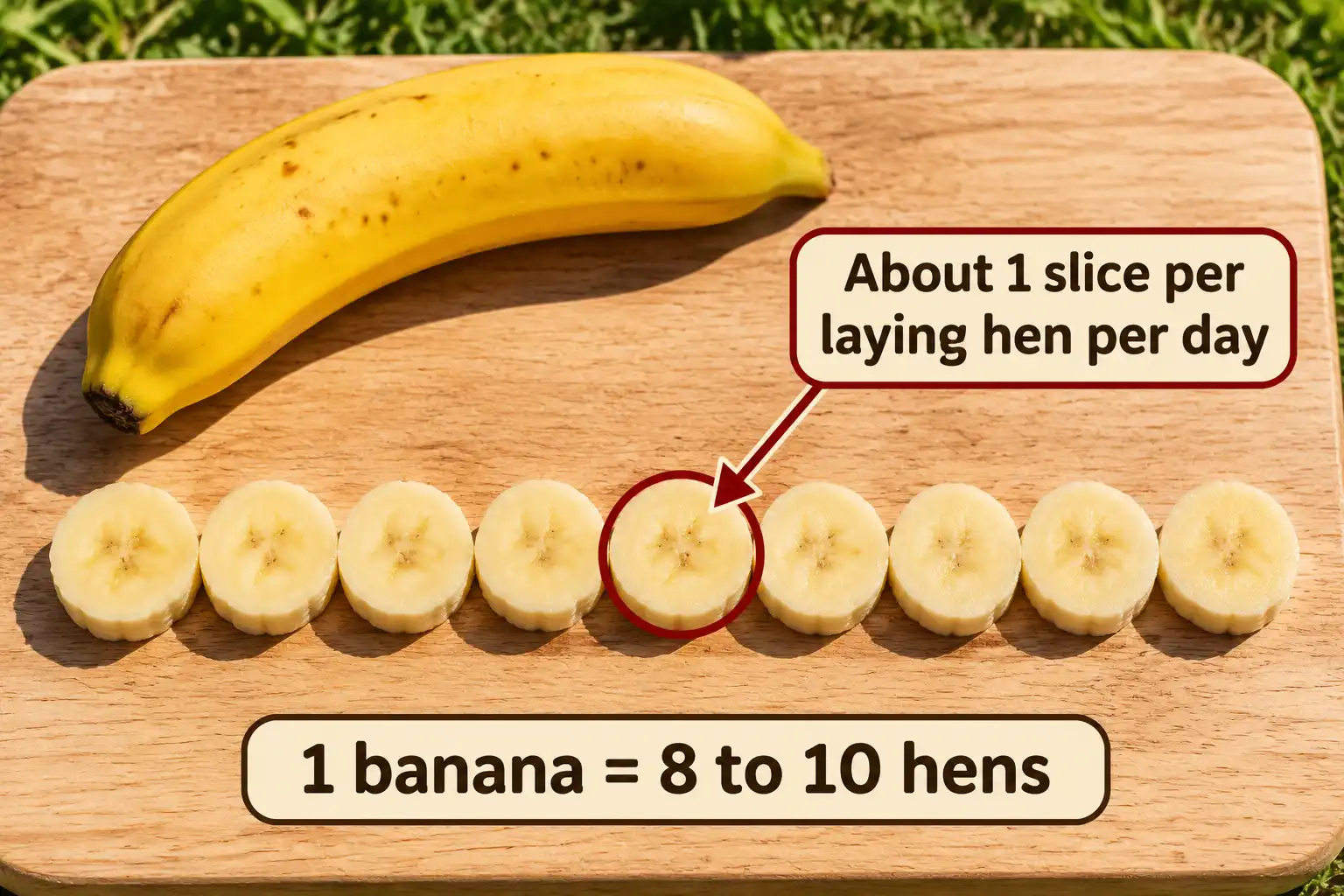
A laying hen can have about 0.4 to 0.5 ounces of treats a day. That is roughly one 3/4 to 1 inch slice of a medium banana. Here is the working.
Mississippi State University Extension says an average laying hen eats about 1/4 to 1/3 pound of feed a day, or 4 to 5.3 ounces. Colorado State University Extension and UF/IFAS Extension both keep treats under 10 percent of the diet. So a laying hen’s treat allowance is 0.4 to 0.53 ounces a day.
A medium banana holds about 4.2 ounces of fruit, per USDA. One hen’s full daily allowance is therefore one eighth to one tenth of that banana. On a 7 to 7 7/8 inch banana, that is a slice about 3/4 to 1 inch thick.
| Laying hens in the flock | Daily treat cap, all treats (ounces) | Medium bananas, if banana is the only treat |
|---|---|---|
| 3 | 1.2 to 1.6 | About 1/3 |
| 6 | 2.4 to 3.2 | Just over 1/2 to 3/4 |
| 10 | 4.0 to 5.3 | About 1 to 1 1/4 |
| 25 | 10 to 13.3 | About 2 1/3 to 3 |
That cap covers every treat, not banana alone. Scratch grains, greens, and mealworms all draw from the same allowance, as our treat and foraging guide explains. Also, Colorado State advises putting out no more than the flock eats in 5 to 10 minutes, so leftovers don’t draw nuisance animals.
Banana by Bird Type and Age
Only adult birds should get banana on a regular basis. Younger birds need nearly every bite to come from formulated feed.
| Bird type and age | Feed and protein (Mississippi State) | Banana guidance |
|---|---|---|
| Layer-breed chicks, 0 to 8 weeks | Starter, 20% protein | Skip it; keep them on starter |
| Broiler chicks, 0 to 6 weeks | Starter, 23% protein | Skip it |
| Pullets, 8 to 20 weeks | Developer, 14% protein | An occasional small taste, under the 10% cap |
| Laying hens | Layer feed, 16% protein minimum | Up to the 10% treat cap |
Mississippi State advises against adding grain or supplements to a complete poultry feed. The extension publications we checked set no age for a chick’s first treat, and hatchery advice ranges from two weeks to several months. Banana carries about 1 percent protein against 20 to 23 percent in starter. Waiting until the starter phase ends costs chicks nothing, and our chick care basics cover what they do need.
Cornish Cross broilers are a similar case. They grow fast on a short schedule, so banana mostly displaces feed they would turn into meat. A 2025 review in Poultry Science reports banana meal at up to 10 percent of broiler diets without hurting productivity. However, that meal was dried, ground, and balanced into a formulated ration. Fresh banana tossed on top of feed is a different thing.
Can Chickens Eat Banana Peels?
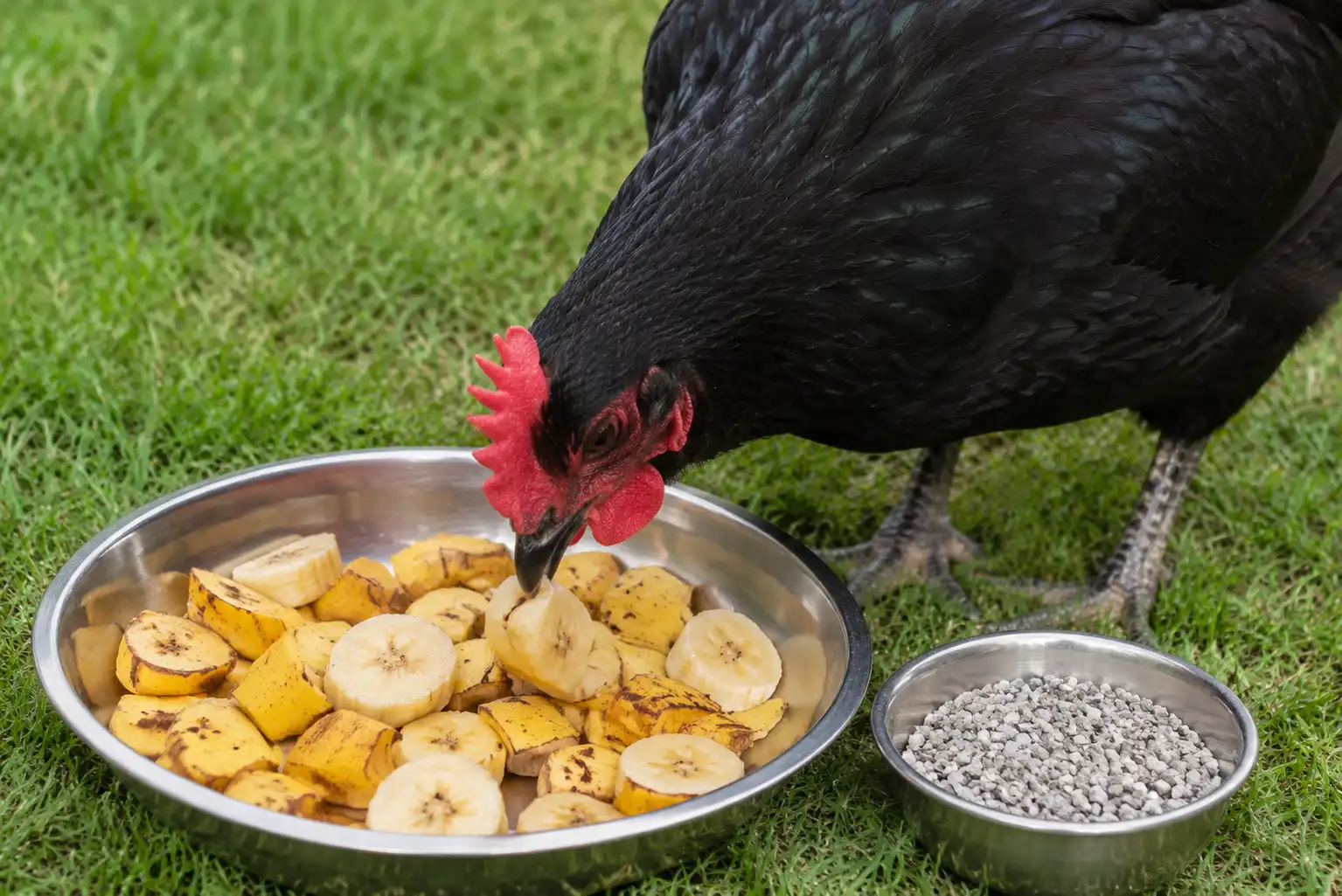
Yes, chickens can eat banana peels, but most hens eat little of them raw. The peel is tough and stringy, so many birds pick out the soft fruit and leave the skin.
The peel also holds different nutrients from the flesh. The 2025 Poultry Science review gives banana peel 6 to 9 percent crude protein and 43.2 to 49.7 percent total dietary fiber. It also lists tannins, phytates, and oxalate in peels, compounds that can get in the way of nutrient digestion.
Trials have fed peel to chickens, just not the way backyard keepers do. For example, the review cites dried banana peels at up to 18 percent of laying hen diets. Those peels were dried, ground, and mixed into balanced rations. We found no published trial of raw kitchen peels in a backyard flock, so the evidence for that use is thin.
Can Chickens Eat Banana Skins?
Yes. Banana skins and banana peels are the same part of the fruit, so the same guidance applies. Chop them small, count them toward the 10 percent treat cap, and throw out any skin with mold on it.
How to Prepare Banana Peels for Hens
- Peel off the produce sticker and cut away the hard stem end.
- Rinse the peel under running water.
- Chop it into small pieces, or simmer it until soft and let it cool.
- Mix the pieces with a little banana flesh so hens notice them.
- Pick up whatever is left after 10 minutes.
Peel fiber takes grinding. UF/IFAS Extension notes that chickens grind food in the gizzard with grit, and flocks with no soil access may need grit supplied. Our page on grit for digesting scraps covers how to offer it.
Pesticide Residue on Banana Peels
Federal limits for banana fungicides apply to the whole fruit, peel included. Under 40 CFR 180.242, the EPA tolerance for thiabendazole on bananas treated after harvest is 3.0 parts per million. Under 40 CFR 180.413, imazalil carries the same 3.0 ppm limit on bananas.
Older rules hint at where that residue sits. EPA once set a separate imazalil limit of 0.20 ppm for banana pulp, against 3.00 ppm for the whole fruit. Then, in its 2002 imazalil reassessment, EPA dropped the pulp limit, citing its policy of setting tolerances on the whole commodity, peel included. A pulp limit one fifteenth the size of the whole-fruit limit points to the peel as the place most residue stays.
What that residue means for hens or their eggs hasn’t been studied, as far as we can find. Rinsing may remove some surface residue, but we found no data on how much for banana peels. So if you’d rather not take the chance, feed the flesh and compost the peels.
Ripe, Green, Overripe, or Moldy?
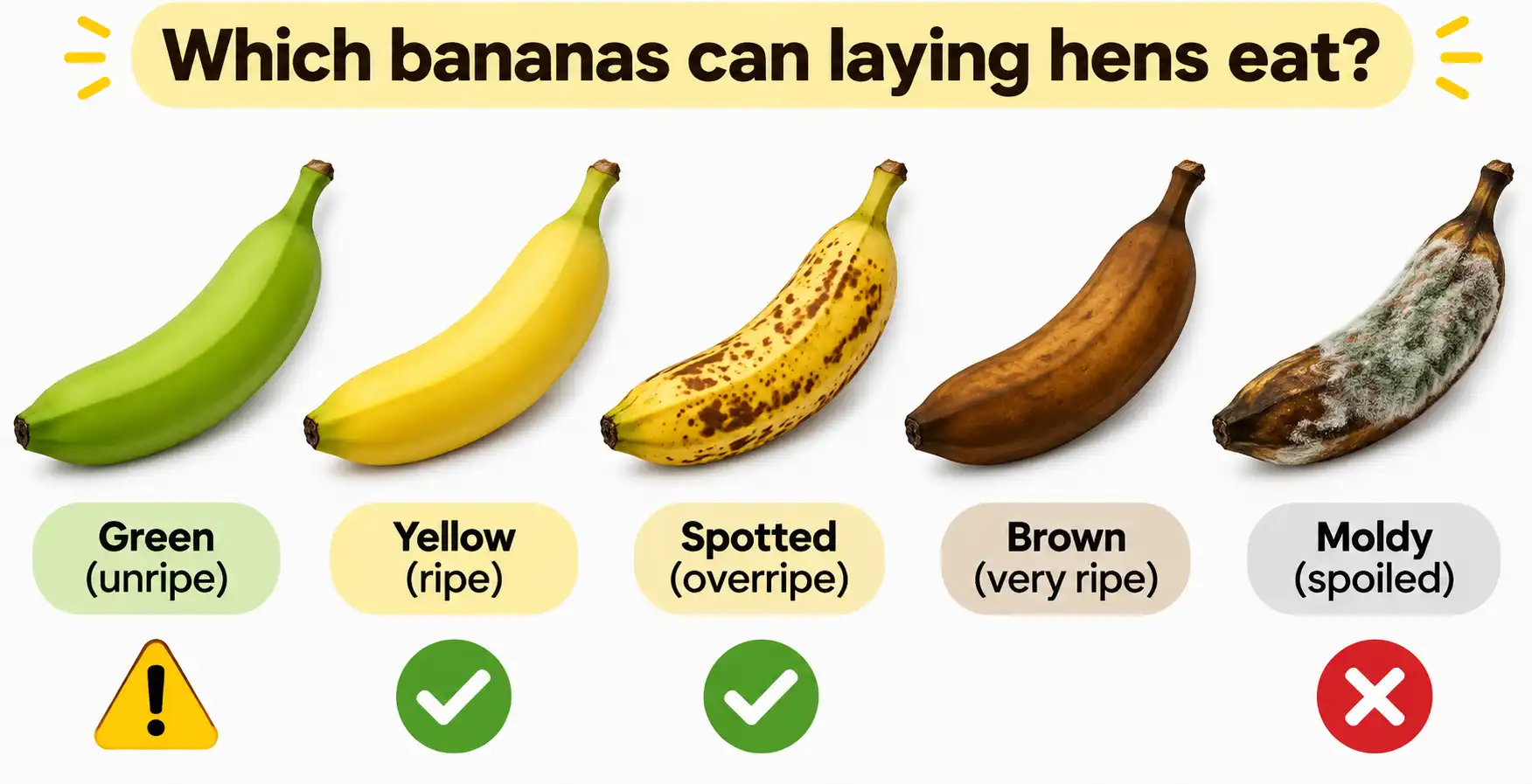
Ripe and spotted bananas are the best picks for laying hens. Moldy fruit and sweetened banana products are out.
| Banana form | Feed it to laying hens? | Why |
|---|---|---|
| Ripe yellow flesh | Yes | Soft and easy to eat |
| Brown-spotted, overripe flesh | Yes, if there is no mold | Softer and sweeter, and still counts toward the cap |
| Green, unripe banana | Skip, or a small taste | Rich in resistant starch |
| Moldy or fermenting banana | No | Colorado State says to keep moldy food from the flock |
| Raw peel, chopped | Yes, in small amounts | Fibrous, and where most residue sits |
| Dried banana or banana chips | No | Drying concentrates the sugar; chips are often fried or sweetened |
| Banana bread, muffins, pudding | No | Added sugar and fat, plus salt, which Colorado State says to avoid |
Green bananas are the gray area. The Poultry Science review cites 40.9 to 58.5 percent resistant starch in green banana flour, a starch that resists digestion. But it reports no poultry trials on that starch, so a ripe banana is the safer choice.
How to Serve Banana to Chickens
Give banana after the flock has eaten its feed, so it adds to the diet instead of replacing it. Our guide to complete layer feed covers the base diet banana sits on top of.
- Work out the flock’s share from the portion table above.
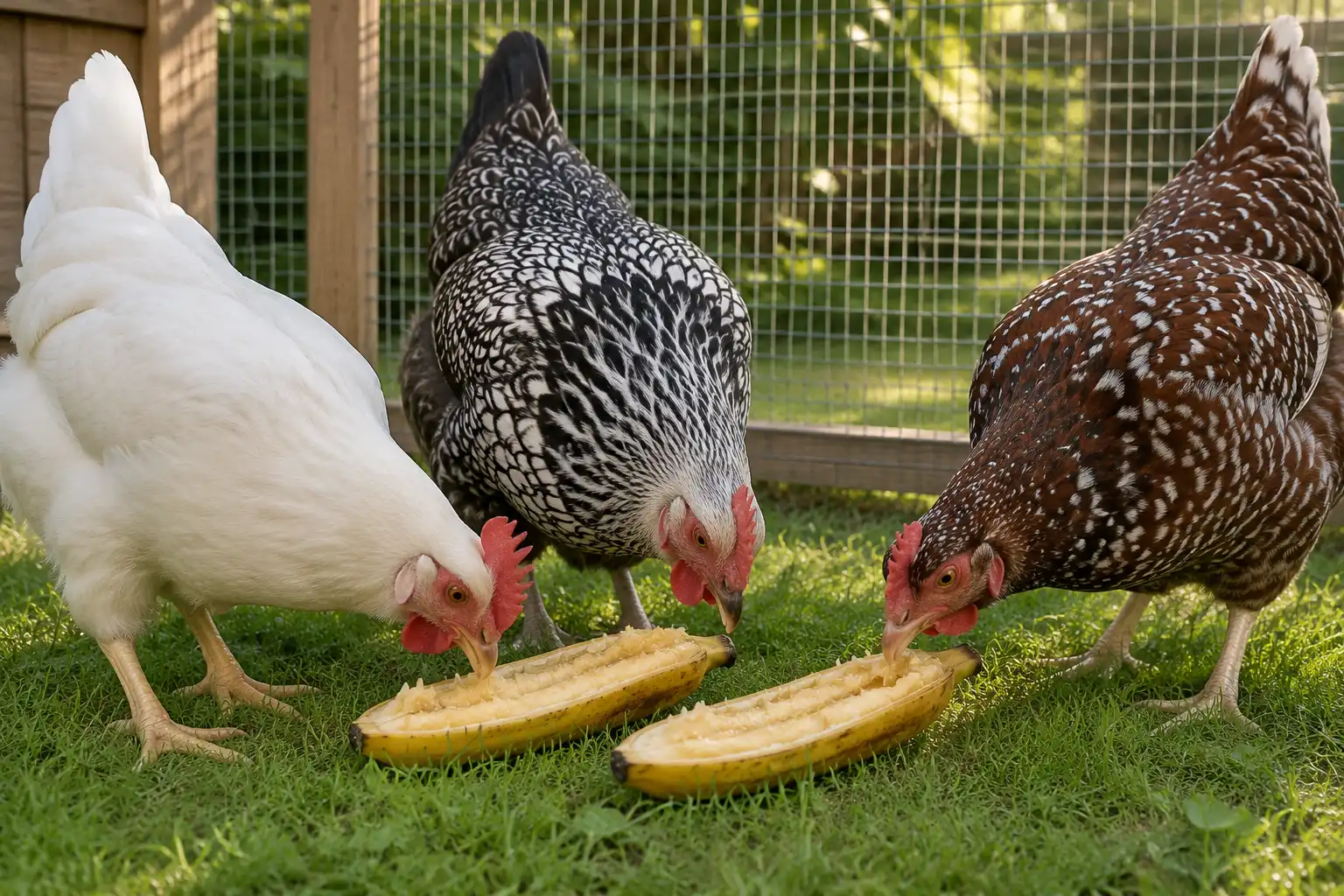
- Cut the banana into rounds, or split it lengthwise and leave it in the peel.
- Serve it in a shallow dish or on clean, dry ground, never on wet litter.
- Spread pieces out so the boldest hen doesn’t take them all.
- Remove leftovers after 5 to 10 minutes, as Colorado State advises.
- Wash the dish before the next use.
Store-bought treats draw from the same 10 percent cap. If you buy them, our page on packaged treats for laying flocks covers what to check on the label.
Troubleshooting Banana Treats
Most banana problems come from serving too much or leaving it out too long.
- Hens leave the peels. That is normal. Chop them finer, mix them with flesh, or compost them.
- Fruit flies, ants, or rodents show up. Serve less, and pick up leftovers within 10 minutes.
- Sticky, matted feathers. Mashed banana clings to feathers, so serve firm rounds instead.
- Fewer eggs or thinner shells after more treats. UF/IFAS Extension notes that hens filling up on treats miss nutrients from their feed. Cut treats back under 10 percent, and offer crushed oyster shell in a separate dish, as UF/IFAS describes.
- Wetter droppings. Watery fruit can loosen droppings for a short time. Droppings that stay loose after the banana stops need a poultry veterinarian, because many problems look alike.
Some signs are not a treat problem at all. Sudden deaths, birds that stop eating or drinking, or a flock-wide drop in laying need a same-day call to your state veterinarian or USDA at 1-866-536-7593.
FAQs About Chickens Eat Bananas
Can baby chicks eat bananas?
Keep baby chicks off banana until the starter phase ends, at 6 to 8 weeks per Mississippi State Extension. Banana carries about 1 percent protein against 20 to 23 percent in chick starter, so every bite dilutes growth feed.
Can chickens eat raw banana peels?
Yes, adult hens can eat raw banana peels, but chop them small first. Many hens ignore whole peels because they are tough, so mix chopped pieces with banana flesh and count them toward the treat cap.
Do bananas help hens lay more eggs?
No published evidence shows that fresh banana raises egg production in backyard laying hens. Too much banana can lower laying instead, because it crowds out the layer feed that supplies protein and calcium for eggs.
Can chickens eat overripe or brown bananas?
Yes, brown-spotted and fully brown bananas are fine for adult laying hens if no mold shows. Throw out any banana with fuzzy growth or a sour smell, since Colorado State Extension says to keep moldy food away.
How often can I give my chickens bananas?
You can give laying hens banana daily, as long as all treats together stay under 10 percent of the diet. Rotating banana with greens and other scraps keeps that small allowance from going to sugar every day.
Can chickens eat banana chips or dried bananas?
Skip both. Drying removes water and concentrates the sugar, and commercial banana chips are often fried or sweetened, so a small handful uses far more of a hen’s treat allowance than fresh banana does.
Should I wash banana peels before feeding them?
Rinsing banana peels is a sensible precaution, though no data show how much residue it removes. EPA sets banana fungicide limits on the whole fruit, peel included, so composting the peels is the more cautious option.
Key Points for Your Flock
Banana is a safe, sugary treat for adult laying hens, not a substitute for feed. Keep all treats combined under 10 percent of the diet, which works out to about one 3/4 to 1 inch slice per hen a day.
Chop peels small or compost them. Skip moldy, dried, and baked banana, and keep chicks and broilers on their formulated feed.