Can Chickens Eat Sweet Potatoes? Raw, Cooked, Peels and Skins
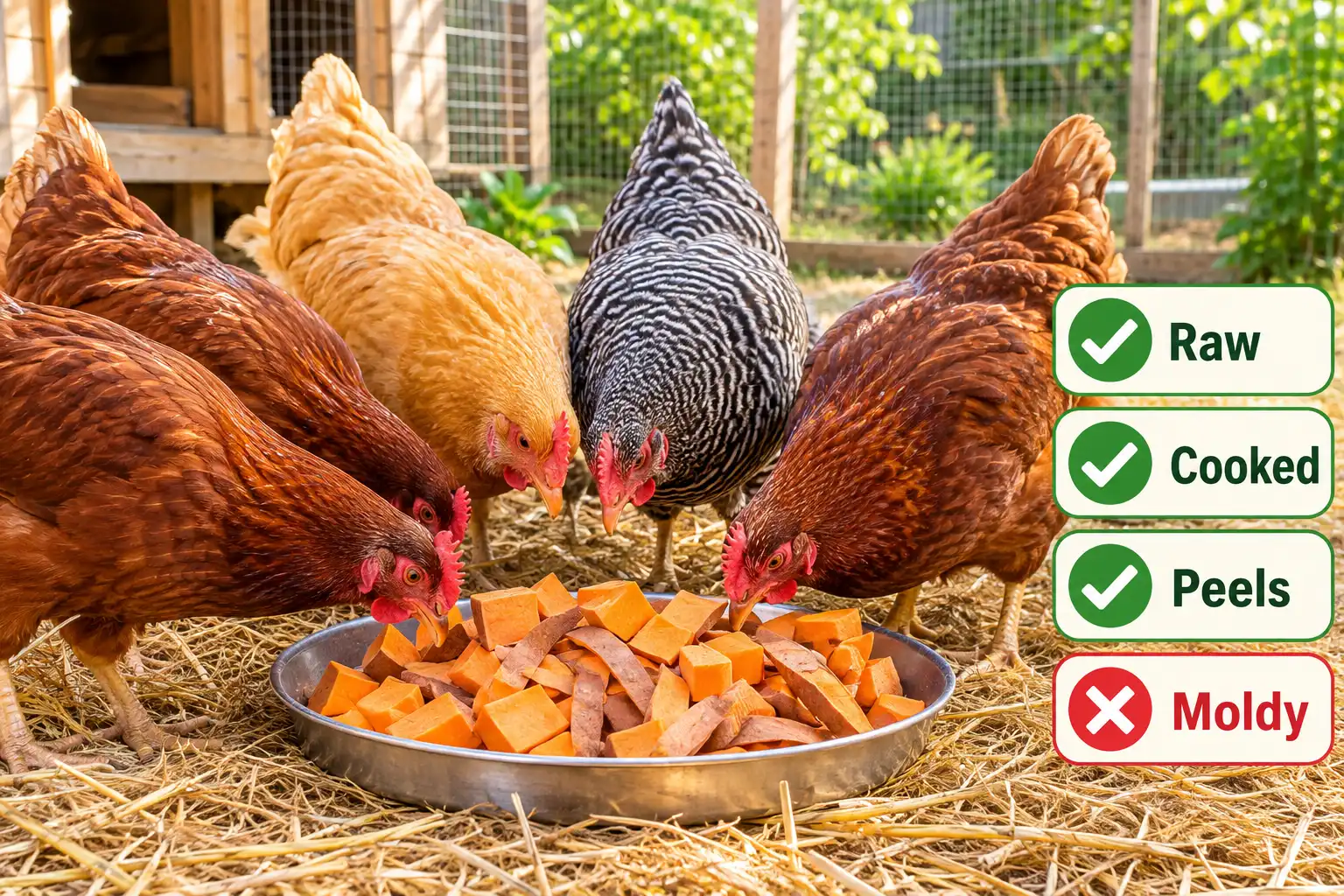
Sweet potatoes are a common, low-risk vegetable scrap for backyard flocks. Can chickens eat sweet potatoes raw, cooked, and peel-on? Yes, within a treat limit and one hard rule about mold. Here is how raw roots, cooked leftovers, peels, vines, and flock size change the answer.
Yes. Chickens can eat sweet potatoes raw or cooked, peels and skins included. Serve them plain and chopped, hold treats under 10 percent of an adult flock’s diet, per UF/IFAS Extension, and discard moldy pieces.
Are Sweet Potatoes Safe for Chickens?
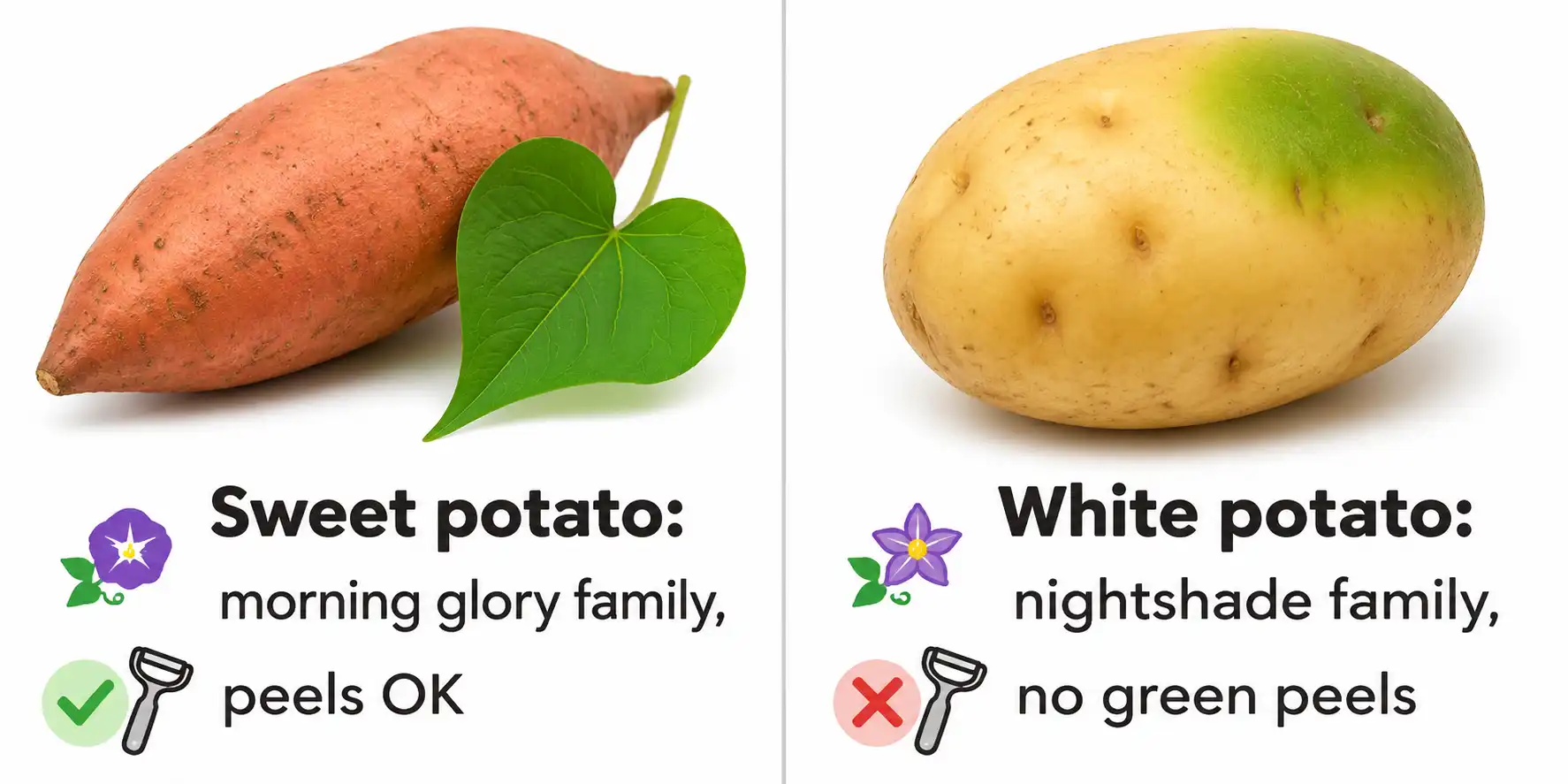
Yes. Plain sweet potatoes are a safe treat for chickens, raw or cooked. The sweet potato (Ipomoea batatas) belongs to the morning glory family. It is not a nightshade, the family that includes white potatoes, tomatoes, and eggplant.
That family line matters. UF/IFAS Extension lists green potato peels among the foods never to feed chickens. Green or sprouting white potatoes carry solanine. People often apply that warning to sweet potatoes, but it belongs to a different plant. The same goes for the leaf and vine warnings attached to tomato plants and other nightshades.
So the risk with sweet potatoes is not the plant itself. Instead, it comes from mold, rot, and what cooks add: butter, salt, sugar, and marshmallows. Those risks appear below, alongside the wider list of foods chickens should never eat.
What Sweet Potatoes Add to a Chicken’s Diet
Sweet potatoes add energy and vitamin A, with very little protein. USDA FoodData Central lists these values for raw sweet potato:
| Nutrient | Per 100 g raw | Per medium root (130 g, about 4.6 oz) |
|---|---|---|
| Energy | 86 kcal | about 110 kcal |
| Protein | 1.6 g | about 2 g |
| Carbohydrate | 20.1 g | about 26 g |
| Fiber | 3.0 g | about 4 g |
| Sugars | 4.2 g | about 5 g |
| Vitamin A | 709 µg RAE | about 920 µg RAE |
Protein is the gap. At 1.6 grams per 100 grams, raw sweet potato is 1.6 percent protein. Compare that with the protein percentage on your complete layer ration tag, and the reason for a treat limit is plain. Every bite of sweet potato replaces a bite of balanced feed.
Water is the other part of the picture. Feedipedia, the animal feed database backed by the UN’s FAO, puts fresh tubers at about 30 percent dry matter. So roughly 70 percent of a fresh root’s weight is water, and most of the rest is carbohydrate.
Can Chickens Eat Raw Sweet Potatoes?
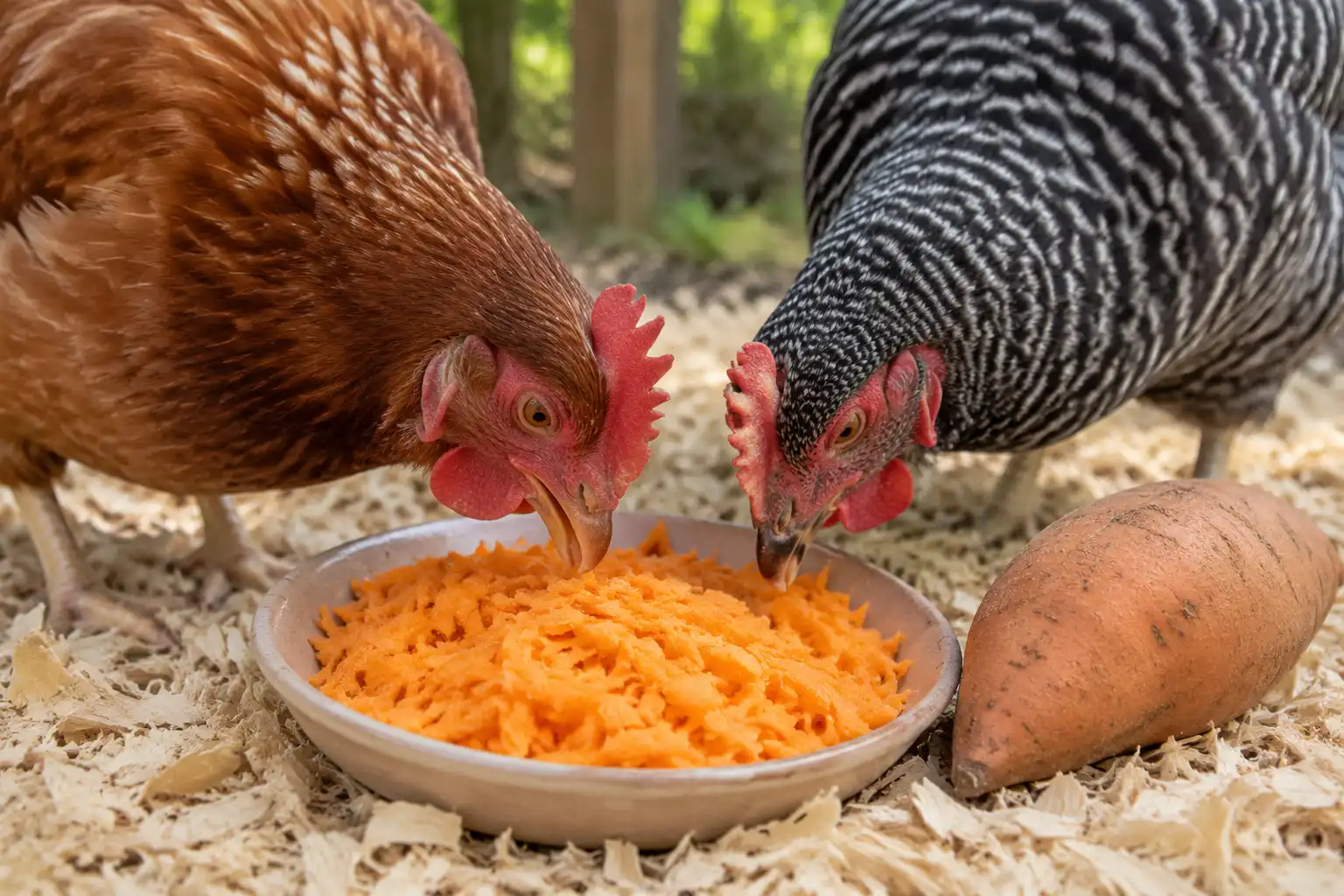
Yes, chickens can eat raw sweet potatoes. Grate them or dice them small, though, because a whole raw root is too hard to peck apart.
Raw roots do carry one drawback. Feedipedia notes that raw sweet potato tubers contain medium levels of trypsin inhibitors, which can lower protein digestibility. Moist heat above 176°F eliminates them, per the same source, so cooking removes the issue.
At treat-sized portions, that matters little. For example, a Tuskegee University trial published in Poultry Science in 2015 fed 360 day-old Cornish Cross male broilers. In their diets, uncooked, air-dried sweet potato root meal replaced 10, 20, or 30 percent of the corn. Over 7 weeks, the sweet potato groups compared well with the corn-fed control for performance and meat nutrient content. Yet that meal made up a far bigger share of the diet than any treat should.
Raw sweet potato also gives a flock something to work at. Grated raw root scattered in a dish is a pecking job, not a quick gulp.
Can Chickens Eat Sweet Potato Peels?
Yes. Sweet potato peels are safe for chickens, raw or cooked, as long as they come from sound, washed roots. They are the same plant as the flesh, so the solanine warning for white potato peels does not apply.
Still, peels bring three risks of their own:
- Soil and residue. Scrub roots before peeling, the same as for your own table.
- Damaged spots. Feedipedia advises against feeding defective parts of tubers, because they may carry toxic molds. Throw damaged peel out rather than adding it to the treat bowl.
- Spoilage. Peels in a warm scrap bucket mold fast. So feed them the same day, or refrigerate them until you do.
Raw peel strips are tough and stringy. Chop long strips into short pieces so a hen can swallow them easily. By contrast, peels from boiled or steamed sweet potatoes are softer and need less chopping.
Can Chickens Eat Sweet Potato Skins?
Yes, the skins of baked, boiled, or steamed sweet potatoes are fine for chickens if nothing was added. After all, a plain baked skin is just cooked peel.
The trouble is what cooks put on them. Skip skins that come:
- Rubbed with oil and salt for roasting
- Topped with butter, brown sugar, or marshmallows
- Fried, as loaded skins or fries
- From a restaurant plate, where the seasoning is unknown
UF/IFAS Extension lists salty foods among the foods never to feed chickens, and seasoned skins can carry a lot of salt. Sugar-coated skins, meanwhile, add calories without anything a hen needs.
Cut plain cooked skins into pieces about the size of a fingernail. Then let them cool before they go out.
Moldy, Rotten, or Damaged Sweet Potatoes: Never Feed Them
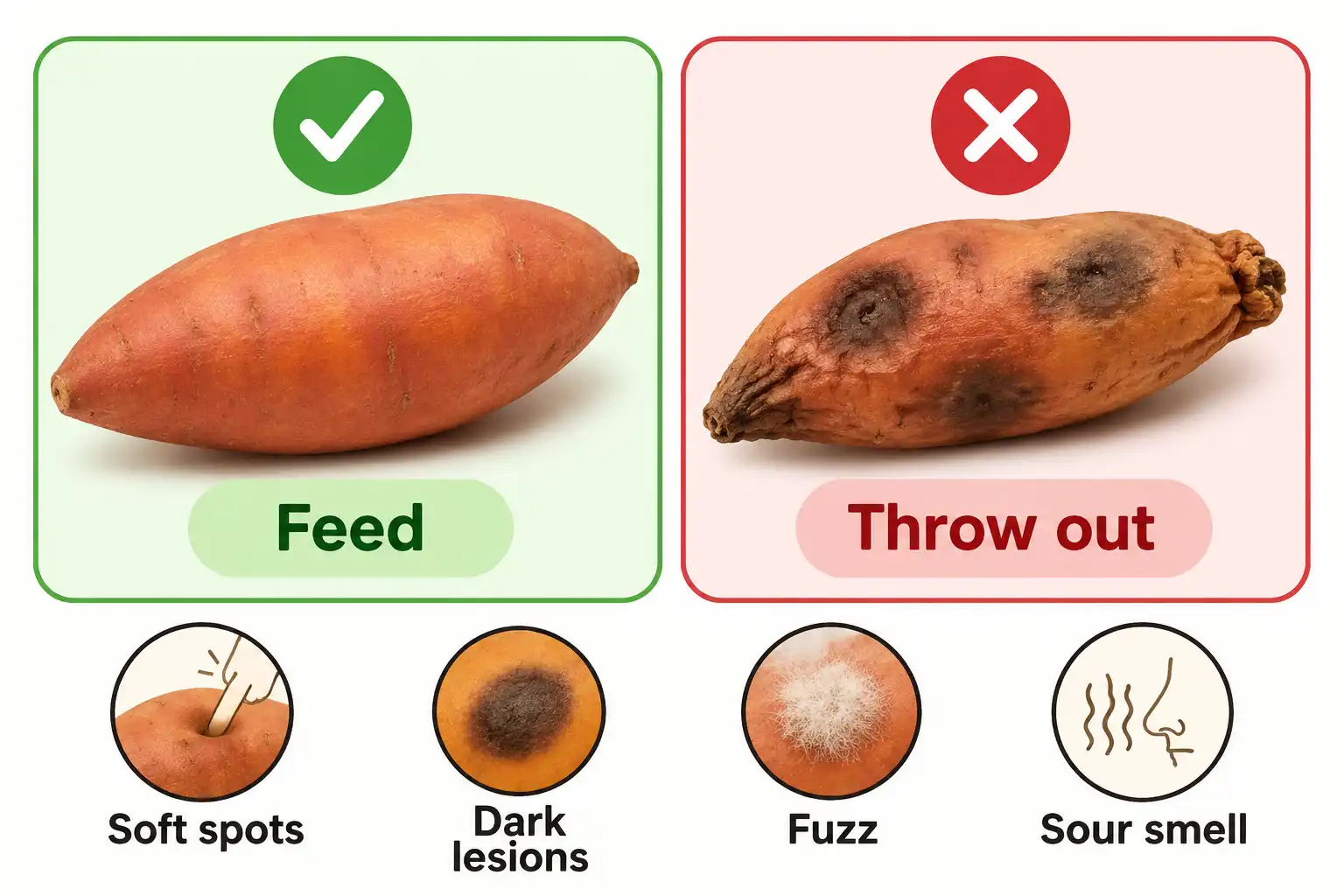
Never feed chickens moldy, rotting, or damaged sweet potatoes. This is the one serious hazard in this food.
Damaged sweet potatoes make their own toxins as a defense. Feedipedia reports that roots infected with black rot (Ceratocystis fimbriata) produce ipomeamarone. It adds that injury or fungi such as Fusarium solani trigger 4-ipomeanol, which causes pneumonia in cattle. Cattle are especially sensitive and can die within days.
Trimming the bad spot is not enough, either. A 2015 Journal of Agricultural and Food Chemistry study found ipomeamarone at toxic levels in healthy-looking parts of some infected roots.
Poultry data on these toxins is thin. We found no study that sets a safe level for chickens, so treat any spoiled sweet potato as unsafe. UF/IFAS Extension puts the rule simply: food moldy enough that you would not eat it should not go to chickens.
Throw out any root with these signs:
- Soft, wet, or sunken patches
- Dark, dry, firm lesions
- White or gray fuzz
- A sour, bitter, or fermented smell
If birds breathe hard, stop eating, or die after eating spoiled scraps, call a poultry veterinarian. Your state diagnostic lab can confirm the cause. Several sick birds or sudden deaths need a same-day call to your state veterinarian or USDA at 1-866-536-7593. The signs overlap with reportable diseases such as avian influenza.
Can Chickens Eat Sweet Potato Leaves and Vines?
Yes. Sweet potato leaves and vines are safe for chickens, unlike the leaves of white potatoes and tomatoes.
The vines even have a feed history. A 1974 study in Poultry Science tested dehydrated sweet potato vine meal for coloring egg yolks and broiler skin.
Two cautions apply to garden vines. First, if you sprayed the patch, the pesticide label sets the wait before harvest, and that wait applies to the flock too. Second, free-ranging hens can strip a young sweet potato bed, so fence it while the plants get established.
How Much Sweet Potato Can Chickens Eat?
Keep sweet potato, plus every other treat combined, under 10 percent of an adult flock’s diet. UF/IFAS Extension sets that limit because chickens that fill up on treats miss nutrients from balanced feed. That can lead to poor egg production and health problems.
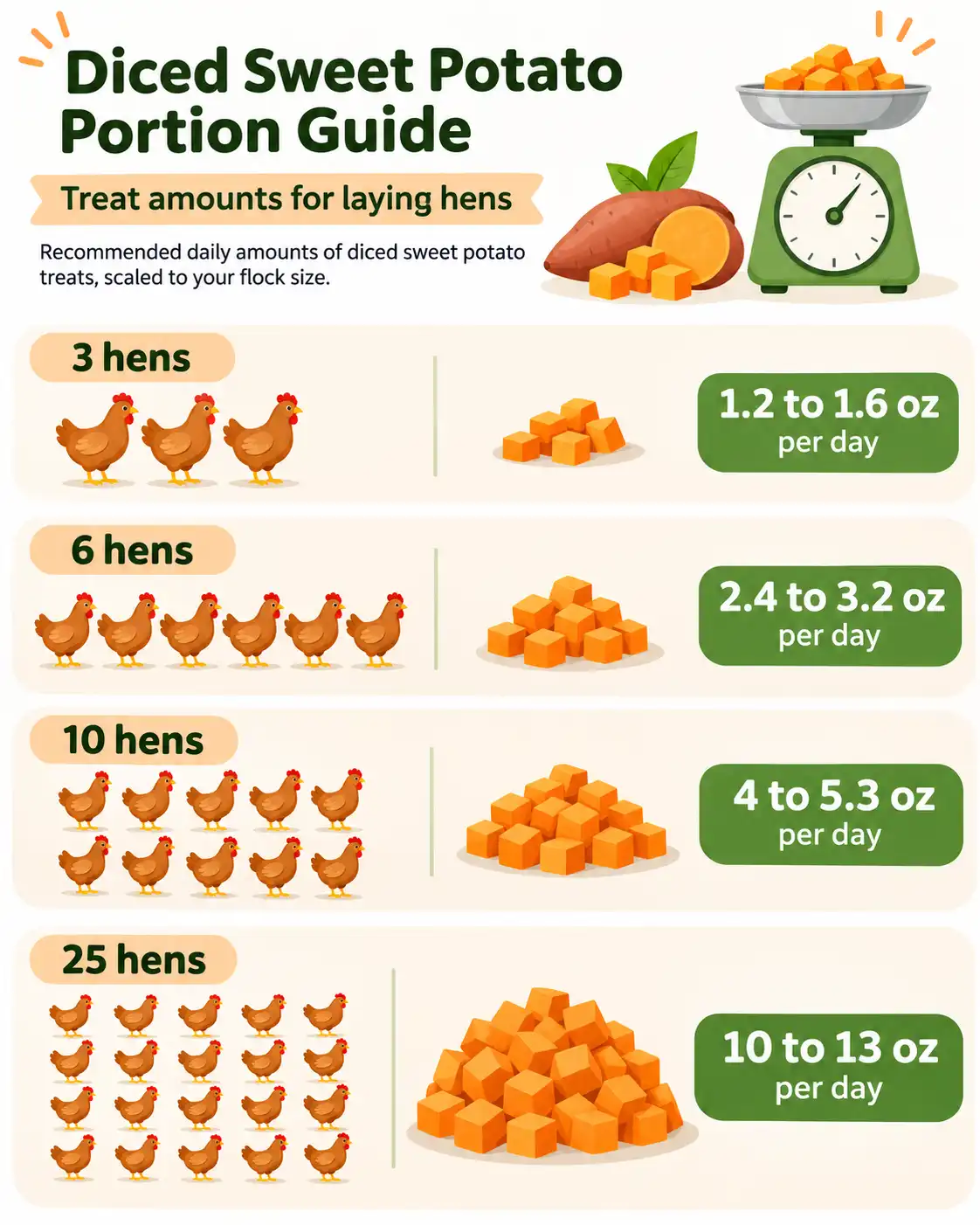
Mississippi State University Extension says an average laying hen eats about 1/4 to 1/3 pound of feed a day. Ten percent of that is about 0.4 to 0.5 ounce of treats per laying hen per day. USDA FoodData Central lists a medium sweet potato, 5 inches long, at 130 grams, or about 4.6 ounces.
| Laying hens | Treat cap per day | Treat cap per week | Medium sweet potatoes per week |
|---|---|---|---|
| 3 | 1.2 to 1.6 oz | 8 to 11 oz | about 2 |
| 6 | 2.4 to 3.2 oz | 17 to 22 oz | 4 to 5 |
| 10 | 4.0 to 5.3 oz | 28 to 37 oz | 6 to 8 |
| 25 | 10 to 13 oz | 70 to 93 oz | 15 to 20 |
These caps cover all treats, so other scraps, scratch, or mealworms shrink the sweet potato share. Mississippi State goes further and advises a complete layer ration with no added grain or other feedstuffs. Treat the 10 percent figure as a ceiling, then, not a target.
The same portion rules apply to every scrap in a flock’s treat and forage mix.
Sweet Potatoes for Chicks, Broilers, and Laying Hens
The right amount depends on the bird.
Chicks
Chick starter is built to be a chick’s whole diet, and sweet potato adds almost no protein to it. We found no extension guidance that gives an age for sweet potato specifically. UF/IFAS Extension notes that chickens need grit to digest treats, so wait until chicks eat starter well and have chick grit available. Then start with a pinch of soft cooked mash.
Broilers
Cornish Cross and other fast-growing meat birds depend on a high-protein ration, and treats dilute it. The Tuskegee trial used balanced, formulated diets, not scraps, so it does not support heavy treat feeding. Keep sweet potato to an occasional small portion for broilers.
Laying Hens
Feedipedia gives 10 to 15 percent dried sweet potato meal as a safe share of a balanced laying hen diet. At 20 percent, egg production fell 11.6 percent. Dried meal is far more concentrated than fresh root, though. Fresh sweet potato inside the treat cap stays well short of those levels. Shell calcium still comes from the layer feed and free-choice oyster shell.
How to Prepare Sweet Potatoes for Chickens
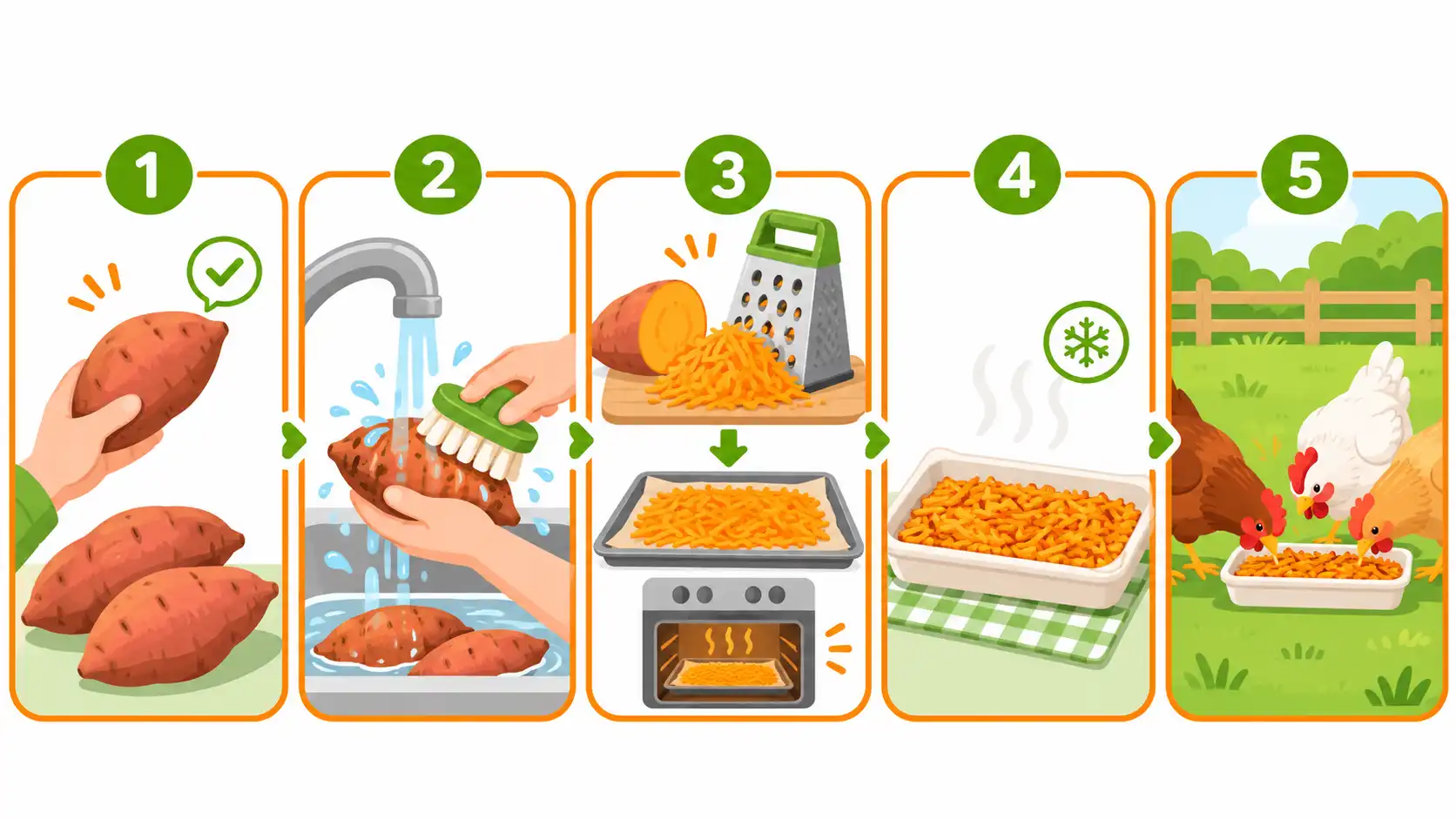
- Sort the roots. Use only firm roots with no soft, dark, or fuzzy spots, because damage brings the toxins.
- Scrub them. Wash off soil before peeling or cooking, so dirt stays out of the dish.
- Pick raw or cooked. Grate or finely dice raw roots. For cooked, bake, boil, or steam them plain, with no butter, salt, oil, or sugar.
- Cool it. Let cooked sweet potato reach room temperature, so hens do not gulp hot food.
- Measure the portion. Weigh it against your flock’s daily cap from the table above.
- Serve it clean. Use a shallow dish or clean ground, not wet litter where it spoils.
- Clear leftovers. Remove uneaten pieces by evening, so they do not mold or draw rodents.
A shallow dish also makes cleanup quicker; options sit among the site’s feed and treat supplies.
Sweet Potato Foods to Keep From Chickens
Plain sweet potato is the safe form. These kitchen versions are not:
- Sweet potato casserole with marshmallows, brown sugar, or buttered pecans
- Sweet potato pie, with its sugar and fat
- Fries and chips, which carry salt and frying oil
- Seasoned roasted wedges or skins
- Canned candied yams packed in syrup
- Moldy, soft, or bitter roots of any kind
The common thread is salt, sugar, fat, and spoilage. If plain flesh can’t be separated from the toppings, compost the leftovers instead.
FAQs About Chickens Eat Sweet Potatoes
Can chickens eat cooked sweet potatoes?
Yes, cooked sweet potatoes are safe and easy for chickens to eat. Bake, boil, or steam them plain, let them cool, and skip the butter, salt, oil, sugar, or marshmallow toppings that holiday recipes often add.
Do sweet potato peels need to be cooked for chickens?
No, raw sweet potato peels are safe for chickens once the roots are scrubbed clean. Chop long strips into short pieces, and feed them the same day so they do not mold in the scrap bucket.
Can chickens eat sweet potato casserole or pie?
No, holiday sweet potato dishes are a poor choice for chickens because of their sugar, butter, and salt. If plain flesh can be separated from the toppings, that part is fine; otherwise, compost the leftovers.
Are yams and sweet potatoes the same for chickens?
Most roots sold as yams in US grocery stores are orange-fleshed sweet potatoes, so the same rules apply. True yams are a different plant, and we found no extension feeding guidance for them, so skip those.
Will sweet potatoes make egg yolks darker?
Don’t count on it from the orange flesh, which is rich in beta-carotene rather than the xanthophylls that mainly color yolks. The leaves differ, though: a 1974 Poultry Science study tested sweet potato vine meal as a yolk pigment.
Can chickens eat sprouted sweet potatoes?
Yes, if the root is still firm, because sweet potato sprouts are not nightshade growth and carry no solanine. Discard any sprouted root that has turned soft, dark, or moldy, since damage brings the real toxins.
How often can chickens have sweet potatoes?
A few times a week suits most backyard flocks, and small daily portions work too. What counts is the total: keep all treats under 10 percent of an adult flock’s diet, per UF/IFAS Extension.
Key Points for Your Flock
Sweet potatoes are a safe treat for chickens raw, cooked, peeled, or skin-on, and the leaves are fine too. Serve them plain and chopped, and keep all treats under 10 percent of an adult flock’s diet, per UF/IFAS Extension. Check every root before it goes out. Firm and clean goes to the hens. Soft, dark, or moldy goes in the trash, not a compost pile the flock can reach.