What Food Kills Chickens Instantly? 2 Fast Killers and 11 Slow Poisons
A hen that raids the compost, the trash, or a pile of hedge trimmings raises one urgent question: what food kills chickens instantly? This guide separates the fast killers from the slow poisons and covers what to do in the first hour.
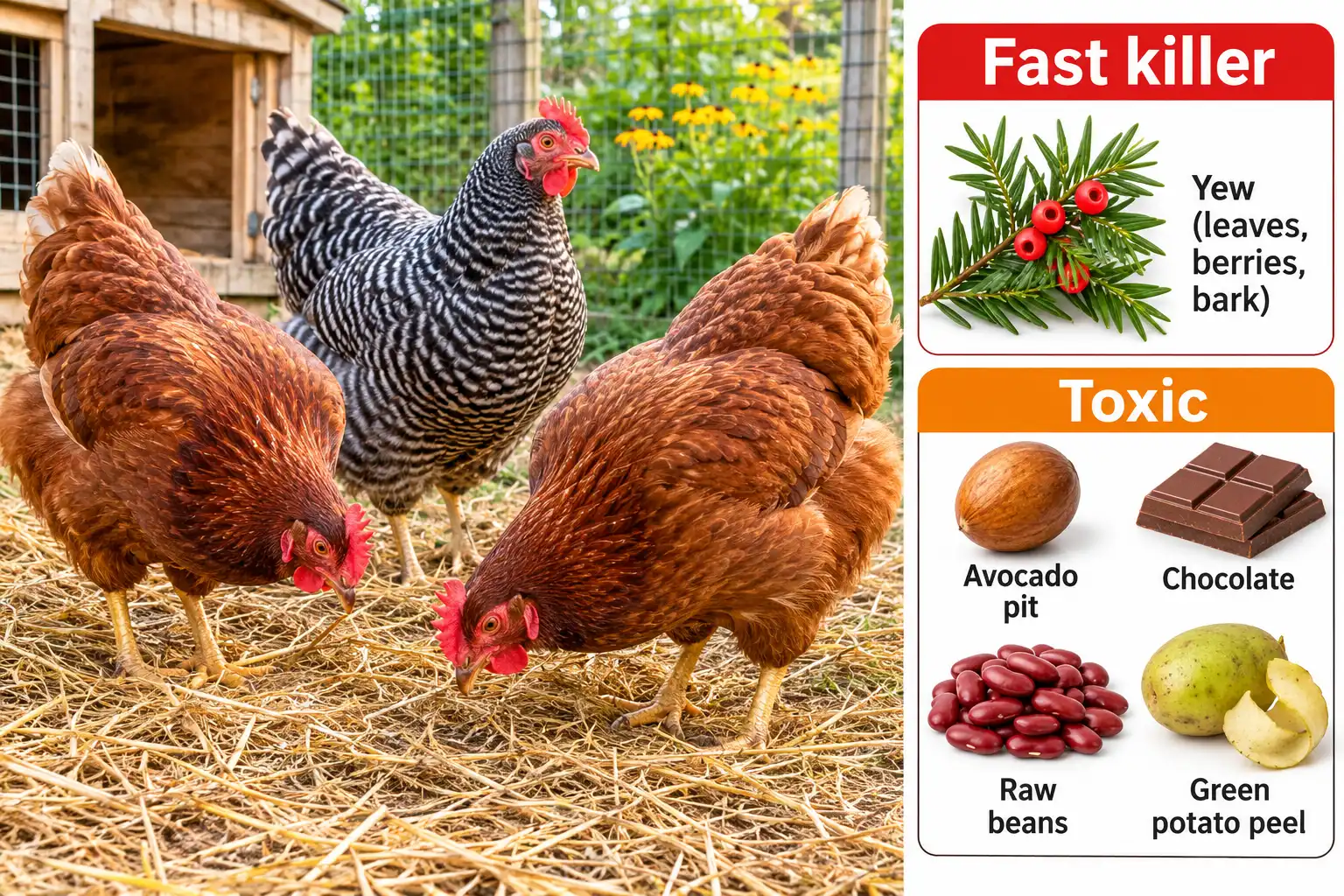
Almost no food kills chickens instantly. Yew clippings cause sudden heart failure, and rotting food can carry botulism toxin that kills within 12 to 24 hours. Avocado skins and pits, chocolate, and raw beans are toxic too.
Can Any Food Kill a Chicken Instantly?
Almost none can. Food poisoning in chickens usually takes hours or days, and the amount eaten matters as much as the food itself.
NC State Extension notes that toxicity depends on the dose, the plant part, and conditions such as wilting or frost damage. Some toxins never kill at all. Instead, they cut egg production or slow growth.
That’s why a bird found dead an hour after a treat needs a closer look before anyone blames the treat.
Call first if birds are dying. USDA APHIS lists sudden death without any prior signs as the first warning sign of avian influenza. So if several birds die with no obvious cause, call your state veterinarian or USDA at 1-866-536-7593 today. For one sick bird, call a poultry veterinarian or your state diagnostic lab. Only they can confirm the cause.
The Fastest Killers: Yew Clippings and Botulism
Two hazards stand out for speed: yew and rotting food. Both can kill before you notice a problem.
Yew and Oleander
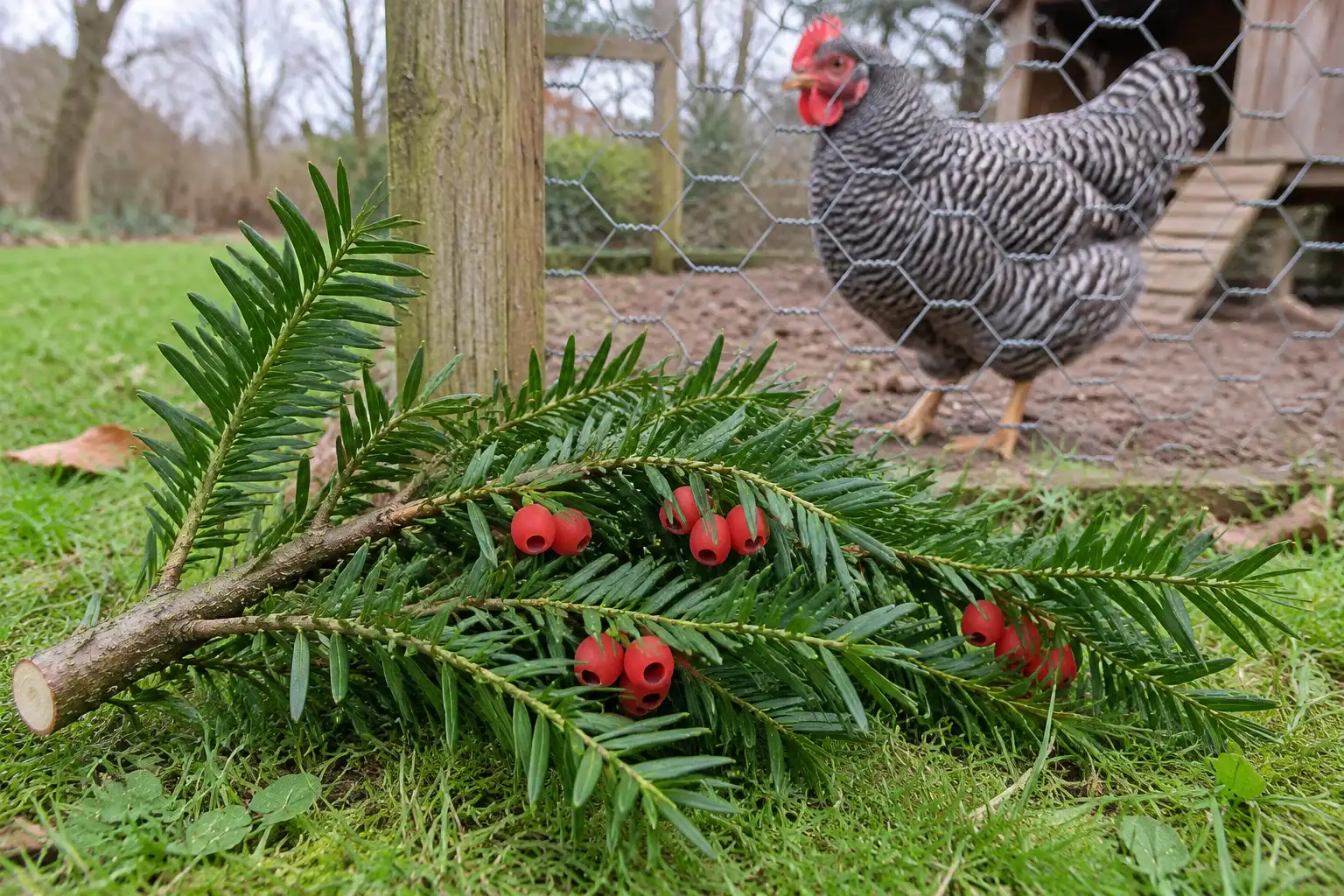
NC State Extension lists every part of yew and oleander as toxic to poultry. Of the two, yew has the clearer record for speed.
USDA NRCS describes yew poisoning in livestock as sudden trembling, labored breathing, poor coordination, and collapse. Death comes from heart failure, and NRCS reports no effective treatment for acute cases.
The danger usually arrives as yard waste. Most cases follow pruning, NRCS notes, when cuttings land where animals can reach them. Even the ashes of burned clippings stay poisonous. So never toss hedge trimmings into the run.
Rotting Food and Botulism
Botulism, also called limberneck, comes from a toxin that bacteria make in spoiled food. University of Kentucky’s Jacquie Jacob notes that birds of any age are highly susceptible.
The sources are ordinary: spoiled canned vegetables, rotting scraps, dead animals, and the maggots that feed on them. Paralysis often starts within a few hours of eating contaminated food. After a lethal amount, death can follow in 12 to 24 hours.
Botulism doesn’t spread from bird to bird. Still, a flock sharing one rotten pile can lose several birds at once.
Also know: Chickens Should Eat
Toxic Foods for Chickens, Ranked by Risk
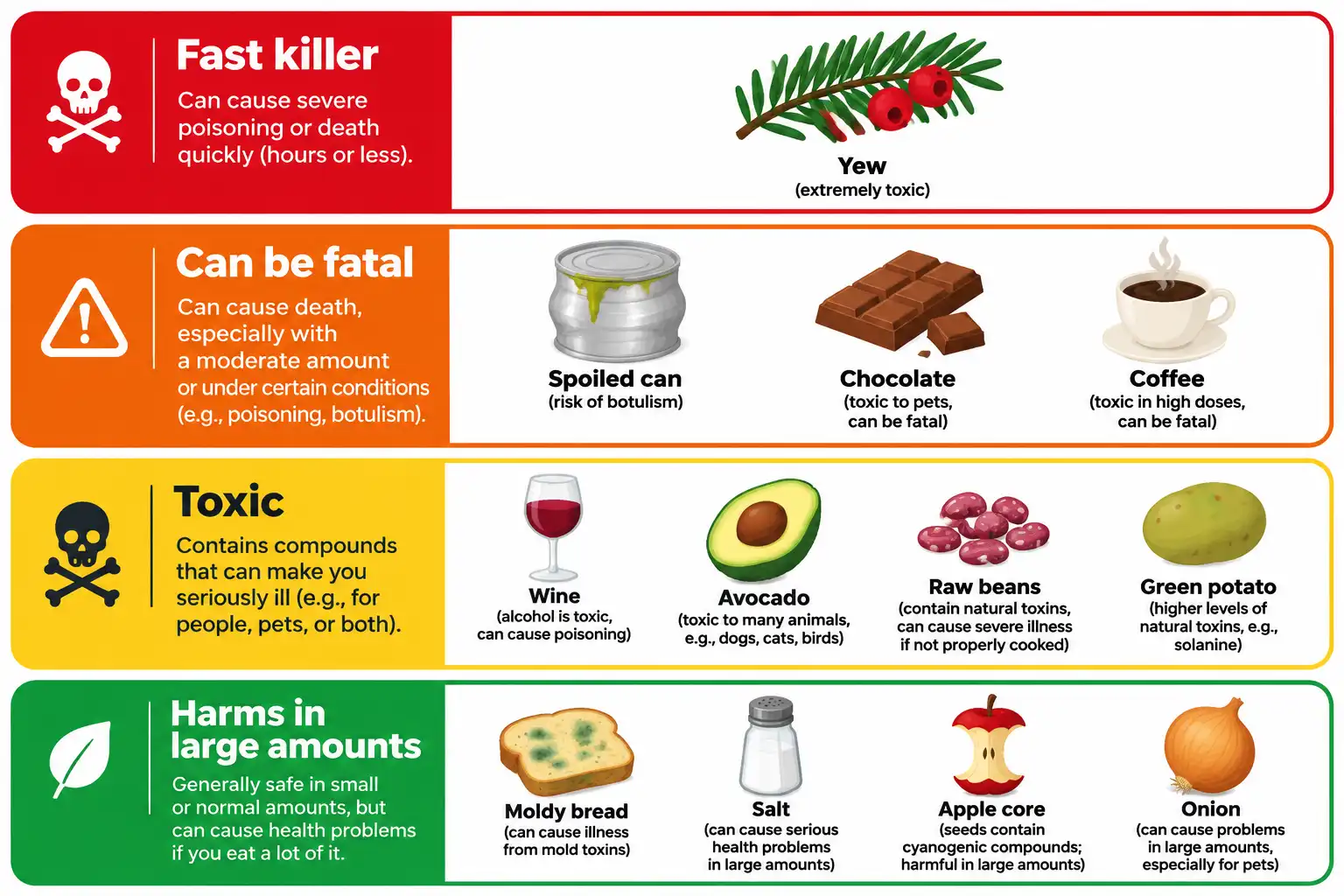
This table sorts 13 common hazards by how fast and how badly they harm birds. Each effect comes from UF/IFAS Extension, NC State Extension, the University of Kentucky, or USDA NRCS.
| Food or plant | Toxin | Riskiest part | Documented effect | Risk tier |
|---|---|---|---|---|
| Yew | Taxine | All parts, clippings, and ashes | Sudden collapse and heart failure (livestock data) | Fast killer |
| Rotting food, spoiled canned goods, carcasses | Botulism toxin | Anything decaying, plus maggots | Paralysis within hours, death in 12 to 24 hours | Fast killer |
| Chocolate | Theobromine, caffeine | Candy and baked goods | Seizures, heart problems, death | Can be fatal |
| Coffee, tea, energy drinks | Caffeine | Grounds and tea bags | Nervous system and heart effects, can be fatal | Can be fatal |
| Alcohol | Alcohol | Drinks and heavily fermented food | Respiratory failure, death | Can be fatal |
| Oleander | Not named by source | All parts | Toxic to poultry, no timeline published | Toxic |
| Avocado | Persin | Skin, pit, and leaves | Breathing problems, weakness, heart issues | Toxic |
| Raw or dry beans | Phytohemagglutinin | Uncooked beans | Severe digestive problems | Toxic |
| Green or sprouted potato peels | Solanine | Green skin and sprouts | Nervous system, digestive, and heart effects | Toxic |
| Moldy food | Mold toxins | Any moldy item | Breathing and digestive problems | Toxic |
| Salty foods | Salt | Chips, fast food, canned food | Fast dehydration and kidney damage | Toxic |
| Apple seeds and fruit pits | Cyanide-releasing compounds | Crushed or chewed seeds | Cyanide exposure | Toxic |
| Onions | Not named by source | Large amounts | Red blood cell damage, anemia | Harms in large amounts |
Where a row says no timeline is published, that’s a gap in the research, not proof of safety. For the wider list of everyday foods to skip, see the full guide to foods chickens shouldn’t eat.
Avocado, Chocolate, and Caffeine
These three cause the most worry, and UF/IFAS Extension flags all of them.
Avocado. The toxin persin sits mainly in the skin, pit, and leaves. The flesh is less dangerous, but UF/IFAS advises skipping avocado entirely. Persin can cause breathing problems, weakness, and heart issues.
Chocolate. It contains theobromine and caffeine. According to UF/IFAS, even small amounts can cause hyperactivity, seizures, heart problems, or death. So candy and chocolate baked goods stay out of the scrap bucket.
Caffeine. Coffee grounds, tea bags, and energy drinks all count. Caffeine affects the nervous system and heart, and UF/IFAS warns it can be fatal. Grounds and tea bags often end up in compost piles that hens scratch through.
The research here is thin. None of the extension sources reviewed for this guide gives a safe or lethal amount of any of these three for chickens. Because no one has published that line, treat any amount as unsafe.
Raw Beans, Green Potatoes, and Onions
These kitchen staples are risky raw or in bulk. Cooked, two of them are generally safe, so the form matters more than the food.
Raw or dry beans. UF/IFAS Extension says uncooked beans carry phytohemagglutinin, a toxin that can cause severe digestive problems and poisoning. Fully cooked beans, by contrast, are generally considered safe.
Green or sprouted potato peels. These contain solanine, which can affect a chicken’s nervous system, digestion, and heart. Plain cooked potatoes are generally safe in moderation, per UF/IFAS. So skip green peels and sprouts entirely.
Onions. Large amounts can damage red blood cells and may cause anemia, while small amounts are usually not harmful. There’s a second reason to hold back, too. The University of Kentucky notes that strong flavors such as onion can carry into the eggs of laying hens.
Moldy, Salty, and Fermented Scraps
Spoiled and heavily salted scraps are easy to miss. That’s because they sit in buckets, compost piles, and trash bags hens can reach.
Moldy food. Mold can produce toxins that lead to breathing problems, digestive problems, or poisoning, according to UF/IFAS Extension. Its rule of thumb is simple: skip any food you wouldn’t eat yourself. The University of Kentucky adds that any feed you suspect has spoiled should be replaced.
Salty foods. Chips, fast food, canned food, and heavily salted leftovers are the usual sources. UF/IFAS warns that too much salt can quickly lead to dehydration and kidney damage.
Alcohol and heavily fermented food. UF/IFAS lists disorientation, dehydration, respiratory failure, and death. Fermenting fruit in a forgotten scrap bucket counts as well.
Apple Seeds and Fruit Pits
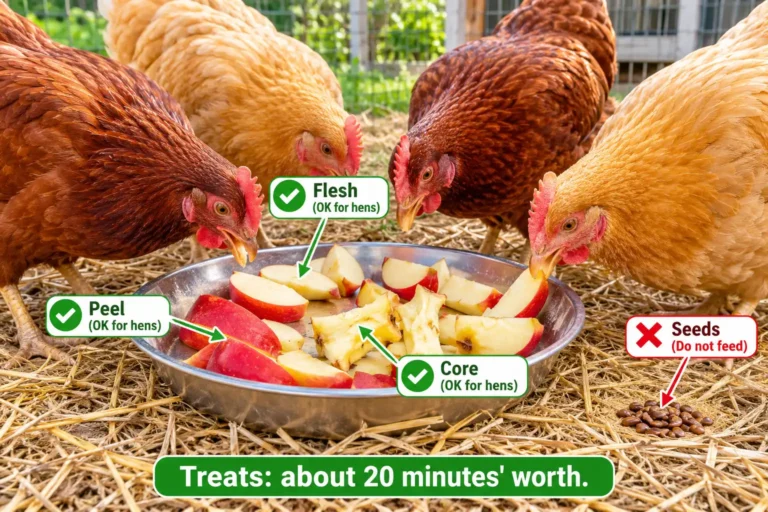
Remove them before sharing fruit. UF/IFAS Extension notes that apple seeds and the pits of peaches, cherries, and plums contain compounds that release cyanide when crushed or chewed.
The fruit flesh, on the other hand, is safe. So core apples and pit stone fruit first. For more on apples as a treat, see our guide to feeding apples safely.
Toxic Plants and Yard Chemicals in the Run
Free-ranging hens also meet poisons outside the kitchen. NC State Extension lists these plants as toxic to poultry, by the part that causes harm:
- All parts: yew, oleander, yellow jasmine
- Seeds: castor bean, jimsonweed, corn cockle, sweet pea, vetch, hemlock, sickle pod, bladder pod, rapeseed, velvet weed
- Fruit: nightshade, pokeberry
- Leaves or stems: black locust, oak, tobacco
- Whole plant: milkweed, parsley
- Root: cassava
NC State also warns about granular products, including many fire ant baits, because chickens find them attractive. Keep birds away from household chemicals, fuels, and pesticides, and follow every label’s directions.
Before you let a flock range, walk the yard with this list. Then pair it with our guide to safe foraging and treats so the hens have better things to eat.
How Much Kitchen Scrap Can Your Flock Safely Eat?
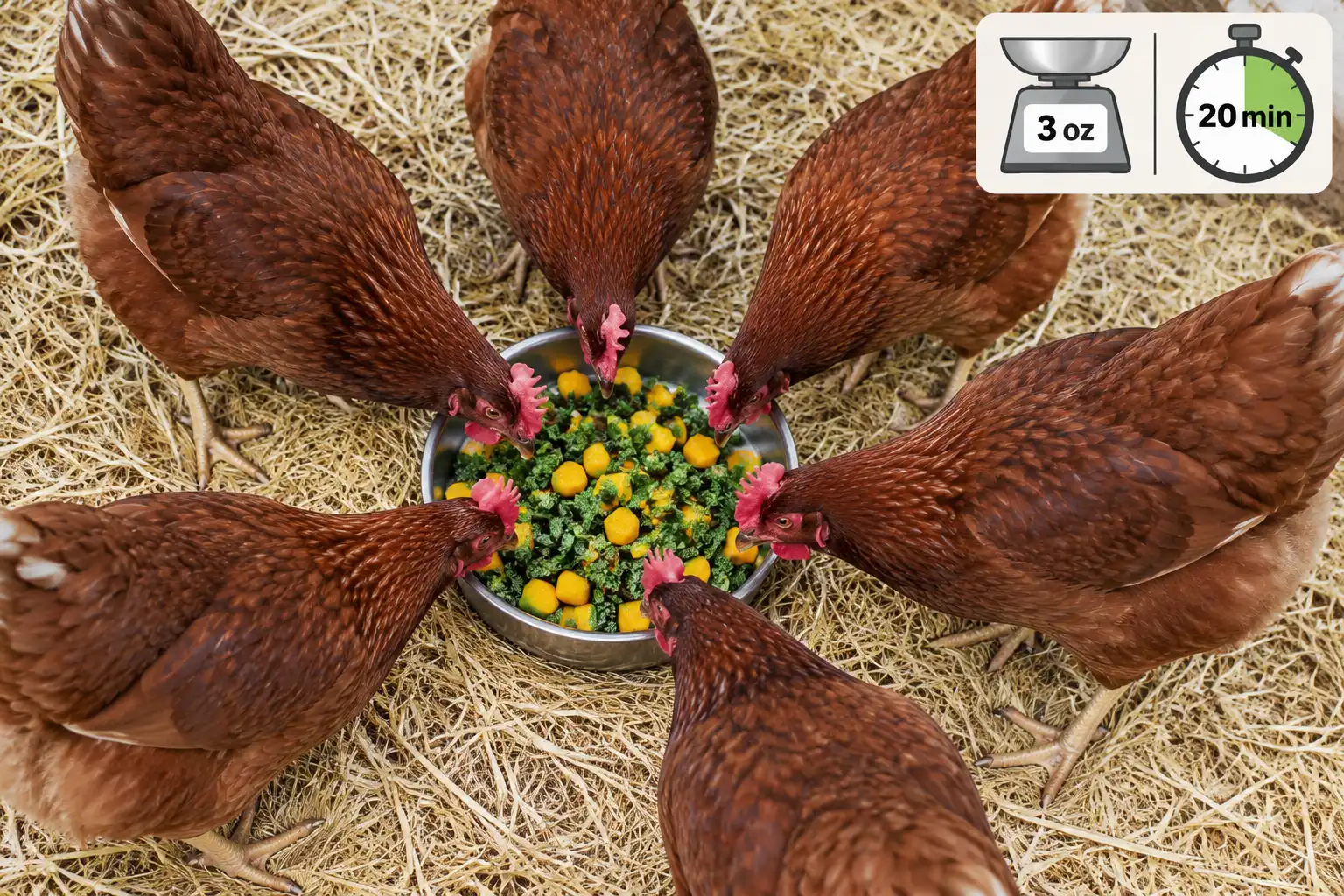
Keep treats and scraps under 10 percent of what your laying hens eat, and offer only what they finish in 20 minutes. A smaller pile means a smaller dose of anything risky that slips in, and nothing left to rot.
The inputs come from two sources. UF/IFAS Extension recommends keeping treats under 10 percent of the diet. The University of Kentucky puts feed use at 18 to 24 pounds a week for 10 laying hens. It also limits scraps to what the hens clean up in 20 minutes and warns that rotting scraps can cause botulism.
That works out to 1.8 to 2.4 pounds of feed per hen each week. Applied by weight, the treat limit for your flock looks like this:
| Laying hens | Feed per week | Treat limit per week | Treat limit per day |
|---|---|---|---|
| 6 | 10.8 to 14.4 lb | about 1.1 to 1.4 lb | about 2.5 to 3.3 oz |
| 10 | 18 to 24 lb | about 1.8 to 2.4 lb | about 4.1 to 5.5 oz |
| 25 | 45 to 60 lb | about 4.5 to 6 lb | about 10.3 to 13.7 oz |
Use the low end in hot weather. Kentucky notes that feed intake drops in heat and rises in cold, so the treat share shifts with it. Then pick up anything left after 20 minutes.
Signs a Chicken May Have Eaten Something Toxic
The signs depend on the toxin, and many overlap with infectious disease. A poultry veterinarian or state diagnostic lab confirms the cause. Signs alone can’t.
Botulism. The University of Kentucky describes paralysis of the legs and wings first, then a limp neck. Neck feathers loosen and pull out easily. Birds that eat less than a lethal amount turn dull and sleepy.
Yew. In livestock, USDA NRCS lists sudden trembling, labored breathing, poor coordination, and collapse.
Slow toxins. Some poisons show up only as fewer eggs or slower growth, NC State Extension notes. So a gradual slump can point to feed or forage, too.
Now compare those signs with avian influenza. USDA APHIS lists stumbling or falling, twisting of the head and neck, gasping for air, and diarrhea among its signs. Those look a lot like poisoning. That overlap is the reason a lab test matters more than a guess.
What to Do in the First Hour
Act on the source first, then get a professional involved. Don’t treat birds at home or give any medication unless a veterinarian directs it.
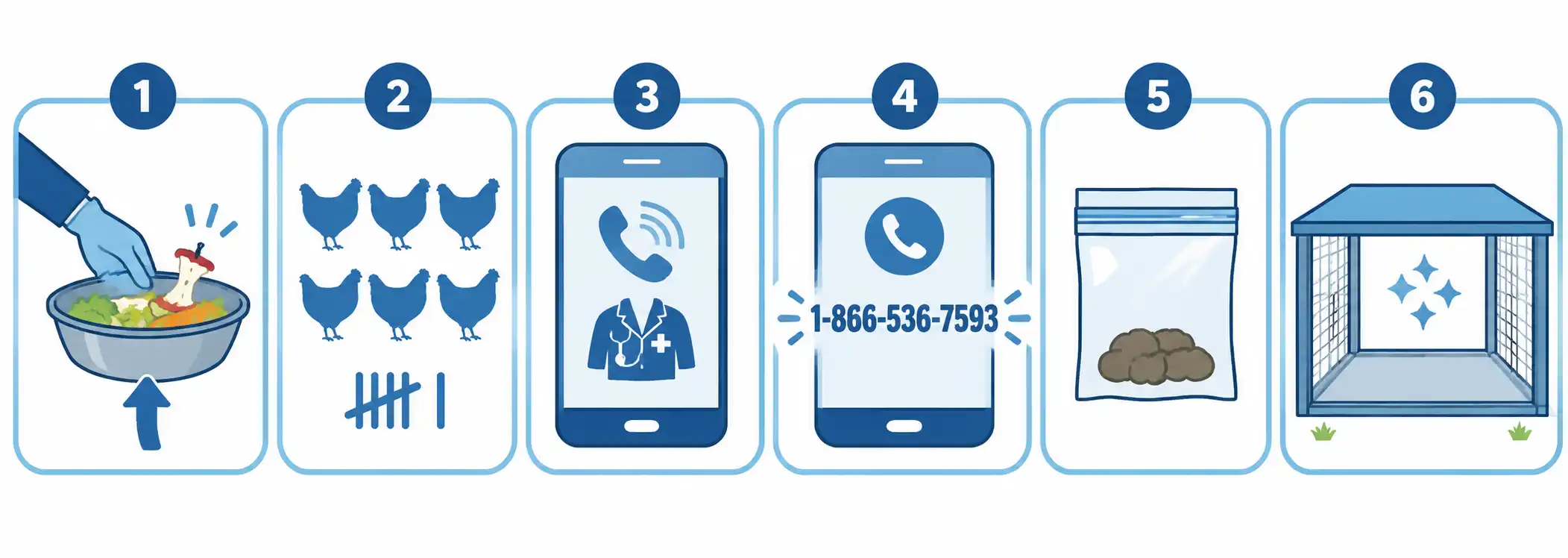
- Remove the source. Pick up leftover scraps, clippings, or spilled feed so no other bird eats it.
- Count the birds that show signs. One sick bird and five sick birds call for different responses.
- Call a poultry veterinarian or your state diagnostic lab. Tell them what was eaten, roughly how much, and when. Those three details guide their advice.
- Report clusters right away. If several birds sicken or die with no clear cause, call your state veterinarian or USDA at 1-866-536-7593. Don’t move birds off the property in the meantime.
- Save the evidence. Bag a sample of the suspect food and photograph any plants. Then ask the lab how to hold a dead bird for testing.
- Get dead birds out of the run. The University of Kentucky notes that carcasses and the maggots on them carry botulism toxin, so flock mates must not reach them.
When Sudden Deaths Aren’t About Food
Sudden deaths across a flock are a reporting matter first and a feeding question second. USDA APHIS guidance says an occasional unexplained death is normal, but a large share of dead or dying birds is not. If there’s no obvious cause, such as predators or weather, APHIS asks owners to report the deaths immediately.
Timing matters this fall. Avian influenza detections rise with wild bird migration, and new cases are still arriving. The Oregon Department of Agriculture reported that USDA confirmed HPAI in a Clackamas County commercial flock on November 4, 2026. This section reflects USDA and state reports as of November 2026.
So before you search the scrap bucket for a culprit, rule out disease with your state veterinarian. For background, see our guide to bird flu signs and reporting. A steady flock biosecurity routine, built on USDA’s Defend the Flock guidance, lowers the odds of that call in the first place.
How to Poison-Proof the Run
The fast killers above usually reach hens as yard waste or spoiled scraps. These habits close those gaps:
- Bag hedge trimmings, especially yew, and keep them out of the run and any compost the hens scratch.
- Fence hens out of compost that holds coffee grounds, tea bags, moldy scraps, or meat.
- Never feed spoiled canned vegetables, a known botulism source per the University of Kentucky.
- Replace any feed you suspect has spoiled.
- Store chocolate, coffee, and alcohol where scraps can’t pick them up by accident.
- Keep granular fire ant baits, pesticides, and fuels away from birds, as NC State Extension advises.
- Check the yard against the plant list above before free-ranging.
Wet feed molds, so storage counts too. Covered feeders that keep rain off feed and a dry, sealed bin cut that risk for any size of flock.
FAQs on Toxic Foods for Chickens
Can one bite of avocado kill a chicken?
It might, because no extension source gives a safe or lethal amount for chickens. UF/IFAS Extension warns that persin in avocado skin, pits, and leaves can cause breathing problems, weakness, and heart issues.
Is chocolate poisonous to chickens?
Yes, chocolate is poisonous to chickens, including candy and baked goods. UF/IFAS Extension says even small amounts can cause hyperactivity, seizures, heart problems, or death because of its theobromine and caffeine.
Can moldy bread kill chickens?
It can make them seriously ill, and spoiled food can also carry botulism toxin. UF/IFAS Extension says mold produces toxins that cause breathing and digestive problems, so skip any food you wouldn’t eat yourself.
Why did my chicken die suddenly with no signs?
Many causes fit, and food is only one of them. USDA APHIS lists sudden death without prior signs as a warning sign of avian influenza, so report unexplained deaths to your state veterinarian or USDA at 1-866-536-7593.
Are cooked beans safe for chickens?
Yes, UF/IFAS Extension considers cooked beans generally safe. The danger is raw or dry beans, which contain phytohemagglutinin, a toxin that can cause severe digestive problems and poisoning in chickens.
Can chickens eat coffee grounds from the compost?
No, keep hens away from coffee grounds and tea bags. UF/IFAS Extension says caffeine affects a chicken’s nervous system and heart and can be fatal, so fence the compost pile.
Are apple seeds dangerous to chickens?
They can be, so remove them first. UF/IFAS Extension notes that apple seeds and fruit pits from peaches, cherries, and plums release cyanide when crushed or chewed, while the fruit flesh itself is safe.
Key Points for Your Flock
Very few foods kill chickens instantly, but yew clippings and rotting food come closest. Keep both out of reach. Then hold scraps under 10 percent of what your laying hens eat, and pick up leftovers after 20 minutes.
If birds die suddenly with no clear cause, report it the same day. A poultry veterinarian or state lab, not a list, tells you what actually happened.