Can Chickens Eat Apples? Cores, Peels, and Seeds
Apples are one of the most common kitchen scraps a backyard flock gets. So can chickens eat apples safely, including the core, peel, and seeds? Most of the fruit is fine. The seeds are the part to remove, and the amount matters more than most keepers expect.
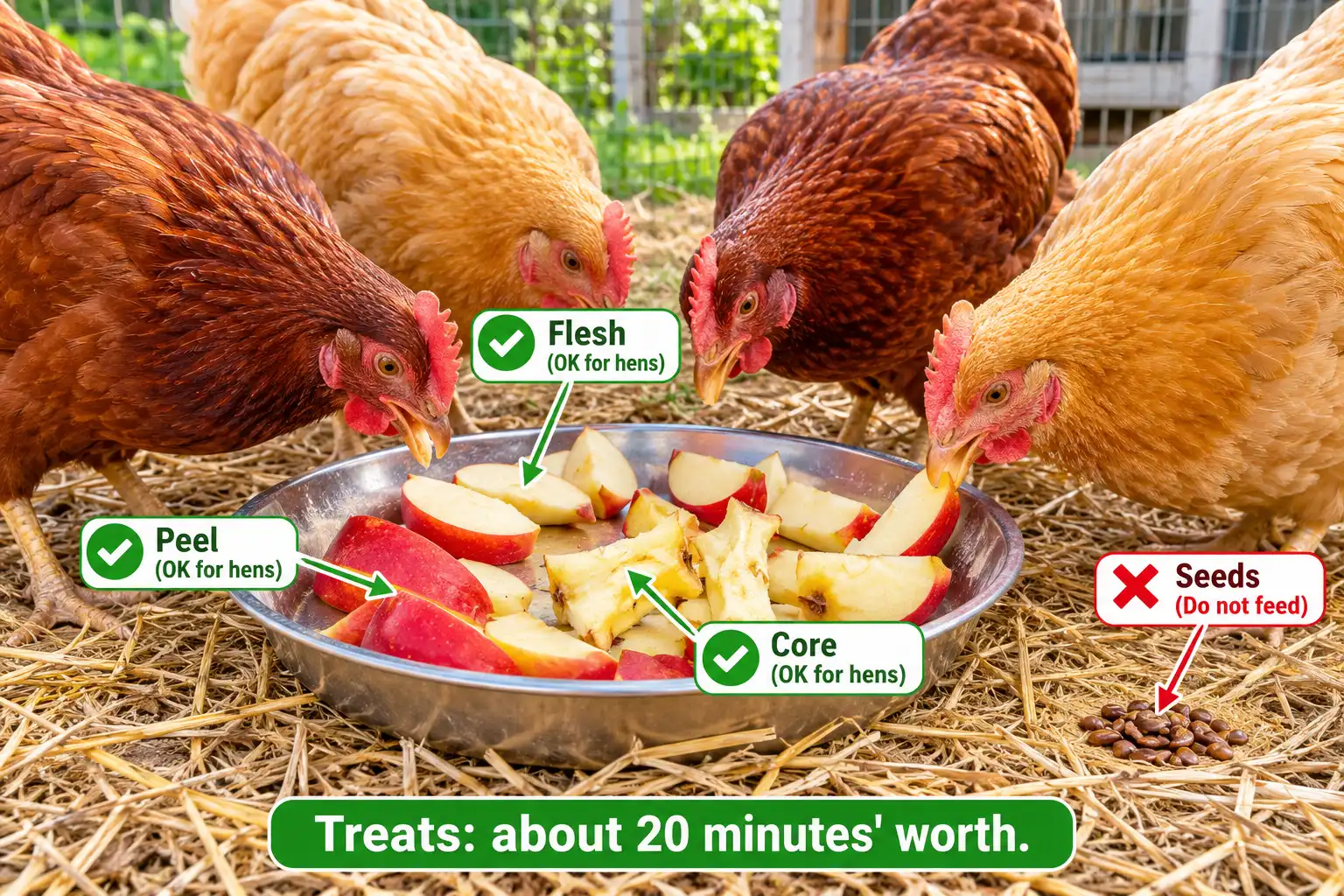
Yes. Adult chickens can eat apple flesh, peel, and chopped core with the seeds cut out. Oregon State University Extension caps laying hens’ treats at what they finish in about 20 minutes, roughly 10 to 15 percent of daily food.
Can Chickens Eat Apples? Which Parts Are Safe
Yes, chickens can eat apples, and almost the whole fruit is usable. UF/IFAS Extension says the fruit itself is safe, but apple seeds should always be removed before feeding. The flesh and peel need no special handling. The core is fine once the seeds are out.
| Apple part | Safe for adult chickens? | How to serve it |
|---|---|---|
| Flesh | Yes | Slice or chop |
| Peel | Yes | Leave it on; rinse the apple first |
| Core | Yes, once the seeds are out | Cut out the seed pocket, chop the rest |
| Seeds | No | Remove and discard where birds can’t reach |
| Moldy, rotten, or fermented fruit | No | Throw it out |
So the risk comes from two places: the seeds, and fruit left long enough to spoil. Everything below deals with one or the other, plus the question most keepers skip, which is how much.

Can Chickens Eat Apple Peels?
Yes. The peel is part of the fruit UF/IFAS calls safe. So there is no reason to peel apples for a flock. Peels left over from your own cooking make a good scrap.
Still, a few details matter. Rinse whole apples before slicing, the same way you would for your own table. Skip peels coated in sugar, cinnamon sugar, or caramel, because the coating adds sugar the birds don’t need. Also cut long spiral peels into short lengths. That way more birds get a share, and one hen can’t run off with the whole strip.
Can Chickens Eat Apple Cores?
Yes, once the seeds are out. The core itself is just firm, fibrous fruit. The problem is that it holds the seeds, and a hen pecking a whole core will reach them. A whole core tossed into the run hands the flock every seed inside it.
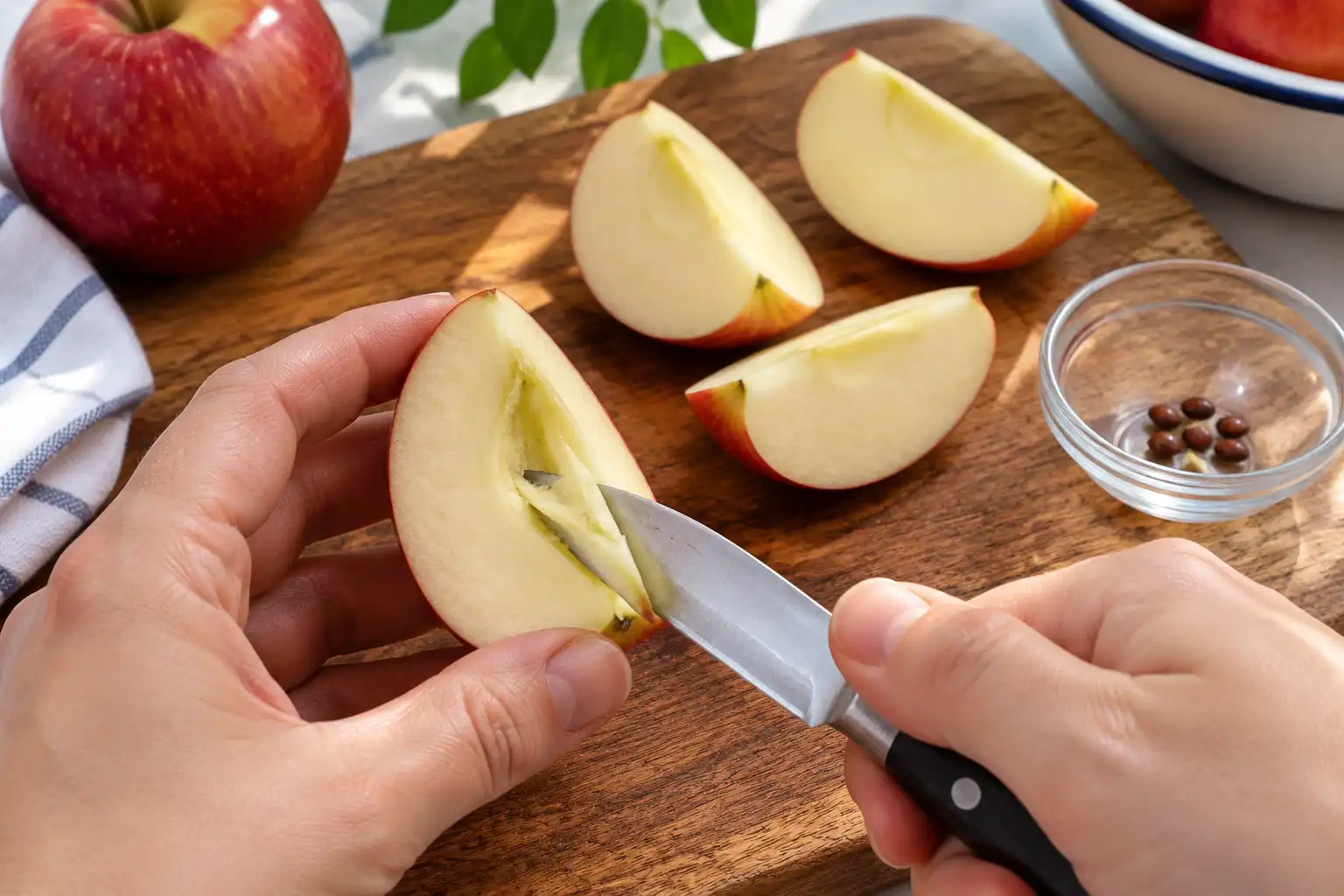
So quarter the apple, cut out the seed pocket, and chop what is left of the core into small pieces. Tough pieces are also one more reason scrap-fed birds need insoluble grit. University of Kentucky Extension notes that grit helps chickens grind their food, since they have no teeth. It also says oyster shell is too soft to do that job.
Can Chickens Eat Apple Seeds?
No. Cut them out every time. Apple seeds contain amygdalin, a compound that plant enzymes can break down into hydrogen cyanide. That is the finding of a 2015 University of Leeds study by Bolarinwa and colleagues in the journal Food Chemistry.
The same study measured seeds from 15 apple varieties. Amygdalin ranged from 1 to 4 milligrams per gram of seed. In other words, one variety’s seeds can carry four times the amygdalin of another’s. You can’t tell which by looking.
UF/IFAS Extension adds that seeds and fruit pits release cyanide when crushed or chewed. Chickens don’t chew, but their gizzards grind what they swallow with grit. So treat any swallowed seed as one that may be crushed.
How Many Apple Seeds Are Too Many?
No published study sets a safe number of apple seeds for a chicken. Research on apple seeds in poultry is thin, and seed amygdalin varies by variety. Because of that, we give no seed count here. The practical rule is zero: remove every seed before apples go to the flock.
The same rule covers stone fruit. UF/IFAS lists peach, cherry, and plum pits alongside apple seeds as parts to remove before feeding.
If Your Flock Ate Apple Seeds or Spoiled Apples
Watch the birds closely. Call a poultry veterinarian the same day if any bird seems weak, struggles to breathe, stops eating, or dies suddenly. Those signs have many possible causes. Only a veterinarian or a state diagnostic lab can tell them apart, so don’t guess at home.
Sudden deaths can also be a sign of avian influenza, which must be reported by law. Call your state veterinarian or USDA at 1-866-536-7593, and don’t move birds off the property while you wait. For the steps that keep a problem from spreading, see the site’s flock biosecurity basics.
How Much Apple Can Chickens Eat?
Less than most people put out. Apples count toward a flock’s total treats, and extension limits on treats are tight.
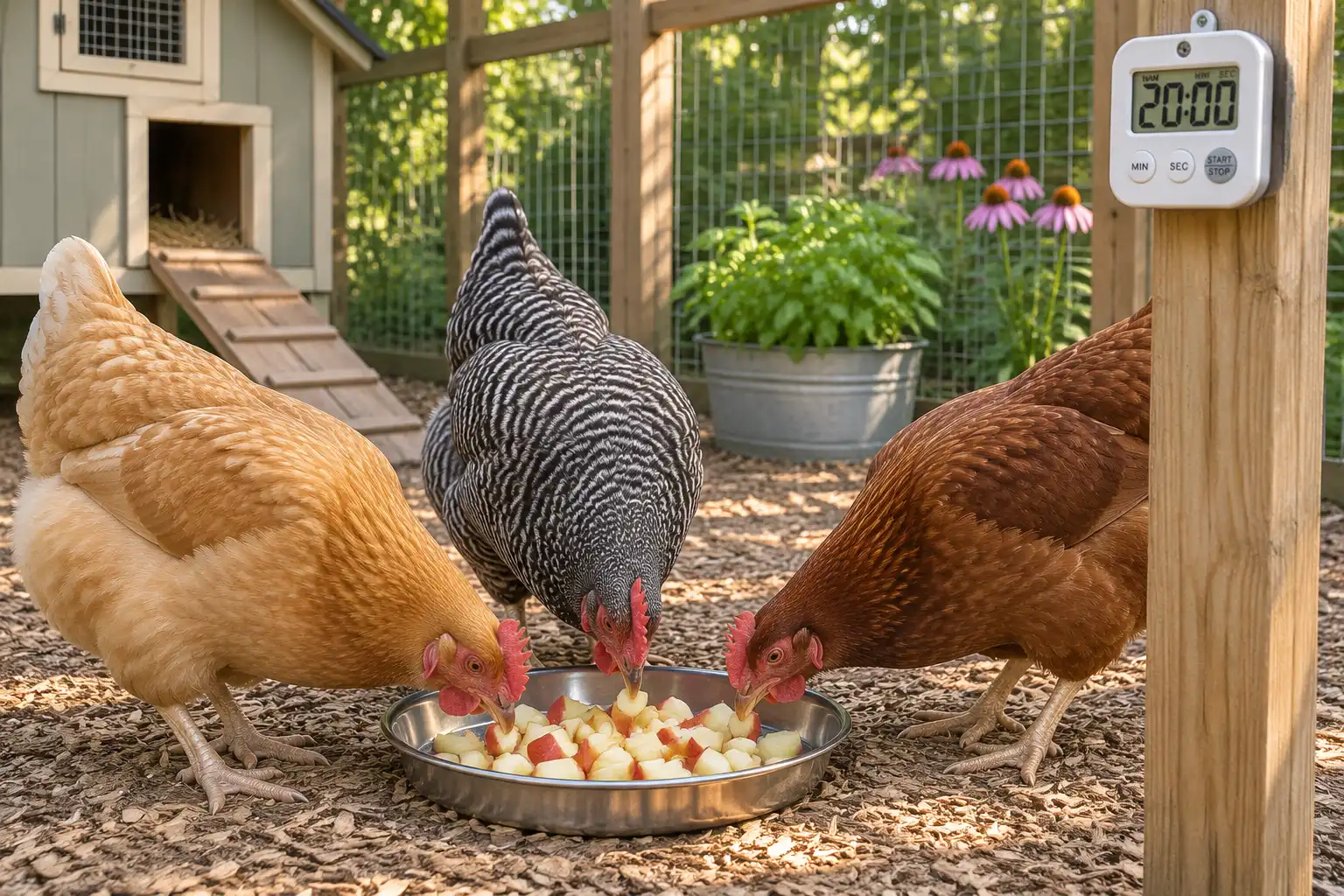
Oregon State University Extension says table scraps and greens follow the same rule as scratch. The total should be no more than the chickens can clean up in about 20 minutes. For scratch, it puts that at roughly 10 to 15 percent of total daily food. University of Kentucky Extension sets the same 20-minute limit for laying flocks.
To turn that into apples, you need two more figures. A laying hen eats about a quarter pound of feed a day, per University of Kentucky Extension. A medium apple, about 3 inches across, weighs about 6.4 ounces (182 grams), per USDA FoodData Central.
Working: 4 oz of feed x 10 to 15% = 0.4 to 0.6 oz of treats per hen per day.
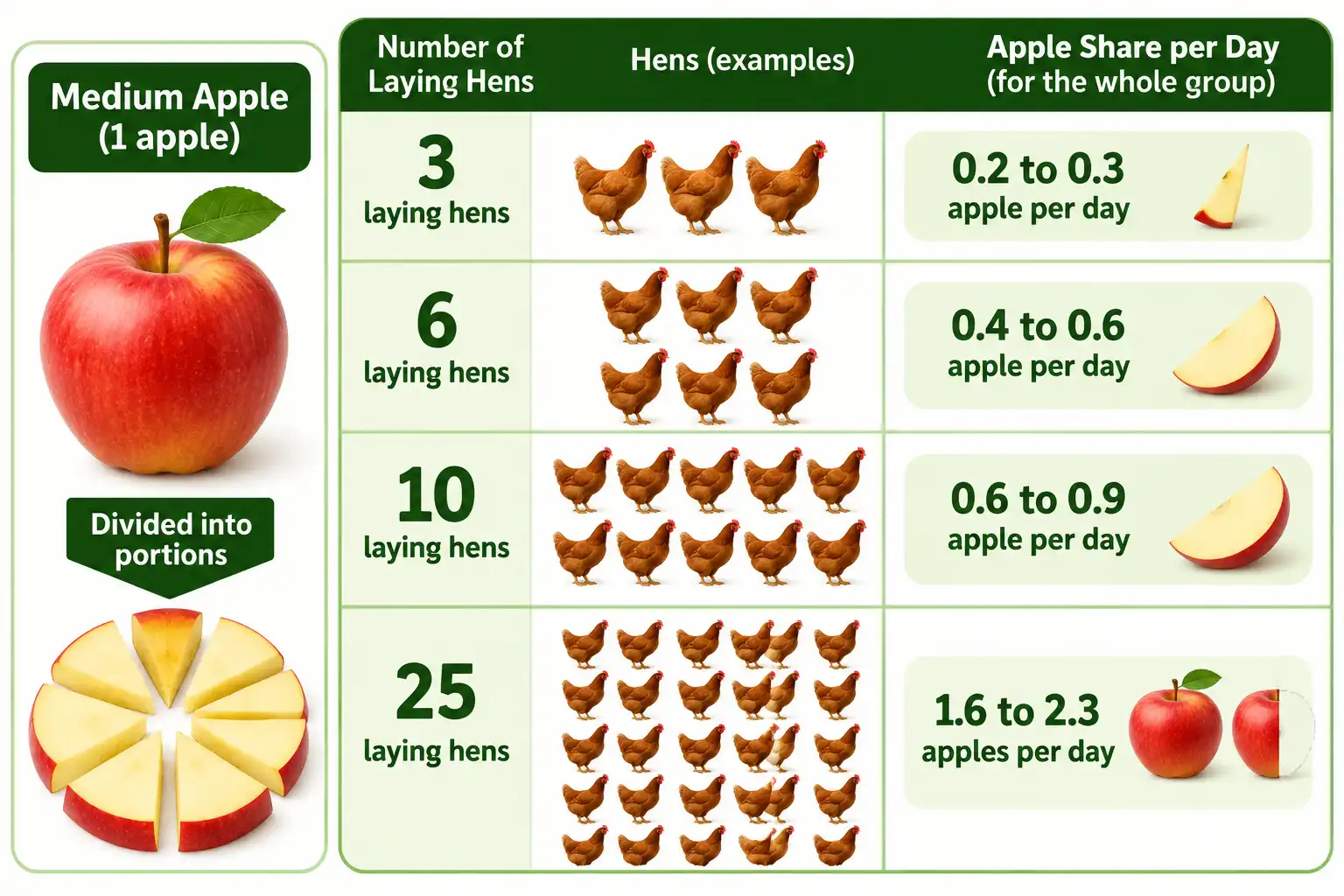
| Laying hens | Daily feed | Daily treat allowance (all treats) | Medium apples per day, if apples are the only treat |
|---|---|---|---|
| 3 | 0.75 lb | 1.2 to 1.8 oz | 0.2 to 0.3 |
| 6 | 1.5 lb | 2.4 to 3.6 oz | 0.4 to 0.6 |
| 10 | 2.5 lb | 4 to 6 oz | 0.6 to 0.9 |
| 25 | 6.25 lb | 10 to 15 oz | 1.6 to 2.3 |
That allowance covers every treat, not apples alone. So if the flock also gets greens or scratch that day, cut the apple back. Some flocks, such as bantams, eat less than a quarter pound per bird. For those, weigh a day’s feed and rerun the math with your own number.
Why Apples Stay a Treat: Apple vs. Layer Feed
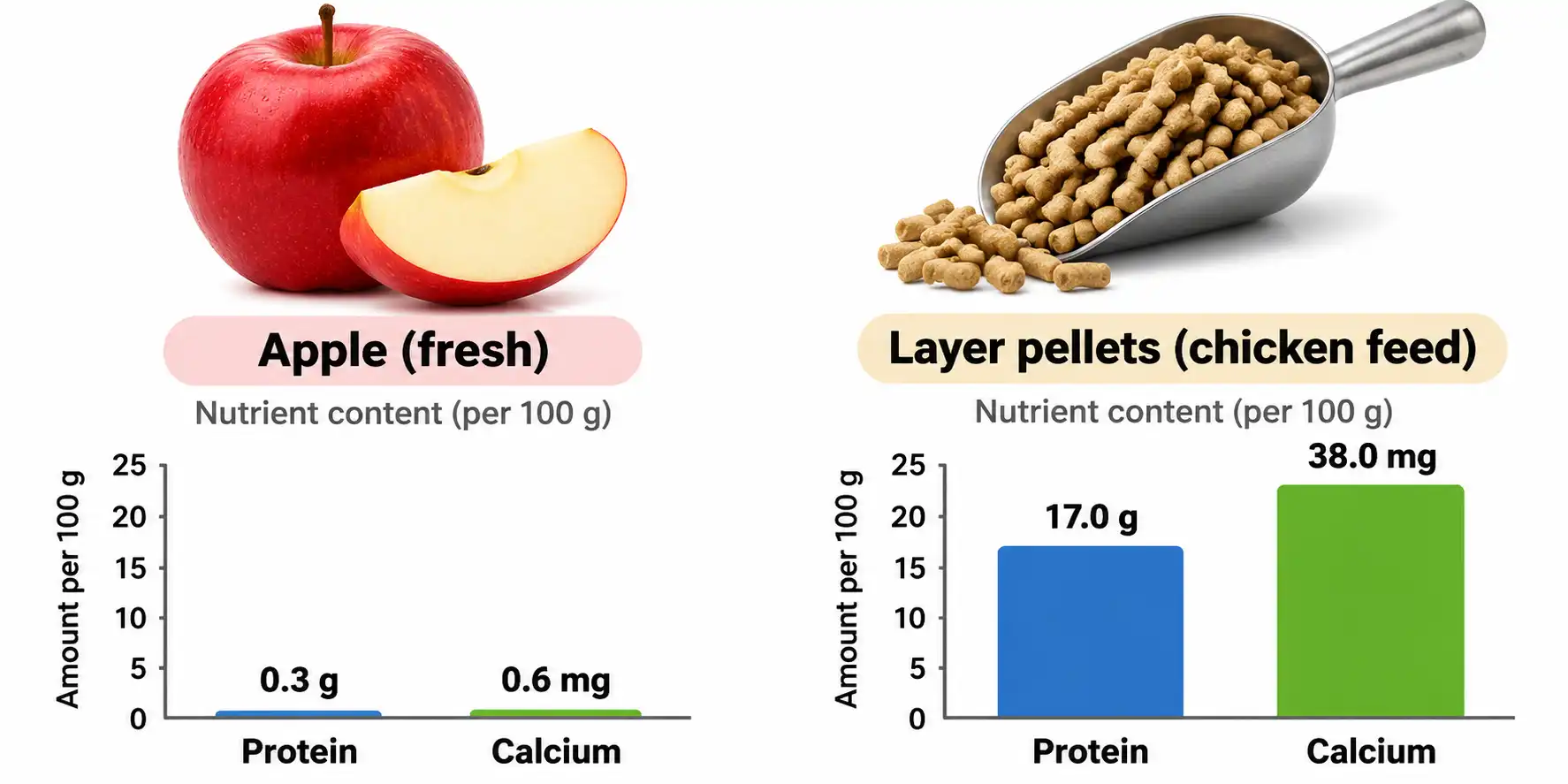
Apples are mostly water and sugar. USDA FoodData Central lists raw apple with skin at about 86 percent water and 10 percent sugar by weight. By contrast, layer feed carries the protein and calcium a laying hen needs for eggs.
| Nutrient, percent by weight | Raw apple with skin (USDA FoodData Central) | Layer feed (Oregon State Extension) |
|---|---|---|
| Protein | 0.26% | About 16% |
| Calcium | 0.006% | 3 to 4% |
Ounce for ounce, complete layer feed gives a laying hen about 60 times the protein of apple. It also gives her roughly 500 to 650 times the calcium. Every ounce of apple she fills up on is an ounce of that feed she doesn’t eat.
That is why University of Kentucky Extension warns that excessive table scraps can hurt egg production. Apples are fine. Apples in place of feed are not.
Apples by Bird Type and Age
The answer changes with the bird. Here is how it breaks down.
- Chicks, hatch to about 6 weeks. Oregon State Extension feeds chicks a starter ration of about 18 to 20 percent protein in this stage. Neither extension source cited here gives a treat amount for chicks, so starter feed stays the whole diet. If you offer a taste, grate it fine. Also provide chick-size grit; University of Kentucky Extension notes that commercial grit comes in chick and hen sizes.
- Pullets, about 6 weeks to first egg. Oregon State puts grower feed at about 15 to 16 percent protein. Keep apple to the same 20-minute limit, since sugar dilutes a ration built for growth.
- Laying hens, from about 18 to 20 weeks or the first egg. Use the flock table above.
- Roosters in a mixed flock. They eat the same feed and treats as the hens, so the same limit applies.
- Broilers such as Cornish Cross. These birds grow fast on a complete broiler ration. Neither extension source cited here sets a treat allowance for them. Keep apple rare, if you offer it at all.
For the starter-to-grower timeline in more detail, see the site’s chick starter guide.
How to Serve Apples to Chickens
- Rinse the apple. It removes dirt from the peel the birds will eat.
- Quarter it and cut out the seeds. Take the whole seed pocket, because one missed seed is one too many.
- Chop it small. Small pieces spread the share across the flock. For young birds, grate it.
- Offer it in the afternoon. University of Kentucky Extension advises feeding scratch after birds have eaten their complete feed, and the same logic fits apple.
- Use a dish, not the ground. A dish makes leftovers easy to find and remove.
- Pick up leftovers after 20 minutes. University of Kentucky Extension warns that scraps left to rot can cause botulism.
- Clean up outside. Wash your hands after touching birds, dishes, or waterers, and wash poultry dishes outdoors, not in the kitchen sink.
Step 7 follows the CDC’s backyard poultry guidance. It advises handwashing after touching poultry or their food and water containers, and cleaning that equipment outside the house.
Cooked apple and plain, unsweetened applesauce are fine in the same small amounts. Skip apple pie filling, sweetened sauce, and anything with added sugar or spice. Dried apple rings pack a fresh apple’s sugar into a few bites. So they use up the treat allowance fast.
Windfall Apples and Orchard Flocks
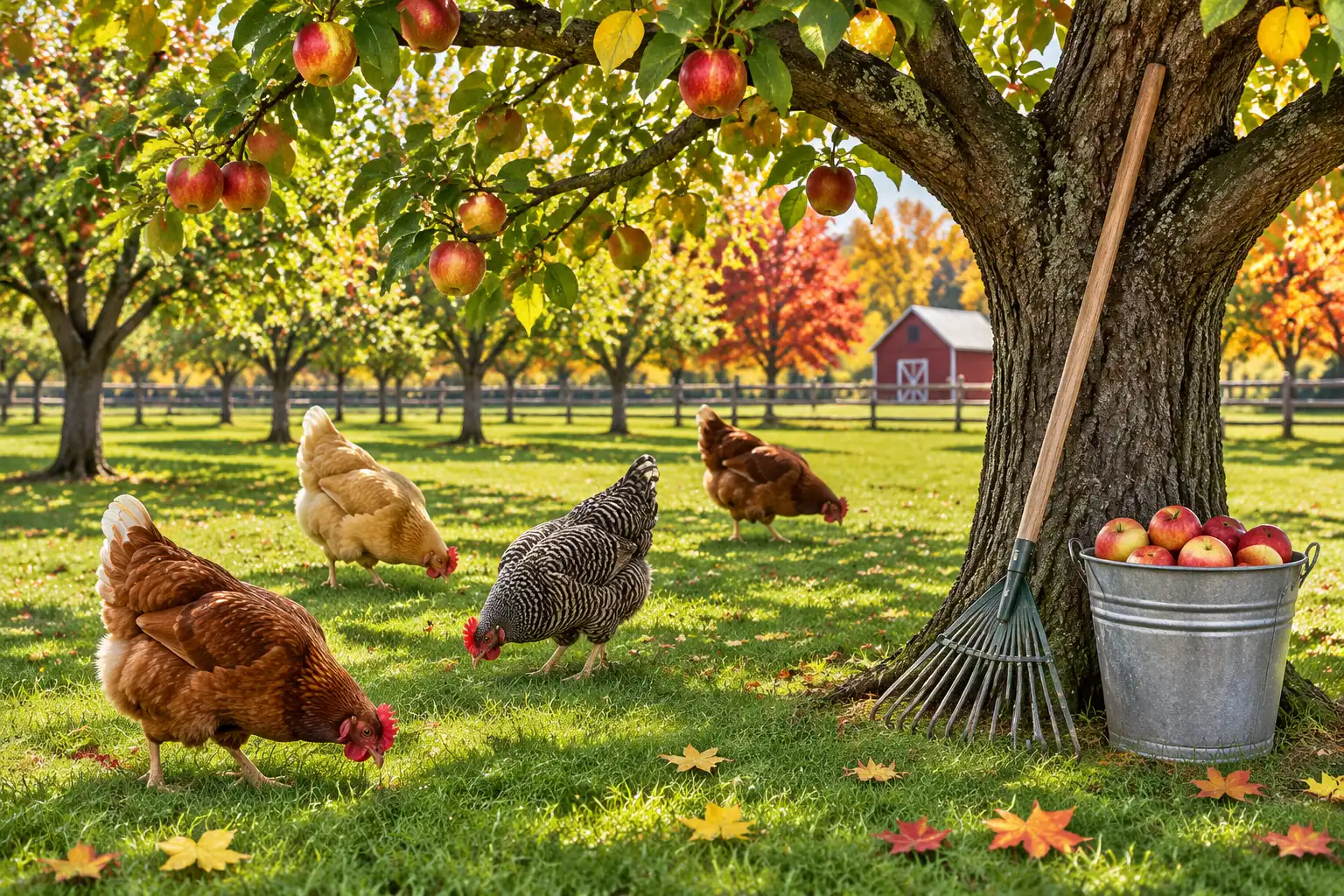
Free-range flocks under apple trees face a different problem. Fallen fruit sits, bruises, and starts to ferment or mold. UF/IFAS Extension warns against feeding chickens alcohol or heavily fermented foods. It also says not to feed moldy food you wouldn’t eat yourself.
So rake up drops every day or two in fall. Rotting windfalls also expose seeds as the flesh breaks down, which puts them within easy reach. Also, a tree that drops fruit daily turns the 20-minute limit into free choice. The birds may then fill up on apple instead of feed.
Common Mistakes With Apples
- Tossing whole cores into the run. Every seed goes with them.
- Counting apples separately from other treats. The 20-minute limit covers all treats combined.
- Leaving slices out overnight. Spoiled scraps carry a botulism risk, per University of Kentucky Extension.
- Feeding sweetened apple products. Added sugar dilutes the diet further.
- Using apples to stretch feed in winter. Apple has almost none of the protein or calcium in layer feed.
- Blaming apples for a sudden egg drop. Heavy treat use can lower production, but a sudden drop with sick birds is a reason to call a veterinarian.
Apples fit inside a broader treat plan. The site’s guide to foraging and treats covers the rest of the scrap bucket. The treat and feed gear guide covers dishes and treat products.
FAQs on Apples for Chickens
Can chickens eat apple peels every day?
Adult chickens can have apple peel on any day, as long as all treats stay within the 20-minute limit. Oregon State Extension puts that at roughly 10 to 15 percent of daily food, so peels share that small allowance.
Is applesauce safe for chickens?
Plain, unsweetened applesauce is fine for adult chickens in small amounts. Skip sweetened or spiced sauce, because added sugar dilutes their feed further, and remove any leftovers within about 20 minutes so nothing spoils.
Can baby chicks eat apples?
Chicks do best on starter feed alone for their first weeks, and extension sources give no treat amount for them. If you offer a taste, grate it fine and provide chick-size grit alongside it.
Do apples help hens lay more eggs?
No published research shows apples raise egg production. University of Kentucky Extension warns that excessive table scraps can lower it instead, because hens that fill up on scraps eat less of their complete layer feed.
Can chickens eat cooked apples?
Yes, plain cooked apple is safe for adult chickens. Leave out sugar, butter, spices, and pastry, cut out the seeds before cooking, and keep the portion inside the flock’s daily treat allowance.
What other fruit seeds and pits should chickens avoid?
UF/IFAS Extension lists peach, cherry, and plum pits with apple seeds, because they release cyanide when crushed or chewed. The fruit itself is safe, so remove the pits and seeds and feed the rest.
Key Points for Your Flock
Apples are a safe, simple treat for adult chickens once the seeds come out. Feed the flesh, peel, and chopped core, and skip anything moldy, fermented, or sweetened.
The amount is where most flocks go wrong. Six laying hens share roughly half a medium apple a day when apples are their only treat. So cut a little, serve it in a dish, and pick up what’s left after 20 minutes.